What if a high cleaning score still overlooked the problems people notice every day? A commercial cleaning audit scorecard template makes inspections consistent by listing standards for each area, scoring results and recording corrective actions. A monthly formal audit is a practical baseline, with more frequent checks where site use or risk calls for closer oversight.
A dependable inspection needs more than an overall score. It should show which tasks meet the agreed standard, where attention is needed and whether issues have been resolved. This gives site teams and cleaning providers a clear record to work from.
This guide explains what a cleaning audit checks and how to set a practical inspection schedule. It covers weighted scores and follow-up records, as well as checks for chemical storage, safety data sheets and personal protective equipment (PPE). You’ll also find a straightforward way to tailor the scorecard to different areas, so results reflect the building’s needs rather than a one-size-fits-all checklist.
Key Takeaways
- Set inspection frequency around site use and risk, with closer oversight for busy or sensitive areas and new cleaning routines.
- Use clear scoring criteria and recorded follow-up actions to turn inspection results into accountable, measurable improvements.
- Include checks for chemical storage, safety data sheets and suitable PPE to make safe working practices part of the audit.
- Tailor the template by area, listing expected task frequencies and recording completed work so recurring gaps are easier to identify.
How Often Should Commercial Cleaning Inspections Take Place?
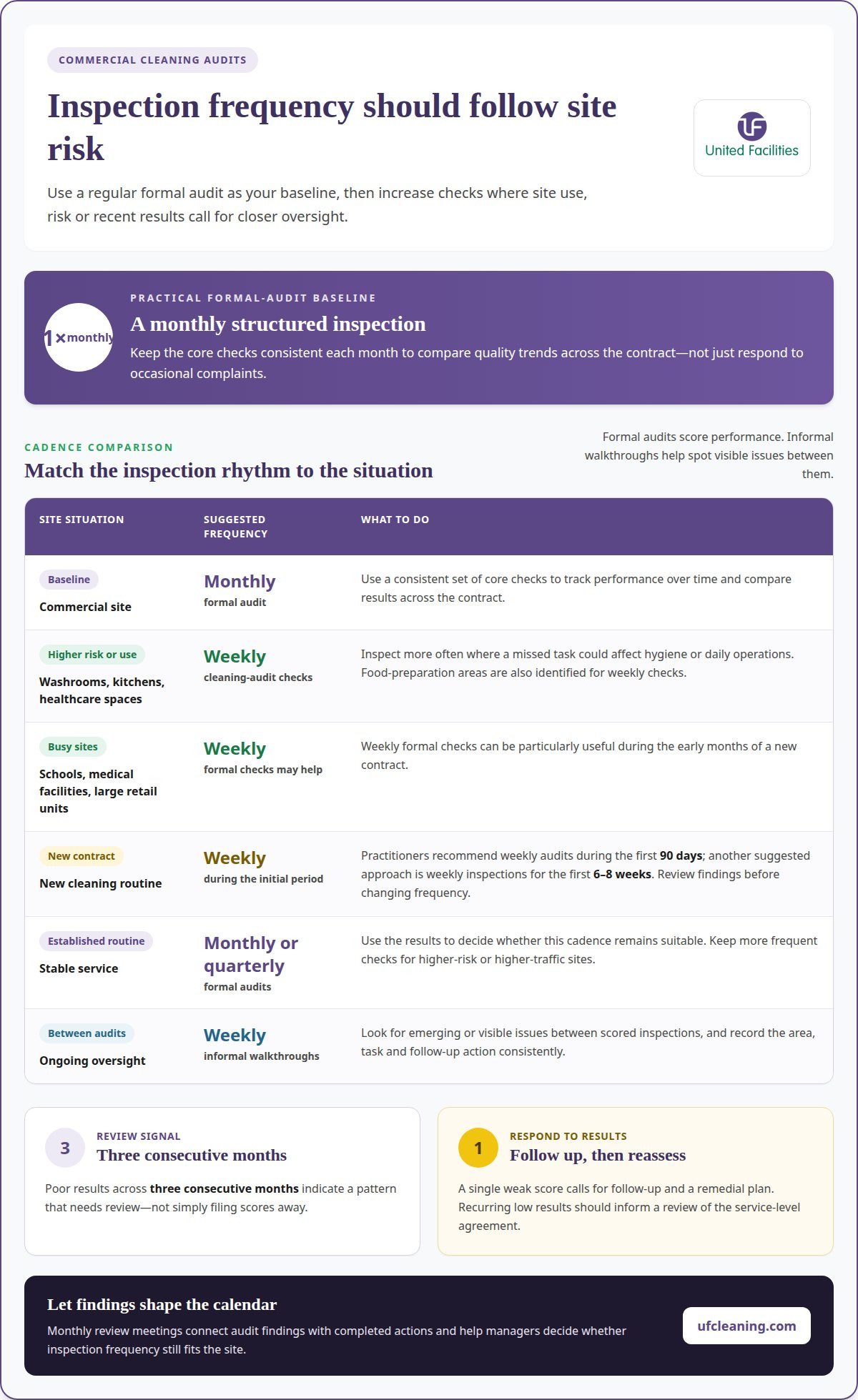
Set a formal audit schedule around site risks, cleaning activity and recent results. A monthly structured inspection is a practical baseline for commercial sites. It gives managers a consistent view of performance across the contract instead of relying on occasional complaints. Keep the core checks consistent each month to compare quality trends over time.
Inspect more often where missed tasks could affect hygiene or daily operations. Washrooms, kitchens and healthcare spaces may need weekly cleaning-audit checks. Busy schools, medical facilities and large retail units can also benefit from weekly formal checks, particularly during a new contract’s early months. Weekly informal walkthroughs help managers spot emerging issues between scored inspections.
Use a closer schedule when a cleaning routine is new. Practitioners recommend weekly audits during the first 90 days of a new contract; another suggested approach is weekly inspections for the first 6-8 weeks. The right onboarding plan should give managers enough observations to spot recurring problems and assess whether corrective work lasts. Record findings consistently, including the area, task and follow-up action.
- New contract: schedule weekly formal inspections during the initial period, then review the findings before changing frequency.
- High-risk areas: check washrooms, food-preparation areas and healthcare spaces weekly.
- Established routine: use monthly or quarterly formal audits, with more frequent checks for higher-risk or higher-traffic sites.
- Between audits: carry out weekly informal walkthroughs to identify visible issues promptly.
Use results to adjust the inspection calendar, not simply file scores. Three consecutive months of poor results indicate a pattern that needs review. A single weak score calls for follow-up and a remedial plan; recurring low results should inform a review of the service-level agreement. Monthly review meetings help managers connect findings with completed actions and decide whether the inspection frequency remains suitable.
How does a cleaning quality inspection checklist improve contractor accountability?
A checklist makes a cleaning contract measurable by linking each observed result to an agreed task standard. Inspectors can record whether floors, surfaces and touch points meet that standard, then note the location and corrective action for any failure. Consistent criteria help managers compare performance fairly and spot recurring patterns instead of relying on impressions.
Choose one scoring method and define it before inspections begin. A 0-4 scale gives each area a clear performance level:
- 4: no observable defects.
- 3: a minor defect that does not affect the overall impression.
- 2: a noticeable defect requiring attention at the next visit.
- 1: a significant defect requiring immediate attention.
- 0: the area was not cleaned, or a health or safety risk is present.
A five-point approach can instead use the APPA cleanliness scale, which runs from Level 1, the highest standard, to Level 5, the lowest. Keep it distinct from the 0-4 rubric. For a simpler checklist, mark each task pass, fail or needs attention; define “needs attention” as partial compliance, not a pass.
Weighted scoring reflects the relative importance of different spaces. One example assigns washrooms 25%, offices and desks 20%, entrances and reception 15%, corridors and stairwells 10%, and consumables and equipment 5%. Calculate an overall result by multiplying each area’s score out of 4 by its weighting, adding the results, then dividing by 4. Alternatively, divide points earned by maximum applicable points and multiply by 100: 30 out of 34 equals 88.2%.
Set the pass threshold in the contract, then connect failed items to evidence, an owner and a re-inspection. A score of 1 calls for urgent attention; a score of 2 requires corrective cleaning. For ongoing cleaning needs, commercial cleaning support can align delivery with clear site standards and documented inspection findings.
COSHH, chemical storage, safety data sheets and PPE checks
A useful cleaning audit checks safe chemical handling as well as visible cleanliness. UK commercial premises must account for requirements involving the Health and Safety Executive (HSE), Control of Substances Hazardous to Health (COSHH) and Food Standards Agency (FSA). Make these checks observable and document them, rather than leaving safety as a general comment.
For each cleaning product in use, record whether its container is labelled, securely stored and suitable for its intended task. Check that cleaning staff can access the relevant safety data sheet and that COSHH assessment records reflect the products and work being audited. Record damaged packaging, unclear labels or storage beside food as specific findings requiring corrective action.
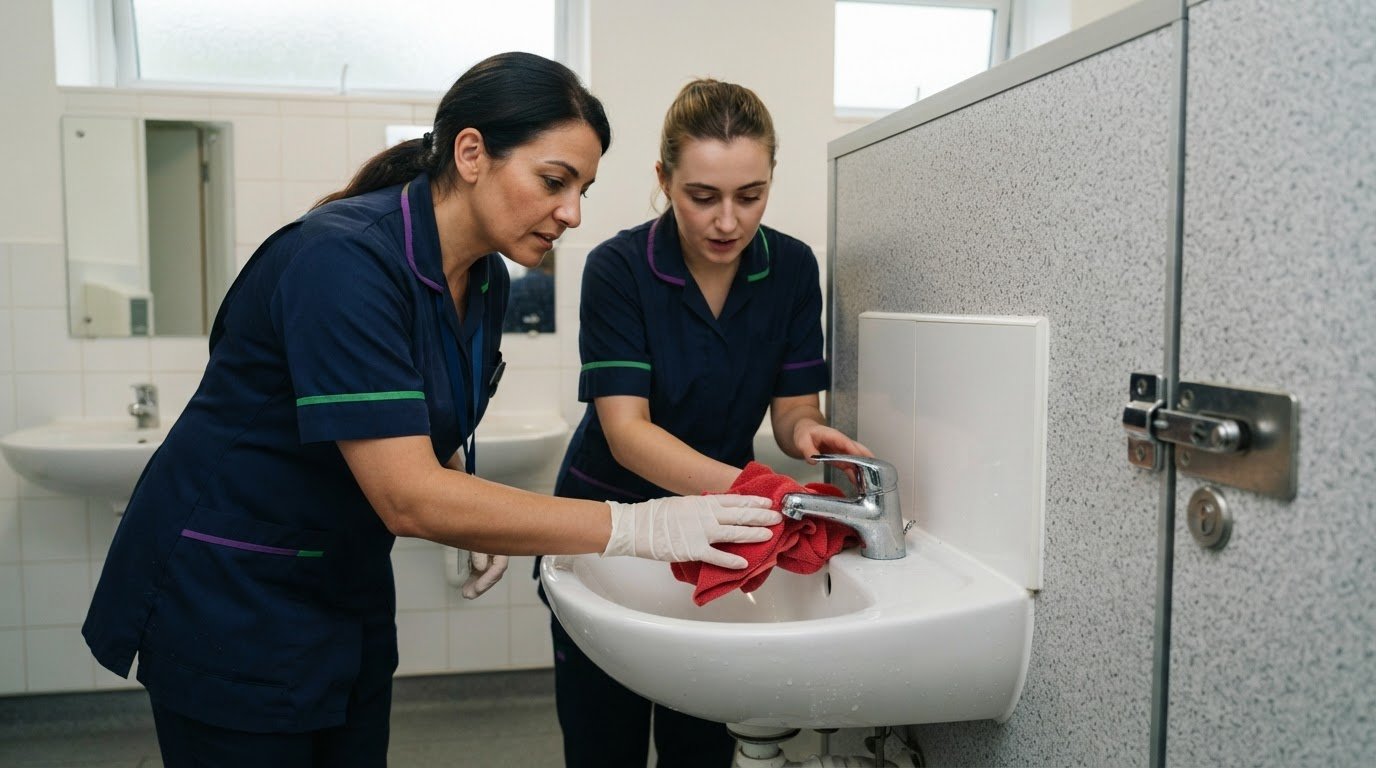
Include PPE as a task-based check. Record whether the required protective equipment is available, in usable condition and worn during the relevant cleaning activity. For example, a washroom inspection can record glove use, product storage and completion of the cleaning log. In a kitchen, check that chemicals are kept separate from food-contact areas.
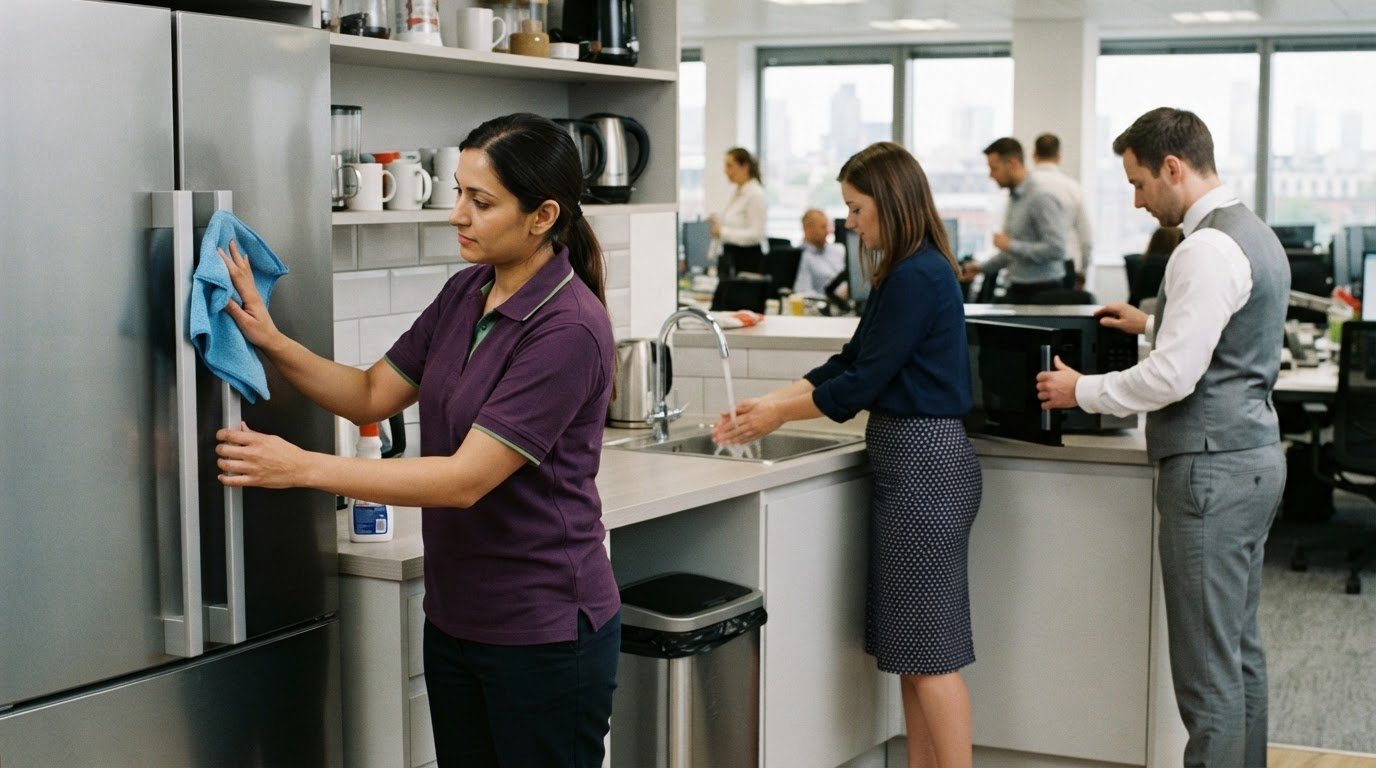
Organise the form by workplace zone, with criteria suited to each space. Reception checks might cover touch points, floors and bins; washroom checks can cover toilets, basins and replenished supplies. Kitchens need checks for worktops, fridges and safe chemical separation. Include offices, corridors or clinical rooms only if they are part of the site.
- Product records: note the product, storage condition and accessible safety data sheet.
- PPE: record availability, condition and use for the observed task.
- Cleaning evidence: review logs for completed tasks, not vague notes.
- Corrective follow-up: assign an action and record its completion.
These examples make the audit useful after a complaint: managers can identify the affected zone, review documented checks and track the response. Tailor the criteria to the building’s activities, products and cleaning schedule, then update the checklist when those conditions change. This keeps the inspection relevant to the site, rather than relying on a generic form that overlooks its actual risks.
Cleaning audit template design
Yes, a free downloadable commercial cleaning audit scorecard template can be a useful starting point. Adapt its zones, task frequencies and evidence fields to the building, as a generic form may omit site-specific work.
Start with the site name, inspection date, auditor, supervisor and area inspected. According to the International Organization for Standardization, ISO 9001:2015 is an international quality management standard used as a framework for cleaning audits. A clear record helps connect each observation with its location and follow-up action.
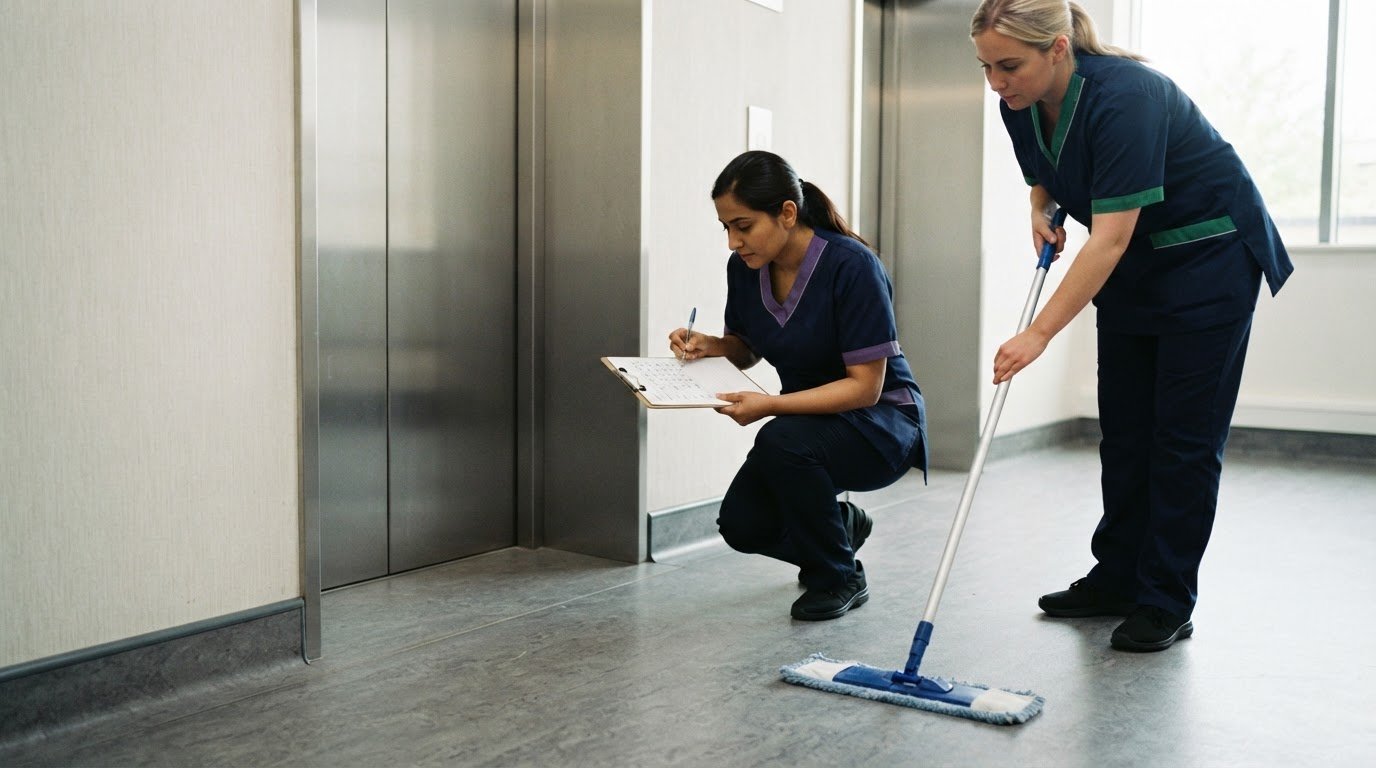
List tasks alongside their expected daily, weekly or monthly frequency. For example, set daily checks for touch points and floors, then record whether the work was completed. Include fields for the applicable standard, findings, photographs of deficiencies and assigned corrective actions. This gives managers evidence to review instead of vague notes.
- Entrance and reception: record floor condition, visible marks and the cleanliness of touch points, so the first impression has defined criteria.
- Offices: include desks, shared surfaces and bins, making routine checks relevant to daily use.
- Washrooms: list fixtures, dispensers and odour observations, so missed tasks are recorded clearly.
- Healthcare areas: use area-specific colour coding; the BICSc system assigns yellow to clinical spaces.
- Staff and equipment: note visible identification, suitable products and whether a supervisor audited the site during the current month.
Where BICSc colour-coded equipment is used, the scorecard can record whether the correct tools stay within their designated zones. Four-colour-coded equipment helps reduce the risk of cross-contamination between cleaning areas. The checklist should also capture completed cleaning logs, not general statements such as “all done”.
Before adopting a template, remove irrelevant tasks and add site-specific areas, such as a kitchenette or meeting room. Review the form when the building’s use or cleaning routine changes, then keep the same fields for comparable inspections. Arrange a site-specific cleaning plan to align scheduled tasks with your building’s requirements.
UF Cleaning
UF Cleaning helps organisations set clear site standards through commercial cleaning and facilities support. When an audit highlights recurring concerns, a consistent cleaning routine can support agreed requirements and make follow-up more straightforward. UF Cleaning provides office cleaning, housekeeping, hotel management and office hard floor cleaning, with plans tailored to each organisation’s occupancy, access arrangements, floor types and the spaces that need the most attention.
For a scorecard to be useful, its findings should inform the cleaning schedule and the areas receiving attention. UF Cleaning uses real-time quality controls as part of its service delivery, supporting oversight alongside inspections. The scorecard remains a practical tool for recording site-specific criteria, identifying issues and tracking corrective actions.
If you’re reviewing cleaning arrangements or planning a new contract, contact UF Cleaning to discuss your requirements.
Make your next cleaning review more purposeful
A commercial cleaning audit scorecard template is most useful when it informs decisions, not just record-keeping. Use each review to improve how site requirements are communicated and how the cleaning routine responds to changing use. When spaces, priorities or schedules shift, revisit the criteria so inspections remain relevant to the people using the building.
An audit can also support a focused conversation about cleaning arrangements. UF Cleaning provides commercial cleaning, housekeeping and hotel management for organisations. Clear expectations and useful inspection records give both parties a practical basis for discussing how cleaning is delivered and where attention is needed.
If you’re considering a new arrangement or reviewing existing requirements, contact UF Cleaning about your cleaning needs. A thoughtful next step can help turn audit findings into a clearer plan for your workplace.
Frequently Asked Questions
What Is a Cleaning Audit?
A cleaning audit is a documented review of whether work meets agreed site requirements. It may combine direct observation, completed task records and evidence of follow-up. For example, an auditor could compare a meeting room’s condition with its cleaning log, then record any mismatch for review. The purpose is to create a consistent basis for discussing service quality, not simply to note whether a space looks clean.
What key areas should your commercial cleaning checklist PDF cover?
A useful PDF should cover every space and task included in the cleaning arrangement, with clear criteria for each. Include entrances, shared facilities, work areas, floors, surfaces, equipment and consumables where relevant. Add fields for the inspection date, observations, supporting evidence and action owner. For example, a reception desk can have a specific check for visible marks instead of a broad “area clean” tick.
Can this scorecard be used in medical or other specialised facilities?
Yes, if the scorecard is adapted to the facility’s activities and agreed cleaning requirements. A medical centre may need separate checks for treatment rooms, waiting areas and staff facilities, rather than one general healthcare rating. Keep specialist criteria distinct from ordinary office tasks and record which areas were inspected. The scorecard supports oversight but should sit alongside the site’s own procedures.
How Can You Tell a Real Audit from a Rubber Stamp?
A genuine audit records specific observations that another reviewer can understand. Note the location, task, evidence and any assigned action, rather than giving identical ratings without supporting detail. For example, a finding about a marked floor should identify the area and describe what was observed. Compare inspection records with recurring complaints and follow-up notes to see whether the documented picture reflects day-to-day conditions.
How to use a scoring rubric guide for accurate audits?
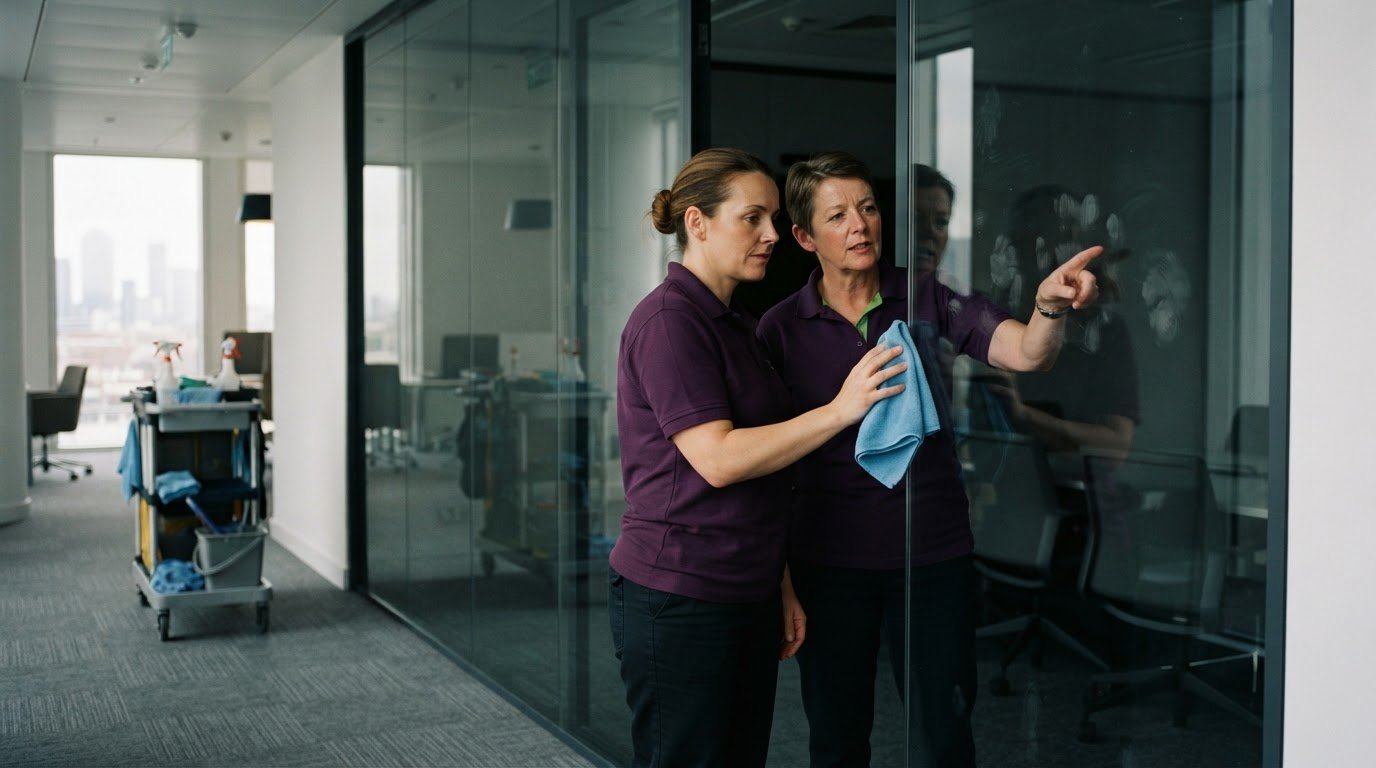
Use the rubric as a shared reference before scoring, so inspectors apply the same standard to comparable tasks. Define acceptable, partial and failed work, then give practical examples such as streak-free glass or an emptied and cleaned bin. If two auditors judge the same item differently, review the wording and evidence together. Record the reason for each low rating to support consistent follow-up.
What should a commercial cleaning audit scorecard include?
A commercial cleaning audit scorecard template should identify the site, inspection areas, relevant tasks and expected standards. Include a scoring method, space for observations, evidence of deficiencies, and fields for corrective actions and re-inspection outcomes. Add a section for items that do not apply, so they are not mistaken for failures. Keep the form easy to complete while retaining enough detail to track issues between reviews.