What if a cleaning issue could be identified before it becomes a complaint? Periodic inspections provide valuable oversight, but they can reveal a missed task only after building users have noticed it. Commercial cleaning real-time quality control brings information about service delivery closer to when work is carried out, helping teams review concerns and take appropriate action promptly.
Managers need clear oversight without disproportionate paperwork, whilst cleaning teams need feedback that is timely, fair and practical. Real-time monitoring isn’t a camera-led inspection regime or a replacement for formal audits. It’s part of a responsive process that connects observations with communication and corrective action. UF Cleaning includes real-time quality monitoring through the Taskbe platform as part of its managed cleaning service.
This explainer explains how live monitoring differs from inspections and quality audits, what an effective reporting and follow-up process should cover, and how technology can support accountable, consistent service. It also sets out practical ways to tailor cleaning checks to a facility’s priorities and schedule.
Key Takeaways
- Commercial cleaning real-time quality control makes timely quality information available to support action whilst cleaning is underway.
- Live monitoring, scheduled inspections, end-of-shift checks and attendance tracking serve different purposes.
- Build a clear check-to-resolution process: define standards, capture evidence, review issues, assign action and verify the outcome.
- Choose evidence methods that suit how the site is used and cleaned, then pilot the reporting and review process in a defined area.
- UF Cleaning includes real-time quality monitoring through the Taskbe platform as part of its recurring commercial cleaning service.
What does real-time quality control mean in commercial cleaning?
Commercial cleaning real-time quality control means gathering timely information about cleaning standards so a concern can be reviewed and acted on whilst service is underway. It makes the process more visible, but it isn’t simply a record of who attended or which tasks were marked complete. A digital log can show that a task was recorded; it doesn’t, by itself, prove that the space meets the agreed standard.
This distinction matters in a busy facility. A facilities manager needs a clear view of whether priorities are being met, cleaning staff need specific and fair feedback, and building users benefit when issues are considered promptly. In its broad sense, Quality control involves checking work against requirements. In practice, commercial cleaning real-time quality control connects that principle to timely observation, communication and follow-up.
How is real-time quality control different from a cleaning audit?
A cleaning audit is a structured check against agreed criteria, often carried out at planned intervals. It can help assess performance consistently and identify recurring patterns, but it may not show what is happening between checks. Real-time control focuses on surfacing relevant information promptly, giving responsible people an opportunity to respond whilst service is in progress. Neither approach replaces the other: audits provide a considered review, whilst live information supports day-to-day attention to the same standards.
End-of-shift checks offer a later snapshot, while attendance records show presence rather than cleanliness. Used together, these records can provide context, but each answers a different question: was someone present, was a task recorded, or did the area meet its required standard?
What should quality control measure?
Start with the agreed cleaning scope, the facility’s priorities and outcomes that can be observed. For example, a shared area might need floors free of visible debris, whilst a washroom check could focus on whether specified surfaces have been cleaned and consumables handled in line with the agreed scope. The right checks depend on how each space is used and when it is cleaned.
Keep task completion separate from checks of cleanliness and hygiene. A completed-task record indicates that an activity was logged; an outcome check considers whether the required condition was achieved. Clear criteria make feedback constructive rather than subjective. A universal checklist is unlikely to reflect every building’s layout, use or priorities, so managers and cleaning teams should understand the standards that apply to their areas.
How does real-time cleaning quality control work from check to resolution?
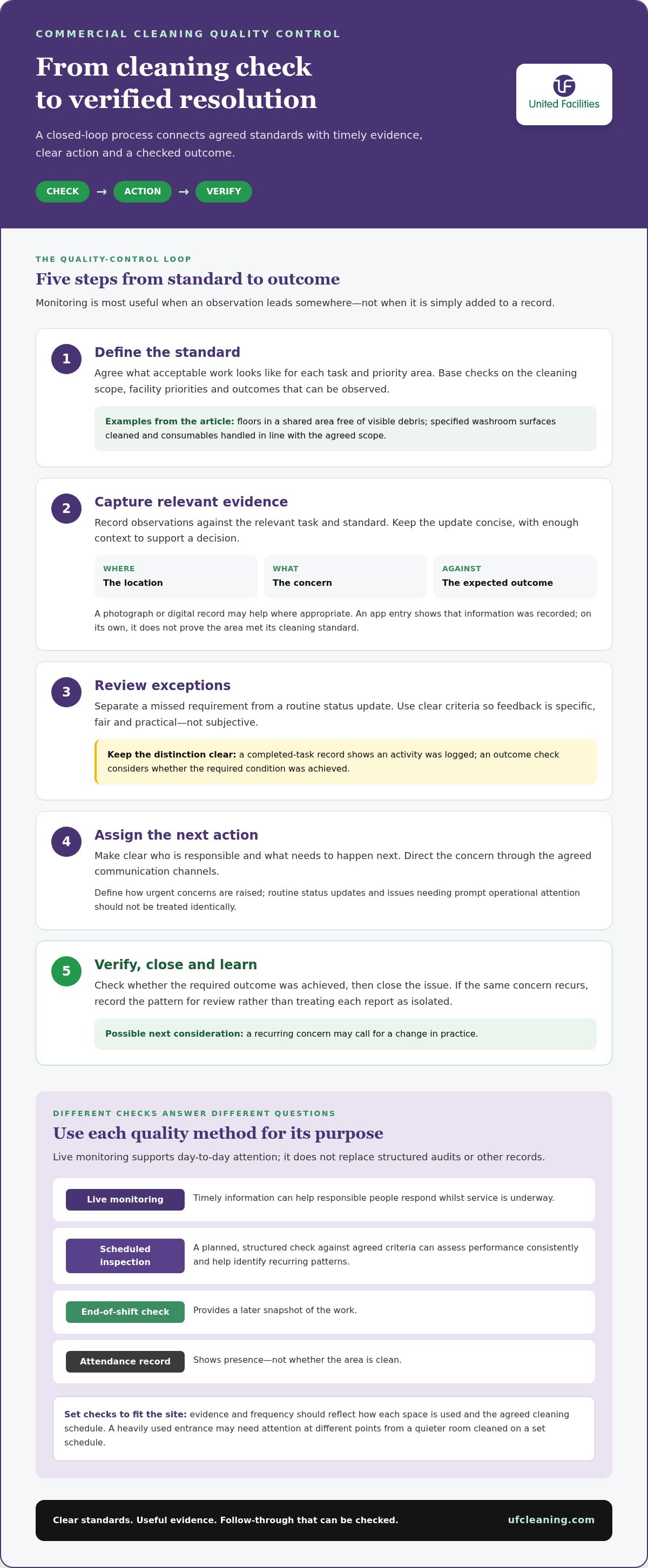
Useful monitoring is a closed loop, not a stream of activity records. It starts with clear standards and moves through evidence, review, action and verification. Each stage should connect to the agreed cleaning scope, so a reported concern has a defined outcome rather than simply being logged.
- Define standards: agree what acceptable work looks like for each task and priority area.
- Capture evidence: record relevant observations against the task and standard.
- Review exceptions: distinguish a missed requirement from a routine update.
- Assign action: make clear who is responsible and what needs to happen next.
- Verify and learn: check the result, close the issue and consider whether a recurring concern calls for a change in practice.
Checking frequency and evidence should reflect how the site is used and the agreed cleaning schedule. A heavily used entrance may need attention at different points from a quieter room cleaned on a set schedule. Set checks around the facility’s priorities, using resources such as ISSA Clean Standards as a reference for thinking about measurable cleaning outcomes.
What happens when a cleaning issue is reported?
A useful report identifies the location, the concern and the required outcome. “Washroom needs attention” gives less direction than specifying which area needs a check and what condition is expected. The issue can then be directed to the person responsible through the service’s agreed communication channels, with the next action made clear.
Routine status updates and urgent concerns shouldn’t be treated identically. The process should define which issues need prompt operational attention and how they are raised. Once action has been taken, someone should check whether the required outcome was achieved. If the same concern recurs, record the pattern for review rather than treating each report as an isolated event.
Which evidence makes a quality update useful?
Keep records concise and link them to the relevant task, standard and time, so they provide enough context to support a decision. A photograph or digital record may help where appropriate, but evidence should be collected and managed consistently. An app entry can show that information was recorded; by itself, it doesn’t prove the area met its cleaning standard.
This is the practical value of commercial cleaning real-time quality control: observations can inform action and follow-up, while records help teams understand whether an issue has been resolved or needs further attention. UF Cleaning’s commercial cleaning support includes real-time quality monitoring as part of a managed service.
Which commercial cleaning quality-control methods provide useful evidence?
No single record gives a complete picture of cleaning quality. Scheduled inspections assess conditions against agreed standards, digital task records show what has been logged, feedback highlights user experience and operational review helps identify patterns. Used together, these methods can support commercial cleaning real-time quality control without reducing staff to tracking data.
| Method | Question it answers | Timeliness | Reliability and staff burden | Follow-up potential |
|---|---|---|---|---|
| Scheduled inspections | Does the area meet the agreed standard at the time of the check? | Periodic, according to the inspection plan. | Useful when criteria are clear and checks are consistent; requires time for inspection and recording. | Can document a shortfall and support a planned corrective action. |
| Digital task records | Has a task or activity been recorded? | Can be timely if entered during the work. | Provides a record of activity, not necessarily the result; recording adds a step for staff. | Can help clarify what was scheduled or logged for review. |
| Feedback | What have building users or colleagues noticed? | Varies according to when feedback is given. | Offers direct context, though reports may differ in detail and perspective. | Can direct attention to a location or concern for assessment. |
| Operational review | Are issues recurring, and could the process or schedule need attention? | Usually considered at agreed review points. | Brings records and observations together; requires time to assess them fairly. | Can inform adjustments to priorities, communication or working practices. |
GPS, QR-code scans and other location signals can indicate that a person or device was at a particular point, but they don’t establish whether a surface was cleaned to standard. Their value is limited unless they are interpreted alongside the task, agreed outcome and suitable quality checks. A timestamp or scan is one piece of context, not a complete verdict.
Can digital monitoring prove that a space is clean?
Not on its own. A digital record may show that an activity was logged; evidence of the result comes from checking the relevant outcome against a clear standard. Combining task records with proportionate inspections or well-described feedback gives managers a more useful basis for review than relying on a single scan, sensor or timestamp.
How can monitoring remain fair to cleaning teams?
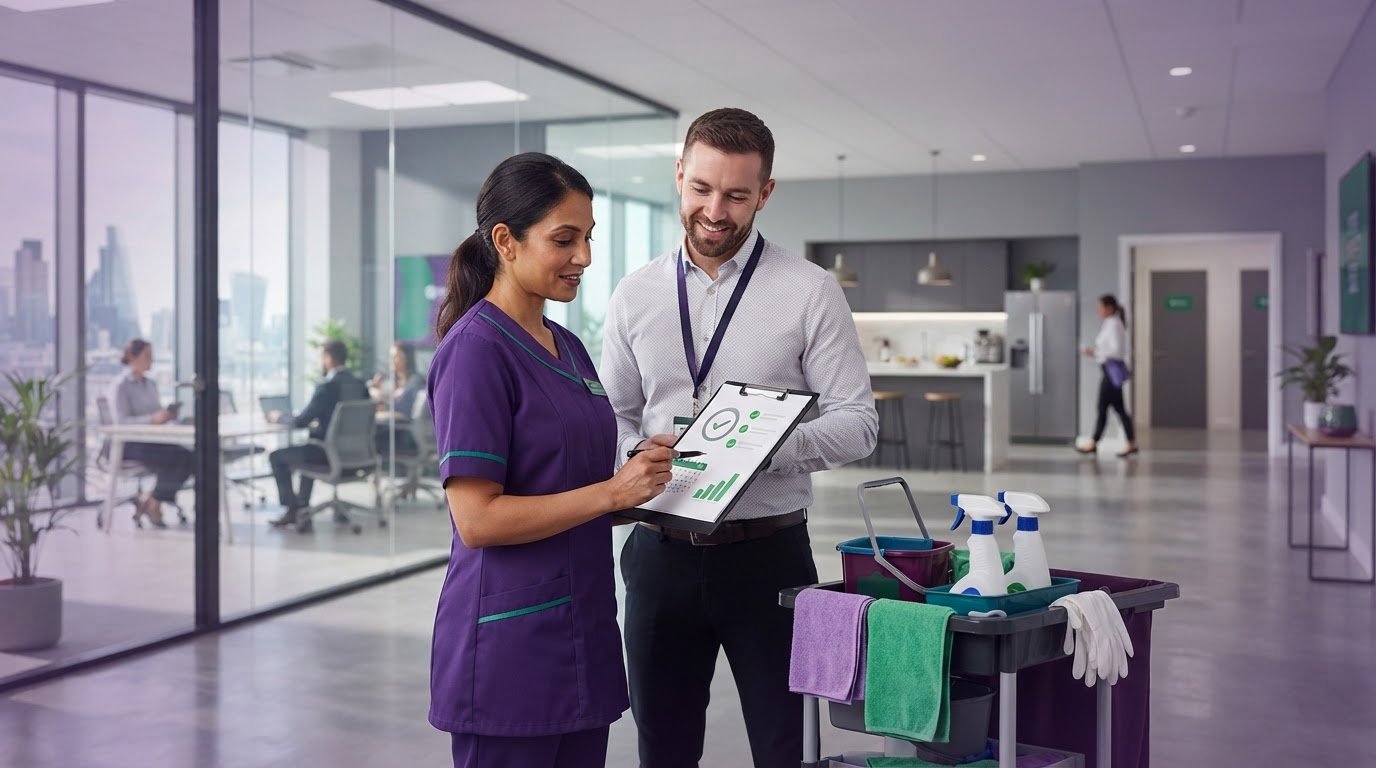
Explain what is being monitored and why, and make the expected standard clear before reviewing records. Use findings to identify where teams need support, where a process may be unclear or where concerns recur, rather than assuming an individual is at fault. Proportionate checks and respect for privacy help keep oversight focused on service quality and workable conditions.
How should facilities teams put real-time quality control into practice?
Begin with a manageable process, not a technology decision. Commercial cleaning real-time quality control is most useful when the people doing the work, reviewing the information and agreeing next steps share a clear understanding of the service standard. A defined pilot can show whether the process fits the site before it is extended more widely.
Use this checklist to establish the foundations:
- Set the standard: describe the expected outcome for priority tasks and areas in clear, observable terms.
- Agree ownership: identify who records a concern, who reviews it and who arranges or carries out the next action.
- Choose reporting routes: make it clear how routine updates and issues needing prompt attention should be raised.
- Set a review rhythm: agree how often live information, unresolved concerns and recurring themes will be considered.
- Pilot in a defined area: test the workflow in a suitable part of the facility, gather feedback and refine it before wider use.
How do you set useful cleaning standards and measures?
Translate the agreed scope into practical expectations for the tasks and areas that matter most. Describe the intended result, not just the action: a task record may show that a floor was scheduled for cleaning, while a quality check considers whether it meets the agreed condition. Measures should help assess outcomes and guide improvement, rather than reward activity counts alone. Make responsibilities clear so reporting leads to a considered response.
How should managers review live quality information?
Use a consistent review routine to consider exceptions and outstanding concerns, keeping the level of review proportionate to the site and service. One report is a prompt to investigate, not proof of a lasting trend. Over time, compare relevant reports and consider whether repeated concerns relate to changes in site use, priorities or working processes. Record agreed actions and revisit them, so operational reviews inform practical improvements rather than simply documenting discussion.
During a pilot, check whether staff understand the standards, whether reporting routes are workable and whether managers can follow concerns through to an outcome. Apply what you learn before extending the approach across a wider estate; different sites may have distinct patterns of use and cleaning requirements.
When reviewing your current arrangements, ask whether expectations are clear, whether issues reach the right people and whether review leads to useful action. UF Cleaning’s managed commercial cleaning service includes real-time quality monitoring.
How does UF Cleaning support real-time commercial cleaning quality control?
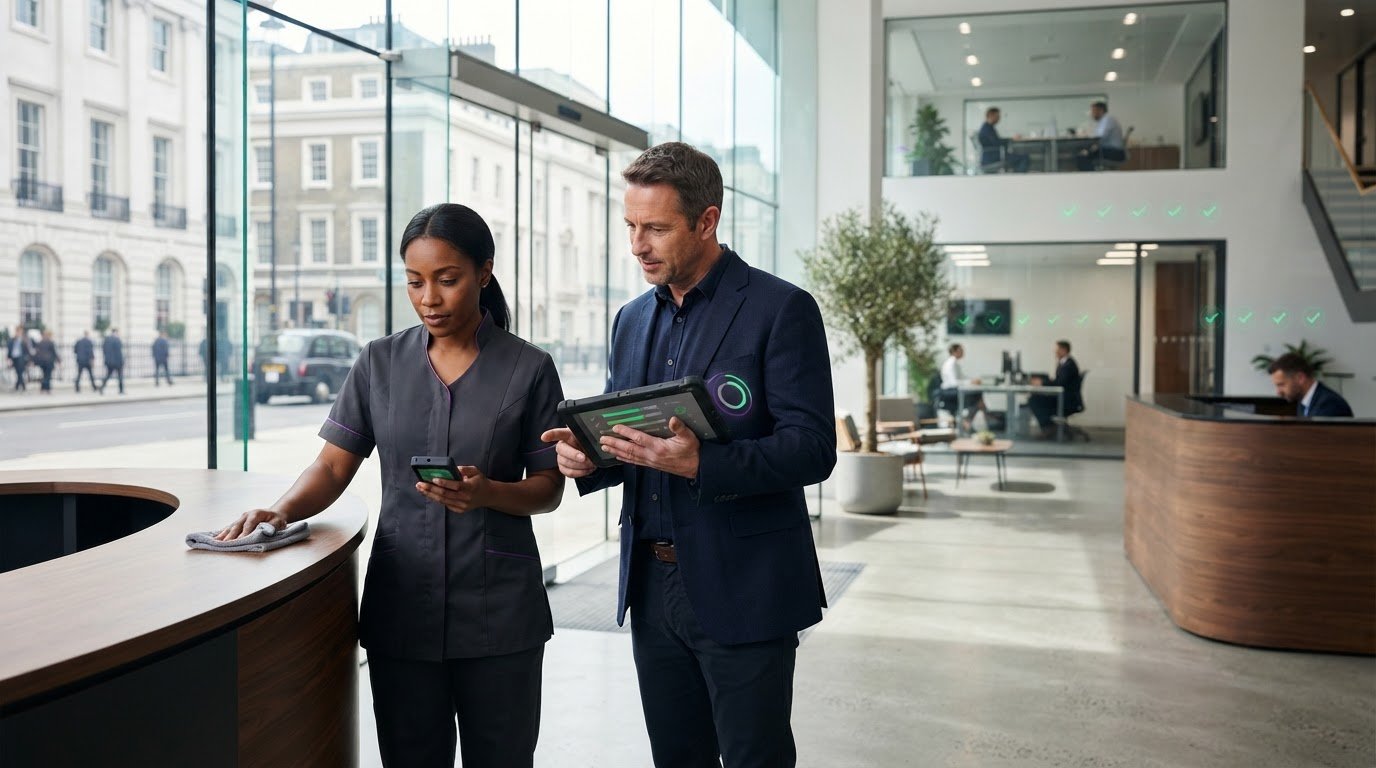
For organisations, commercial cleaning real-time quality control is most valuable when it forms part of the service rather than being treated as a separate software purchase. UF Cleaning includes real-time quality monitoring through the Taskbe platform within its recurring commercial cleaning service. This makes quality information more visible alongside the cleaning work and the standards agreed for the site.
Monitoring sits within a broader service relationship. Cleaning schedules and support can be tailored to an organisation’s requirements, whilst clear operational communication helps managers and cleaning teams stay aligned on priorities. UF Cleaning also provides 24/7 operational support. Monitoring contributes visibility, while people and agreed processes remain central to how information is understood and acted upon.
What role does Taskbe play in a cleaning service?
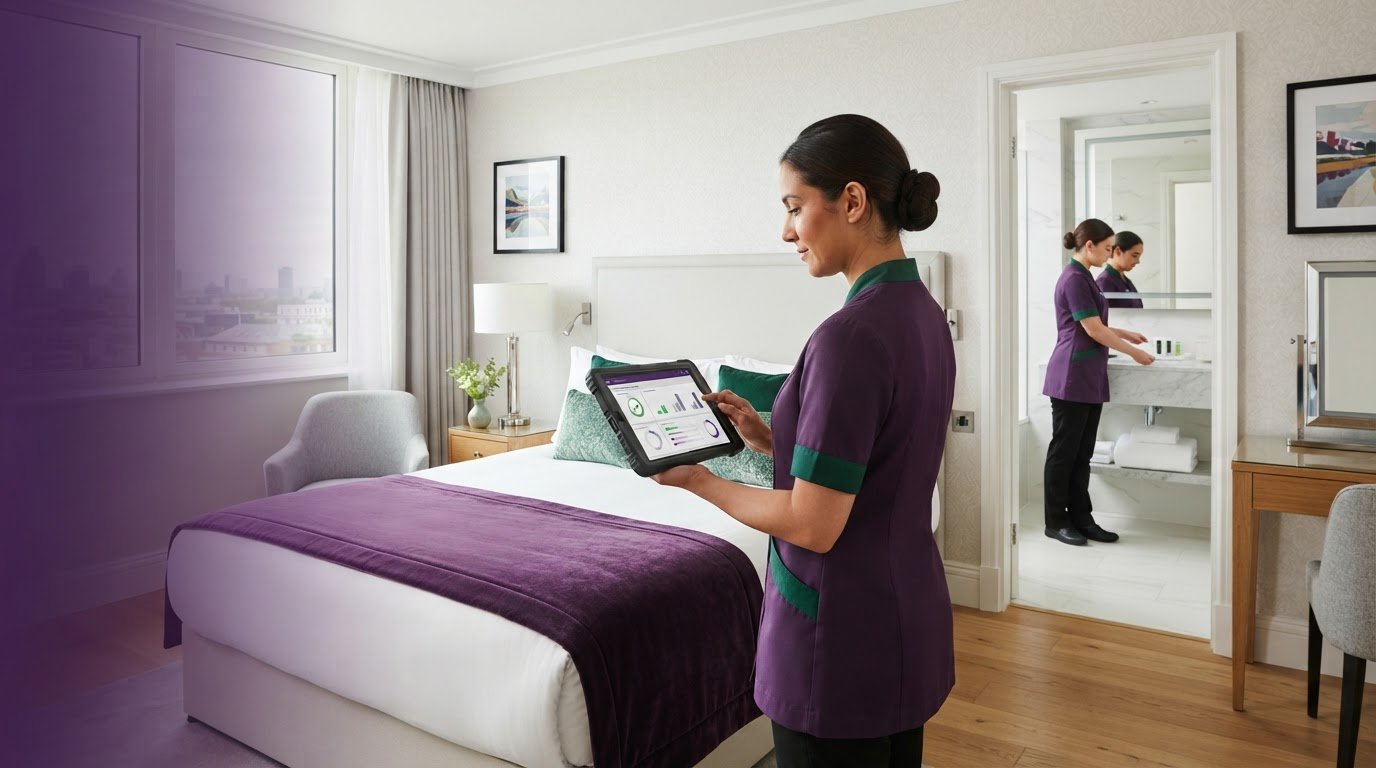
Taskbe is the platform UF Cleaning uses for real-time quality monitoring as part of recurring cleaning. It supports visibility of quality information during service delivery in relation to the standards agreed for the organisation. The focus is the managed cleaning service and its quality monitoring.
Technology can help make service information more timely, but it doesn’t replace professional judgement, clear expectations or communication between the people responsible for the work and the facilities team. Monitoring is one part of maintaining a consistent service, not an automatic verdict on every area or task.
What are the next steps for organisations considering a service?
A useful starting point is to outline the type of site, its cleaning priorities and the schedule that would support its day-to-day use. Consider which areas need particular attention, what outcomes matter most and how quality information should support communication. These details help shape recurring cleaning support around the organisation’s requirements, rather than relying on a one-size-fits-all arrangement.
UF Cleaning works with organisations across commercial settings, adapting schedules to their needs and including real-time quality monitoring within recurring cleaning. If you’re considering how a managed service could support your facilities and quality priorities, request a free quote.
Build greater visibility into your cleaning standards
Effective commercial cleaning real-time quality control connects agreed standards with timely information, clear communication and follow-up. Digital activity records can add context, but they don’t alone confirm that an area meets its required standard. Combining monitoring with proportionate checks helps facilities teams spot concerns, respond constructively and learn from recurring patterns.
UF Cleaning includes real-time quality monitoring through the Taskbe platform as part of its recurring commercial cleaning service. Since 2010, the company has served organisations with flexible cleaning schedules, eco-friendly products and 24/7 operational support. This managed approach brings monitoring into the wider service, with cleaning support tailored to organisational needs.
For clearer quality oversight tailored to your workplace, request a free quote for commercial cleaning support.
Frequently Asked Questions
What is real-time quality control in commercial cleaning?
Commercial cleaning real-time quality control is the timely capture and review of information about cleaning standards, so a concern can be considered whilst service is underway. It connects agreed expectations with observation, communication and follow-up. Unlike an attendance record, it focuses on quality information, and unlike a scheduled inspection, it can help teams respond between formal checks. A task marked complete alone doesn’t confirm the required cleaning outcome.
How does real-time cleaning monitoring work?
It works by setting clear standards, recording relevant information during service, reviewing concerns and assigning appropriate follow-up. For example, a reported issue should identify the area and expected result, then be directed through the agreed communication route. Someone can check whether the concern has been addressed and note recurring issues for review. The process should be understood by managers and cleaning staff.
Can real-time quality control improve commercial cleaning standards?
It can support more consistent standards by making concerns visible sooner and helping teams respond before they remain unresolved. Its value depends on clear criteria, useful evidence and follow-through, rather than the volume of records collected. Reviewing repeated concerns can also help identify whether expectations, site priorities or working processes need attention. Monitoring supports improvement, but it doesn’t automatically guarantee a particular standard or outcome.
Does cleaning quality monitoring mean staff are being tracked?
Not necessarily. Quality monitoring is intended to help assess cleaning against agreed standards; it shouldn’t reduce staff performance to location or activity data. Attendance records, QR scans or location signals may show that an activity was recorded or that someone was present, but they don’t establish cleaning quality. Explain the purpose and expectations clearly, use information fairly, and consider staff privacy and practical working conditions.
What should a commercial cleaning quality report include?
A useful report should connect an observation to its context: the relevant area or task, the agreed standard, when the information was recorded and what outcome needs attention. Where suitable, it may include supporting evidence, such as a concise written note or photograph. It should also make follow-up clear, including responsibility and whether the concern has been checked. Keep records proportionate and consistent, rather than gathering detail without a practical purpose.
Are QR codes or GPS enough to verify cleaning quality?
No. A QR scan or GPS location can indicate that a person or device was at a particular point, but it can’t confirm that a task was completed to the required standard. Treat these signals as limited evidence of activity, not a quality verdict. Pair them with clear cleaning criteria and appropriate checks of the result. A timestamp or scan is most useful when it provides context for a wider review.
How can facilities managers introduce real-time quality control without disrupting cleaning?
Start with a defined area and a small number of clear, observable standards linked to the agreed cleaning scope. Decide who records and reviews concerns, how issues are raised, and when unresolved items are considered. Ask cleaning staff whether the process is practical, then adjust it before extending it to other areas. A focused pilot helps facilities managers assess whether monitoring supports service delivery without adding unnecessary steps or administrative burden.