Height alone doesn’t determine the right cleaning method. Ground-level glazing may be suitable for cleaning from the ground, while higher or harder-to-reach windows require access planned around the building and its surroundings. For commercial window washing in the UK, the approach depends on height, façade design and site conditions, rather than one method for every property.
That distinction matters because shopfronts, office buildings and large commercial sites have different access and cleaning requirements. A well-planned service considers how to carry out the work safely and carefully while minimising disruption to the premises.
This guide explains which methods suit different building heights, how safety planning and staff training fit into the work, and what site surveys and quality checks involve. It also covers the practical factors that shape a cleaning plan, so you know what to expect before work begins and can assess whether the proposed approach suits your premises.
Key Takeaways
- Match the cleaning method to the building’s height, façade and access conditions rather than assuming one approach suits every site.
- Build safety planning and staff training into the work so access arrangements reflect the premises and the task.
- Use a site assessment to shape the cleaning plan, taking account of glazing, access, signage, parking and the surrounding area.
- Set quality reviews around the needs of each commercial premises, helping maintain a consistent standard as conditions change.
Commercial window cleaning methods for buildings of different heights
UK commercial window cleaning services can include external and internal glass cleaning, plus related work such as cladding, gutters and solar panels. The method depends on building height, glazing design, access and the surrounding space.
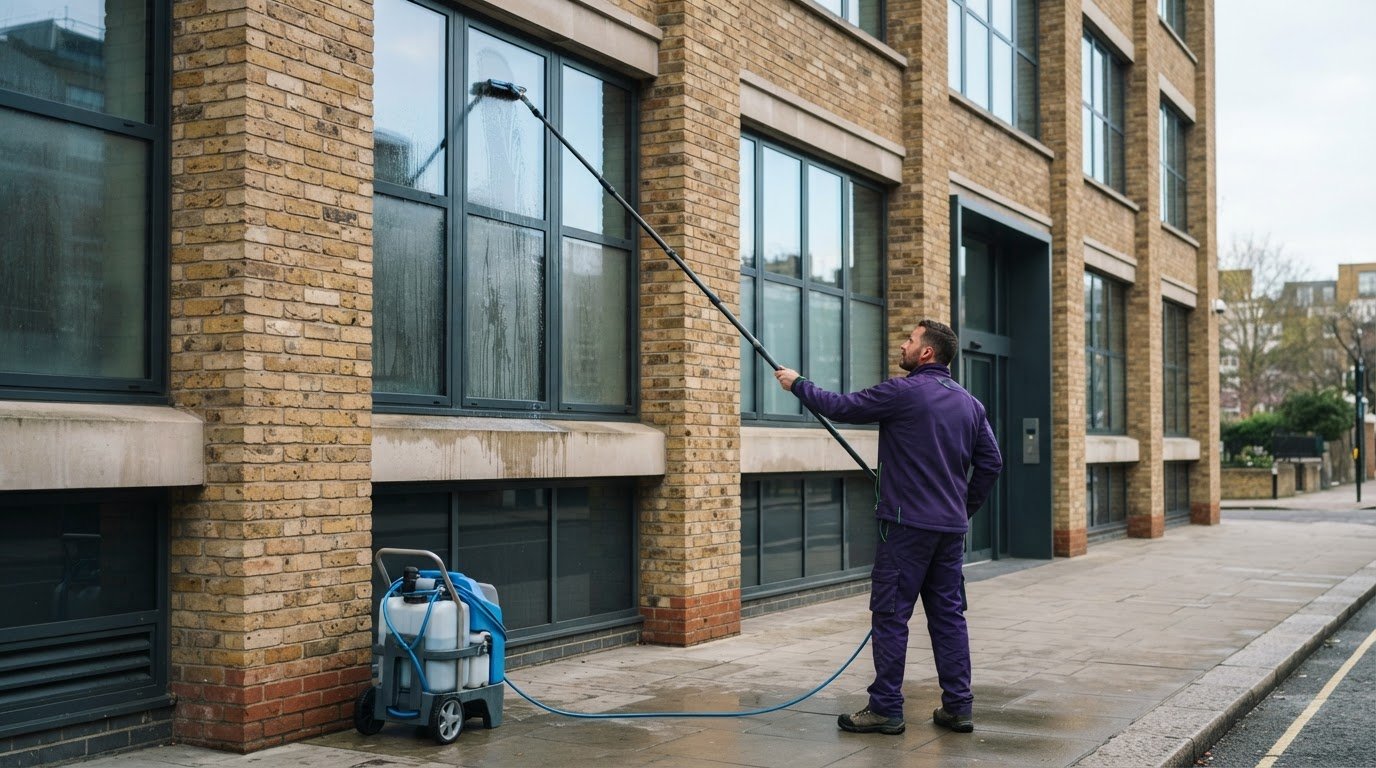
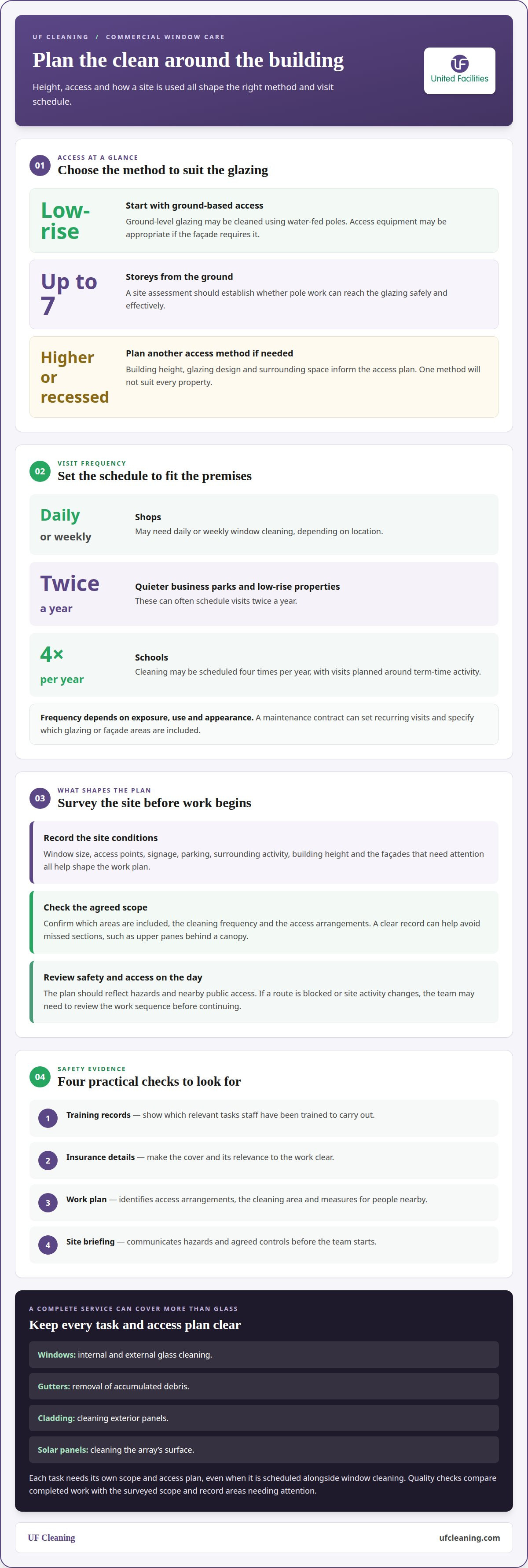
At low-rise premises, cleaning may be carried out from the ground using water-fed poles, or with access equipment if the façade requires it. For windows up to seven storeys from the ground, a site assessment should establish whether pole work can reach the glazing safely and effectively. Higher or recessed windows may require another planned access method.
Hotels, offices, schools and residential blocks each have distinct operational needs. A hotel may schedule work around guest areas, while an office may need clear access to entrances and meeting-room windows. Schools can plan around term-time activity, and residential blocks may require coordination around shared entrances and residents’ access.
Cleaning frequency should reflect exposure, use and appearance. Shops may need daily or weekly window cleaning, depending on location, while quieter business parks and low-rise properties can often schedule visits twice a year. Schools may schedule cleaning four times per year. A maintenance contract can set recurring visits and specify which glazing or façade areas are included.
Commercial window cleaning may also include work beyond the glass. Gutter cleaning removes accumulated debris, cladding cleaning addresses exterior panels, and solar panel cleaning focuses on the array’s surface. Each task needs its own scope and access plan, even when scheduled alongside window cleaning.
The price depends on the building and the work required. Factors include window size, access, parking, signage, nearby jobs and cleaning frequency. To prepare for a quote, record each façade and any access constraints, then agree the visit schedule and areas covered before work starts.
Health and safety, insurance and staff training
When choosing a commercial window cleaning service, look for a clear explanation of the method, access arrangements, staff training and insurance. Consider these details against the building’s specific risks, such as a busy entrance, school grounds or an exposed external walkway.
Public liability insurance is relevant because an injury to someone nearby could create liability. This matters at commercial premises where visitors, residents or staff use areas close to the cleaning work. Insurance is one part of a wider safety plan, alongside suitable equipment, trained staff and careful coordination.
Training should match the task. Staff need to know how to use the selected access equipment, handle cleaning materials, protect surrounding areas and communicate hazards. For example, work near a school entrance may require a clear separation between the cleaning area and pupils’ routes. At an office or shopping centre, teams can plan around pedestrian flows and entrances.
Useful health and safety documentation sets out the work area, access method, hazards and control measures. A site-specific assessment can also record nearby doors, overhead features, uneven ground and public access. Before work begins, the team can review these details and agree how to respond to changes, such as a blocked access route or unexpected activity nearby.
- Training records: show which relevant tasks staff have been trained to carry out.
- Insurance details: make the cover and its relevance to the work clear.
- Work plan: identifies access arrangements, the cleaning area and measures for people nearby.
- Site briefing: communicates hazards and the agreed controls before the team starts.
Assess safety compliance through practical evidence: procedures suited to the site, staff who follow them and records that reflect the work being done. At a school, office or commercial centre, these checks help establish whether the planned work can proceed safely with appropriate controls.
Site assessment, execution and quality checks
A structured site survey connects the building’s condition with a practical cleaning plan. At retail premises, access, height and nearby activity can affect the proposed work and quote.
Site survey process
The survey records window size, access points, signage, parking and surrounding activity. It should also identify which façades need attention and how often they require cleaning. At a retail unit, a projecting sign or restricted pavement access can affect the work plan. Nearby jobs and site access also inform the assessment, alongside the glazing and building height.
Use the survey to compare the proposed scope with your premises. Check that the quote describes the areas included, cleaning frequency and access arrangements. A clear record helps prevent sections being missed, such as upper panes behind a canopy or windows beside a busy entrance.
Cleaning execution
Before work starts, the team can use the agreed site plan to confirm the areas, method and access route. The work sequence should account for the building’s layout, from street-facing retail fronts to less visible rear elevations. A change in access or activity on site may mean reviewing the sequence before continuing.
During cleaning, teams can work through the agreed sections and keep the scope clear to the site contact. This makes it easier to spot missed panes or changes that affect the plan. For example, a newly obstructed entrance may mean cleaning another façade first.
Quality checks should compare the completed work with the surveyed scope. Inspect representative panes across different façades, including ground-level glass and higher sections, and record any areas needing attention. A completion record can note the location and reason for any follow-up.
For a tailored quote, provide the building address, approximate window areas, access details, signage constraints and preferred cleaning frequency. A site survey can then support a scope that reflects the actual premises rather than a generic allowance. Keep the agreed plan and review notes together so future visits can account for changes to the building or access.
Commercial premises served
Commercial window cleaning is relevant to more than office buildings. Each type of premises has its own occupants, operating routines and access points. Start by mapping who uses the building and where glazing affects daily activity.
In an office, windows around reception, meeting rooms and shared spaces contribute to the working environment. A site plan can distinguish these areas from less prominent elevations, helping teams coordinate cleaning with building operations. Hotels also have varied priorities: entrance glazing, guest-facing windows and service areas may need separate attention within the same property.
Retail premises place shopfronts directly beside public pavements. Ground-level glass is visible to passing customers, while signs, displays and entrances can shape the work area. A useful scope records the frontage and surrounding activity, then identifies the windows to clean without obstructing access to the shop.
Schools and education centres need plans that account for how pupils, staff and visitors move through the site. A university may have a different layout, with teaching buildings, shared facilities and windows across multiple façades. Industrial sites may include offices alongside manufacturing areas, so the survey should distinguish public-facing spaces from operational areas.
Event venues add another consideration: layouts and visitor flows may change between activities. Window cleaning can be planned around the areas in the agreed scope, with entrances and public routes identified before work begins. At residential blocks, shared access and residents’ movements also inform how the work is organised.
The key is to group a site by use, not just by façade. List the premises’ main areas, occupants and access routes, then align the cleaning scope with those priorities. This gives offices, hotels, schools, retail sites and venues a practical basis for planning service across their buildings.
Discuss cleaning requirements for your premises and outline the areas your team needs covered.
UF Cleaning: Commercial Window Washing UK
UF Cleaning provides professional commercial window washing and comprehensive cleaning solutions for organisations nationwide that require a coordinated maintenance plan for their premises. Our commercial cleaning services support a pristine, orderly workplace, while our specialist window, carpet and floor care covers all exterior and interior cleaning needs.
For organisations managing diverse environments across the UK, UF Cleaning also provides tailored housekeeping and facilities support services. These solutions suit premises where specific operational standards sit alongside wider cleaning requirements. Identify the areas your facilities team needs covered, then align them with the relevant service.
This joined-up approach helps you plan interior cleaning alongside external commercial window washing throughout the UK, whilst keeping each task within its appropriate scope. Contact UF Cleaning today to discuss your premises' cleaning requirements and request a free, no-obligation quote.
Plan a clear next step for your premises
A considered plan for commercial window washing in the UK should adapt as your premises changes. Refurbishment, new signage or a change in how spaces are used can affect which windows need attention and how the work fits into site operations. Keeping the cleaning scope up to date helps maintain a practical programme over time.
At your next planning review, note changes to the building, access routes or the areas that matter most to staff and visitors. A clear brief gives the conversation a useful starting point and helps connect window care with your premises’ wider cleaning needs.
UF Cleaning also provides Office Cleaning London, Housekeeping and Hotel Management. If you’re ready to discuss your window-cleaning requirements, contact UF Cleaning about your windows. A considered next step can help you move towards a programme that suits your building.
Frequently Asked Questions
How much does commercial window washing cost in the UK?
There is no single price for commercial window washing in the UK. The cost depends on the building, work required, cleaning frequency and access arrangements. Describe the premises and areas to be cleaned when requesting a quote, so the proposed scope reflects the job. A shopfront and a multi-storey office, for example, need different plans and resources.
What factors affect the price of commercial window cleaning?
Price depends on the scale and complexity of the work, including glazing area, access and cleaning frequency. The scope matters too: internal glass, external panes and additional surfaces involve different tasks. For a useful comparison, review what each quote includes, such as the elevations covered, visit frequency and access arrangements, rather than comparing headline totals alone.
How often should UK commercial buildings have their windows cleaned?
Frequency depends on the premises and its exposure. Shops may need daily or weekly cleaning, depending on location, while quieter business parks and low-rise properties can often schedule visits twice a year. Schools may have their windows cleaned four times per year. Treat these as planning examples, then consider weather exposure, public visibility and building use when deciding how the windows should look between visits.
What UK health and safety rules apply to commercial window cleaning at height?
Work at height requires a planned approach that considers the task, access and people nearby. Before cleaning starts, assess the work area, identify hazards and decide how to control them. A busy entrance, for example, may need a managed work zone, while an upper façade requires an access method suited to its layout. Staff should be trained for their assigned tasks.
What methods are used for commercial window cleaning, including water-fed poles and cradles?
Water-fed poles clean suitable windows from the ground, while cradles provide a platform suspended alongside a building. The choice depends on height, façade design, reach and access conditions. A pole may suit accessible glazing, while a cradle can reach sections that a pole cannot. The site plan should specify the method and the windows it covers.
What insurance and certifications should commercial window cleaners have in the UK?
Public liability insurance is an important consideration, as an injury to someone nearby could create liability. Ask for clear evidence of cover and relevant staff training. There isn’t one certification that automatically suits every job; credentials should relate to the work and its management. UF Cleaning lists CHAS Approved, ISO 9001 Certified, BICSc Member and Investors in People.