What if the most important part of event venue cleaning happens before the first guest arrives and after the last one leaves? When arranging professional event venue cleaning, the challenge is coordinating each stage around access, set-up and turnaround without compromising presentation or interrupting the event.
A single post-event clean may not be enough. Attendance, room layouts and event formats all affect what needs attention and when, from preparing guest-facing areas to responding discreetly to spills and restoring the venue afterwards. A clear brief helps keep changing requirements in view.
This guide explains how to plan cleaning before, during and after an event, define a practical scope and understand what to expect from a tailored service. It also covers how flexible scheduling, eco-friendly products and real-time quality monitoring through the Taskbe platform can support oversight. UF Cleaning provides event-specific cleaning designed to work around each function’s schedule.
Key Takeaways
- Plan cleaning across the full event cycle, from preparing guest areas to maintaining them during the function and restoring the venue afterwards.
- For event venue cleaning London, align the cleaning schedule with access windows, event timings and room set-up to minimise disruption.
- Shape the cleaning scope around attendance, venue layout, event duration and the time available for turnaround.
- Use clear schedules and real-time quality monitoring through Taskbe to support oversight as event requirements change.
- UF Cleaning tailors event-specific cleaning and flexible schedules to each venue’s requirements.
Why professional event venue cleaning shapes the guest experience
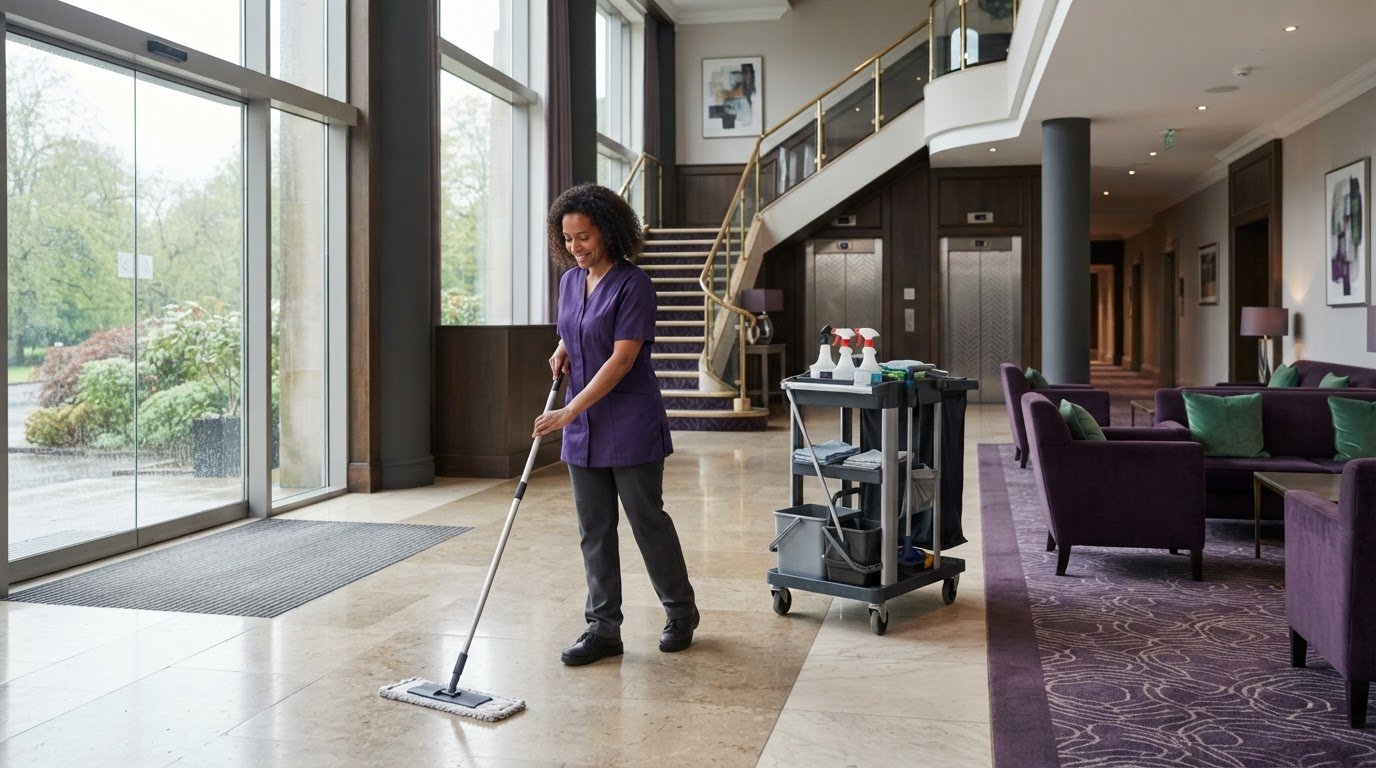
Guests begin forming an impression before the programme starts. A clear entrance, presentable washrooms and well-kept event spaces help a venue feel ready to welcome people. Maintaining that standard takes more than a single clean: the work needs to reflect what is happening in the venue, which areas are in use and when staff can access them.
Event venue cleaning is planned upkeep before, during and after scheduled functions. Unlike routine maintenance, which supports a venue’s day-to-day condition, event-specific cleaning is organised around a particular function and its demands. The two approaches can complement one another: routine work establishes a baseline, while event cleaning responds to the schedule, layout and use of the space. For background on the wider sector, see Commercial cleaning.
What does event venue cleaning cover?
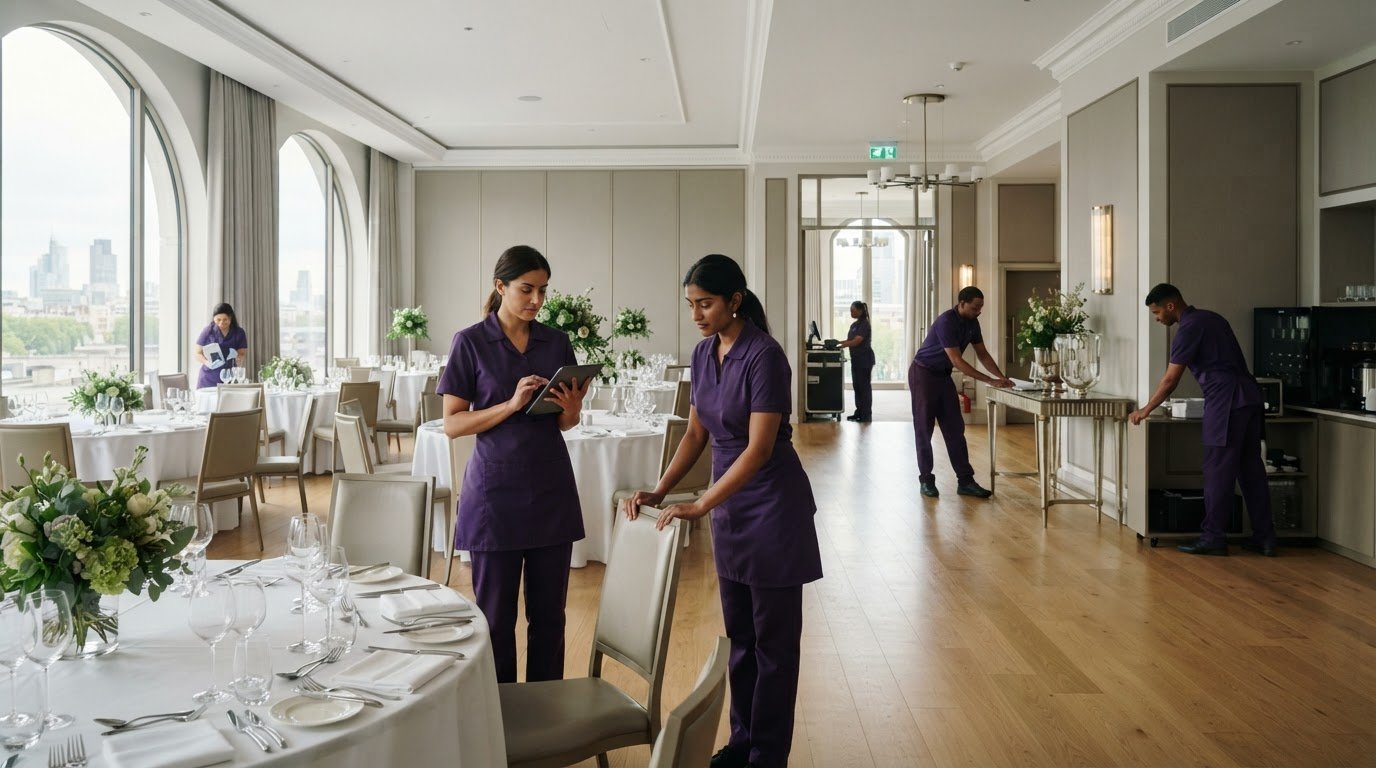
The scope is tailored to the venue, event schedule and areas in use. Planning may cover public areas such as entrances and corridors, event spaces, washrooms and back-of-house areas used by staff. A seated conference, for example, may place different demands on rooms and circulation areas than a reception where guests move between spaces. Cleaning can be scheduled before, during or after a function, with priorities shaped by access windows and how each area will be used.
Why does cleanliness matter throughout an event?
A polished room supports the standard guests expect from the venue, while tidy entrances and attended washrooms help maintain confidence as attendance rises. During busy periods, visible upkeep can be especially important in high-footfall areas, where conditions may change as guests move through the space. Discreet, well-timed attention helps maintain presentation without making cleaning activity a distraction.
Event-cycle cleaning is planned upkeep that prepares a venue, supports its presentation during a function and restores its spaces afterwards.
Set priorities according to the event’s format and pattern of use. Consider expected attendance, which rooms are open, how long the function runs, and whether spaces will be reconfigured or used for more than one purpose. These details help identify where attention matters most and when it can take place. A tailored plan is more useful than applying the same task list to every event.
For venue teams, the benefit is a clear connection between cleaning activity and the guest experience. Preparation supports readiness; planned upkeep helps protect presentation during the function; and post-event work helps return the venue to the required condition for its next use.
How to plan event venue cleaning before, during and after a function
A dependable cleaning plan starts with the event brief, not a standard task list. Record which spaces will be used, expected attendance, room layouts, access arrangements and the sequence of set-up, guest arrival and close. These details show where cleaning can happen without obstructing deliveries, event teams or guests, and where the schedule may need to adapt if the programme changes.
Cleaning arrangements should sit alongside wider operational planning. The Health and Safety Executive’s guidance on Running an event safely offers organisers a useful reference when considering how venue activity and safety planning fit together. A clear brief helps the cleaning team work within agreed access arrangements and identify which areas need attention at each stage.
What should happen before guests arrive?
Before the event, prepare the agreed spaces in line with the set-up plan. This may include the event room, entrance, washrooms and shared areas that guests will use. Coordinate cleaning with access windows and room preparation so completed areas remain presentable and event teams can finish their set-up without unnecessary interruption. UF Cleaning tailors schedules to the venue and event requirements.
How should cleaning adapt during and after an event?
During the function, planned checks and responsive upkeep can focus on agreed areas, with activity arranged to limit disruption. Priorities may shift as guest movement changes or particular rooms become busier. After the event, cleaning can address the spaces used and their condition, supporting the handover and preparing the venue for its next use.
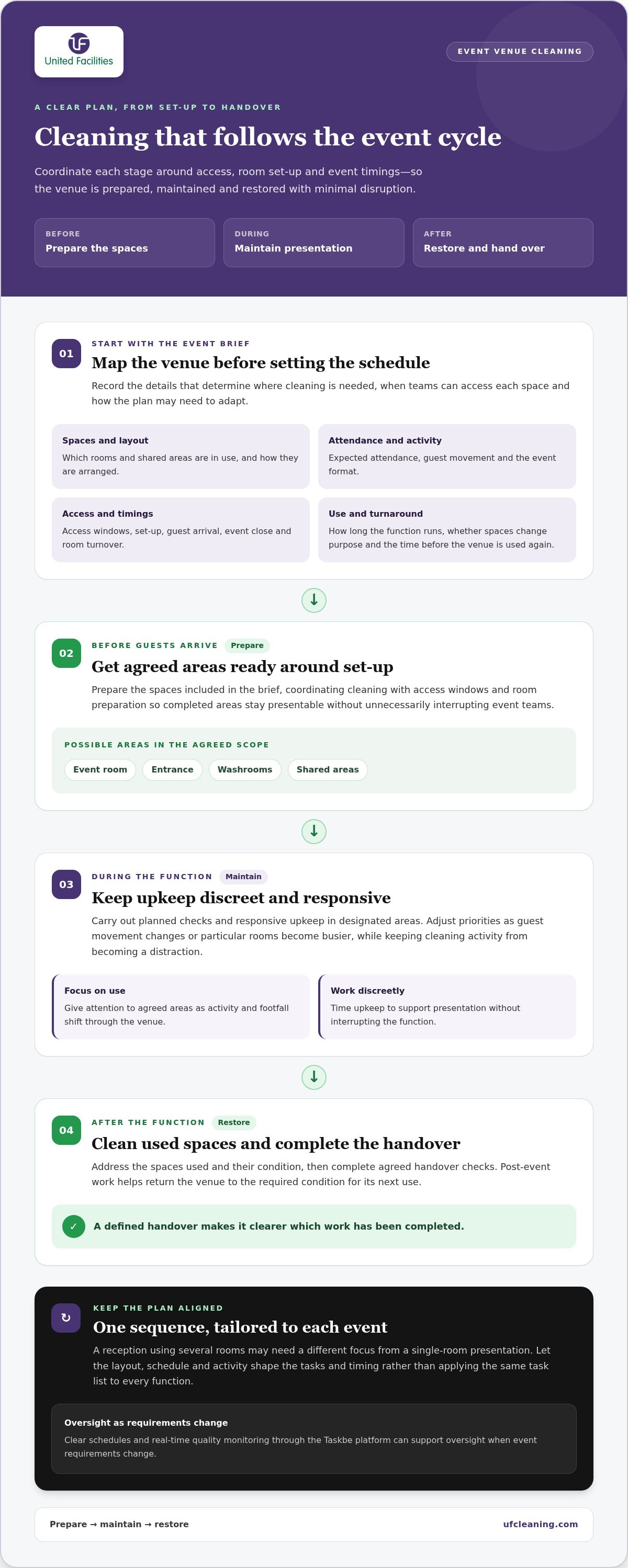
A practical schedule can follow this sequence:
- Event brief: record spaces in use, room layouts, access windows and event timings.
- Before guests arrive: prepare agreed guest-facing and shared areas around venue set-up.
- During the function: carry out discreet, responsive upkeep in designated areas.
- After the function: clean the used spaces and complete the agreed handover checks.
This sequence provides structure without assuming every function needs the same tasks or timing. A reception with several rooms in use may call for a different focus from a single-room presentation. The plan should reflect the actual layout and activity. Flexible scheduling helps align service delivery with changing event requirements, while a defined handover makes it clearer which work has been completed.
UF Cleaning’s event cleaning service can be tailored to your venue and function schedule.
How to define the right event cleaning scope for your venue
A useful cleaning brief connects each area to its purpose, level of use and event stage. Rather than applying an identical task list to every function, consider expected attendance, room configuration, event duration and the time available before the venue is used again. These details help define a tailored scope and keep attention on the spaces that matter for the event.
Which venue areas should the cleaning brief identify?
Separate guest-facing spaces from operational areas, then note which surfaces or facilities are likely to see the most use. Entrances, event rooms and washrooms may have different priorities from back-of-house areas used for event operations. If food is served, identify the areas involved so the scope reflects how they will be used. The event organiser safety guidance also offers a reference point for planning cleaning arrangements.
| Area | Before the event | During the event | After the event |
|---|---|---|---|
| Entrances and shared areas | Prepare visible surfaces and access routes | Attend to areas affected by guest movement | Restore spaces used by attendees |
| Event rooms | Prepare the agreed room configuration | Focus on areas in active use | Address the room’s condition and event set-up |
| Washrooms | Prepare facilities for guest use | Prioritise upkeep according to use | Clean facilities used during the function |
| Back-of-house areas | Identify operational spaces in the brief | Maintain agreed areas around event activity | Address spaces used by event teams |
The table is a planning framework, not a fixed specification. Tasks depend on the agreed event-specific plan, the venue’s requirements and which areas are accessible at each stage. Food service, public access and back-of-house activity may each change what needs attention, so clarify how these areas will be used when shaping the brief.
How do different event needs affect the cleaning plan?
A single scheduled function has a defined set of spaces and a particular handover point. A venue hosting repeated events may need a scope that accounts for changing room uses and successive bookings. Layout changes can redirect guest movement, while a longer function or concentrated footfall may shift attention towards the most-used areas. For event venue cleaning London, as for any event, tailor the scope to the function rather than assuming every venue or event has identical demands.
Event format, footfall and room use should determine the cleaning scope. This keeps the brief focused, supports clear expectations and aligns cleaning priorities with how the venue will operate.
How scheduling and quality controls support reliable venue cleaning
A clear schedule turns the event brief into coordinated activity. It should reflect when each area can be accessed, the event’s key milestones and how cleaning fits around set-up, guest arrival and venue operations. Agreed contact points are also important: they give venue and cleaning teams a practical route for communicating changes, clarifying priorities and keeping work aligned with the function.
For a busy venue, timing can be as important as the task itself. Cleaning an event room while it is being arranged may interrupt set-up, while attention to shared areas can be planned around their use. UF Cleaning tailors schedules to venue and event requirements, helping coordinate service delivery as plans or priorities change. Its 24/7 operational support provides an additional point of support when requirements shift.
What makes an event cleaning schedule workable?
A workable schedule brings together access arrangements, event milestones and operational contacts before cleaning begins. It identifies when agreed spaces are available and how tasks can fit around venue activity, rather than relying on a generic timetable. Since event plans and room use can vary, flexible scheduling helps keep cleaning aligned with the function and reduce avoidable disruption for guests and event teams.
How can quality be monitored across event stages?
Quality oversight should remain relevant before, during and after the function. UF Cleaning provides real-time quality monitoring through the Taskbe platform, supporting visibility of service quality without assuming particular metrics or reporting features. This oversight can inform practical conversations about the agreed scope and changing requirements, helping venue teams maintain a clear view of service delivery across event stages.
Communication gives monitoring operational value. If priorities change, a clear contact route helps keep the cleaning plan aligned with the venue’s needs. Regular service conversations can also help identify whether the scope remains suited to the event format, areas in use and access arrangements.
UF Cleaning uses eco-friendly products as part of its event cleaning approach. Product choice is considered alongside the cleaning schedule and quality oversight, with the service tailored to each function’s requirements.
UF Cleaning’s tailored event venue cleaning support is planned around the venue’s schedule and quality requirements.
How UF Cleaning supports event venues with tailored cleaning
Each function places different demands on a venue. A conference, reception or multi-room event may involve distinct spaces, access arrangements and turnaround needs, so a standardised package can miss important details. UF Cleaning provides event-specific cleaning before, during and after scheduled functions, with the scope shaped around the venue, event brief and areas in use.
This coordinated approach connects agreed tasks with the event schedule, helping cleaning activity fit around venue operations. Flexible scheduling allows service delivery to adapt to event and venue requirements, while 24/7 operational support provides a point of support when requirements change.
What can venues expect from UF Cleaning?
Planning begins with the spaces and event stages identified in the brief. The agreed scope can account for guest-facing areas, event rooms, washrooms and operational spaces, then set out which cleaning tasks are required before, during or after the function. This tailored approach keeps the service relevant to the event rather than applying the same task list to every venue.
Real-time quality monitoring through the Taskbe platform supports oversight of service delivery. Combined with clear communication and flexible scheduling, it helps keep the cleaning arrangement connected to the agreed requirements as the event progresses. UF Cleaning also uses eco-friendly products as part of its service approach, with product selection considered in relation to the venue and function.
What are the next steps to arrange event cleaning?
To shape a service proposal, outline the venue areas in use, event timings, access arrangements and cleaning priorities. Include relevant details such as room configuration, guest movement, food service and expected handover requirements. A clear brief gives the planning process a practical foundation and helps align the proposed scope with the event’s operational needs.
Whether you’re arranging cleaning for one scheduled function or planning support for a venue with changing event requirements, UF Cleaning can tailor the service to the project. Share the priorities that matter to your venue and event, then request a free event cleaning quote.
Set your next event up for a polished handover
Reliable event cleaning is planned around the full function, not treated as a single task at the end. A clear scope should reflect the spaces in use, guest activity and venue timings, with cleaning coordinated before, during and after the event. For event venue cleaning London, this considered approach helps protect presentation while keeping service aligned with changing operational needs.
UF Cleaning provides event-specific cleaning with flexible schedules and 24/7 operational support. Real-time quality monitoring through the Taskbe platform supports oversight, giving venue teams greater visibility across the service. Each plan is tailored to the event and venue requirements.
Share your venue areas, event timings and cleaning priorities to begin shaping a suitable service. Request a free quote for tailored event venue cleaning, and take the next step towards a clean, welcoming venue and a more assured event handover.
Frequently Asked Questions
What does event venue cleaning include?
Event venue cleaning covers tasks agreed for the spaces and stages involved in a function. This may include preparing entrances, event rooms, washrooms and shared areas before guests arrive, maintaining agreed areas during the event and cleaning spaces afterwards. The scope depends on the venue, event format, access arrangements and priorities in the brief, rather than following a fixed package for every function.
How do you plan cleaning around an event schedule?
Plan cleaning around the event brief, access windows, room layout and key milestones, including set-up, guest arrival and handover. Identify which spaces are in use and when they can be accessed, then agree priorities for before, during and after the function. A clear schedule helps align cleaning with venue operations and minimise avoidable disruption.
Can event cleaning take place during a function?
Yes, event cleaning can be scheduled during a function in agreed areas. The plan can focus on responsive upkeep where activity or guest movement makes attention useful, while arranging tasks to limit disruption. The areas covered and timing depend on the event programme and venue requirements. Clear communication between the venue team and cleaning team helps keep activity coordinated as the function progresses.
What happens if the event schedule or venue requirements change?
If requirements change, the cleaning arrangement can be adapted to the revised event schedule and venue priorities. UF Cleaning offers flexible scheduling and 24/7 operational support to help manage changing requirements. Sharing updates about timings, room use or access arrangements supports clear coordination, so cleaning priorities stay aligned with how the venue is operating rather than relying on an outdated plan.
How far in advance should a venue arrange event cleaning?
Arrange cleaning as soon as the event schedule and venue requirements are taking shape. Early planning gives time to define the spaces in use, access windows, event stages and cleaning priorities, especially if room layouts or turnaround needs are complex. There is no single lead time that suits every function, so share the event brief and timings early to shape a service proposal around the project.
How is cleaning quality monitored at an event venue?
UF Cleaning provides real-time quality monitoring through the Taskbe platform. This supports oversight of service delivery across the agreed event cleaning plan. Clear communication alongside monitoring helps keep service discussions connected to the agreed scope and any changing requirements, supporting a consistent approach throughout the event cycle.
Can event venue cleaning include work before and after an event?
Yes, UF Cleaning provides event-specific cleaning before, during and after scheduled functions. Before the event, the agreed scope can prepare spaces for their intended use; afterwards, it can address the areas used and support the venue handover. The exact tasks are tailored to the event brief, venue layout and schedule, so preparation and restoration reflect the function rather than a generic checklist.