Workplace hygiene is a legal responsibility, not simply a matter of appearance. Effective office hygiene maintenance means keeping workplaces safe for employees and visitors: according to UK Parliament, the Health and Safety at Work Act 1974 requires this, while the Workplace Health, Safety and Welfare Regulations 1992 require workplaces to remain clean, hygienic and well maintained. These rules provide a clear foundation for managing cleanliness at work.
Maintaining office hygiene takes more than an occasional tidy-up. It requires practical routines that suit the space and how people use it. This guide explains the workplace rules and covers four key areas: handwashing and frequently touched surfaces, shared kitchens and facilities, infection risks, and cleaning practices that support a consistently well-maintained workplace. You’ll learn what to include in everyday routines and how to organise responsibilities so hygiene becomes part of daily office life.
Key Takeaways
- Build workplace hygiene around the UK’s cleanliness and safety requirements, with clear routines for keeping the premises well maintained.
- Make handwashing straightforward and include desks, keyboards, door handles and shared equipment in regular touchpoint cleaning.
- Set practical expectations for kitchens and communal areas, including wiping surfaces, managing food and dealing with spills promptly.
- Combine consistent cleaning with tidy personal workspaces and good air circulation to help reduce infection risks.
1. What are the regulations on workplace hygiene?
UK workplace hygiene rules combine general safety duties with requirements for clean, well-maintained premises. According to UK Parliament, the Health and Safety at Work Act 1974 requires workplaces to be maintained in a safe condition for employees and visitors. The Workplace Health, Safety and Welfare Regulations 1992 require workplaces to remain clean, hygienic and well maintained, including toilet facilities. The Control of Substances Hazardous to Health Regulations 2002 manage risks from hazardous substances such as cleaning chemicals and dust.
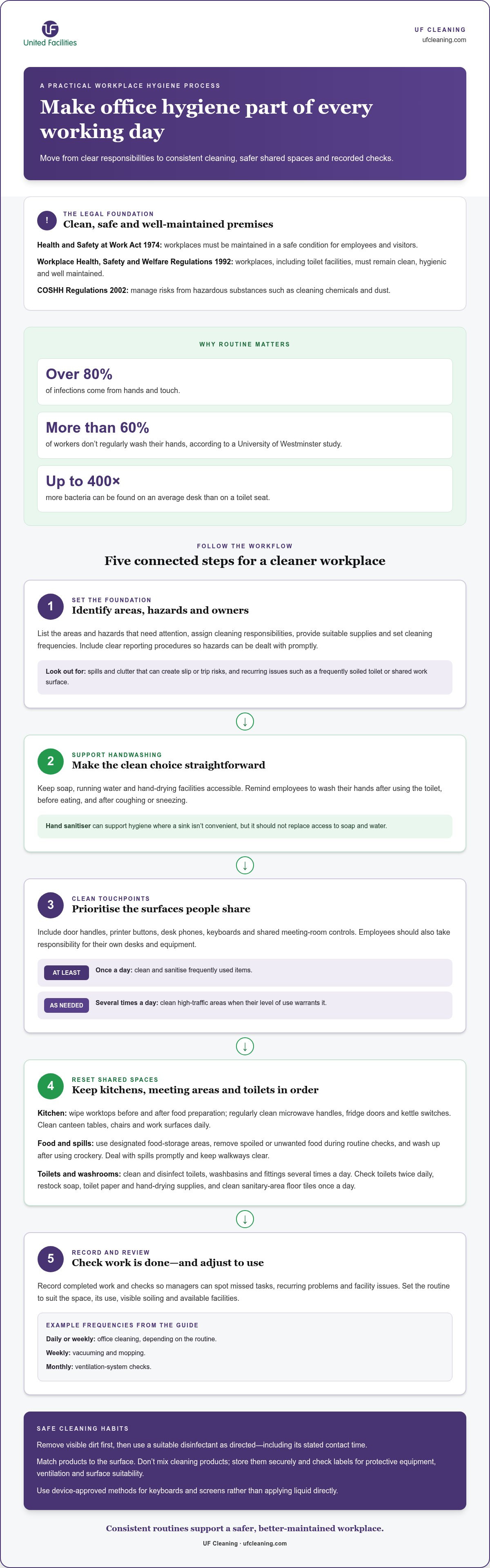
These requirements mean businesses should assign clear cleaning responsibilities, provide suitable supplies and address hazards promptly. Removing spills and keeping floors clear, for example, can help reduce slip and trip risks. A recorded cleaning schedule helps managers spot missed tasks and recurring problems, such as a frequently soiled toilet or shared work surface. Good workplace hygiene supports illness prevention, although cleaning alone cannot prevent every infection.
UK guidance includes the Health and Safety Executive’s general workplace safety advice for smaller, low-risk businesses. Canteens must also meet UK food hygiene requirements, so cleaning routines should cover food-preparation surfaces, storage and disposal. Employers can use this guidance alongside COSHH risk controls when selecting and handling cleaning products.
There is no single cleaning schedule that suits every office. A practical routine may include daily or weekly office cleaning, weekly vacuuming and mopping, and monthly ventilation-system checks. Toilets and other busy areas need attention according to their use, visible soiling and available facilities.
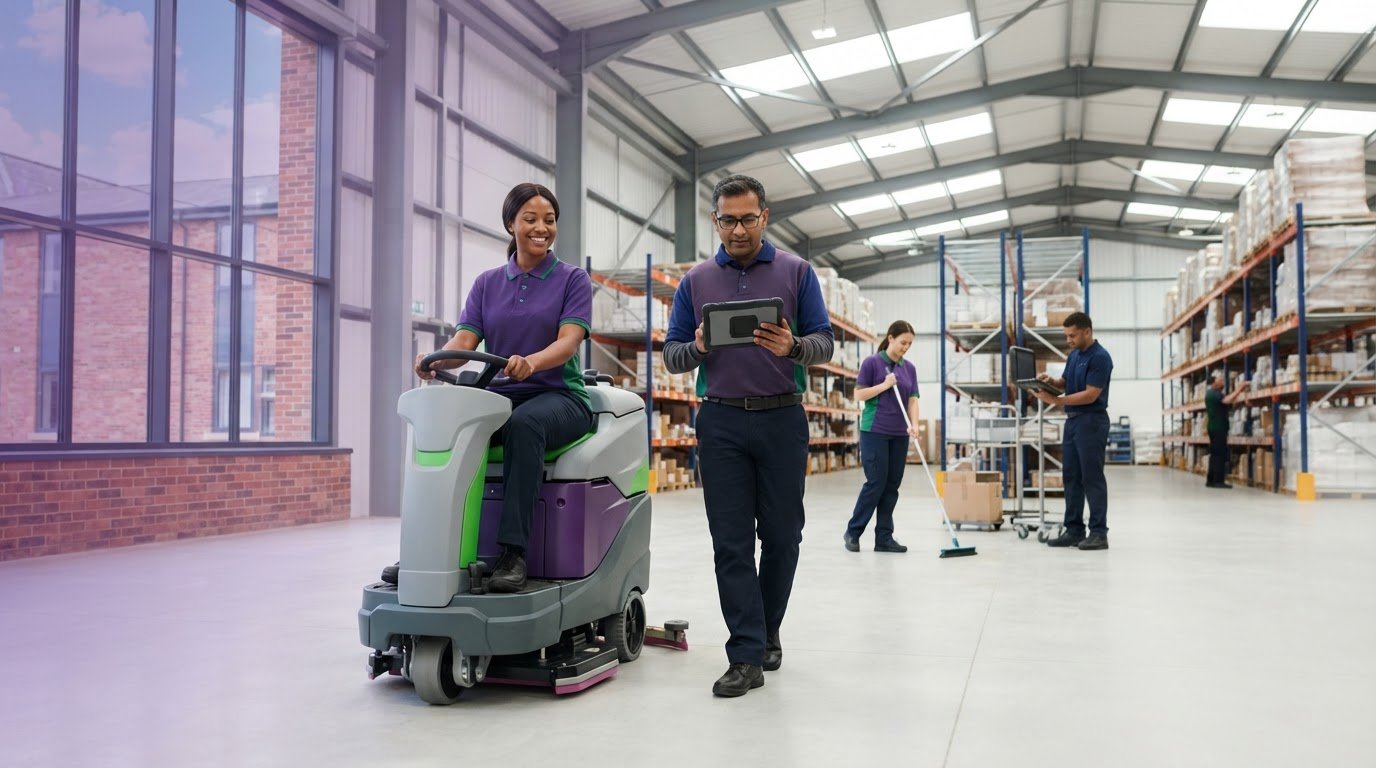
An office hygiene maintenance plan should identify areas and hazards, assign responsibilities, set cleaning frequencies, provide supplies and record completed work. In-house cleaning gives managers direct control, but requires staff time, training and equipment. A professional cleaning service can provide specialist equipment and established workflows, freeing internal time for other tasks.
Insufficient cleaning can leave germs and allergens on desks, equipment and shared surfaces, increasing potential exposure to illness. Spills and clutter can also create accident risks. Regular cleaning, clear reporting procedures and prompt action on hazards help address these risks and support a safer workplace.
2. Handwashing and touchpoint hygiene
Hands and shared surfaces are central to everyday hygiene: over 80% of infections come from hands and touch. A University of Westminster study found that more than 60% of workers don’t regularly wash their hands. Make handwashing an easy practice by keeping soap, running water and hand-drying facilities accessible, and reminding employees to wash after using the toilet, before eating and after coughing or sneezing.
Hand sanitiser can support good hygiene where a sink isn’t convenient, but it shouldn’t replace access to soap and water. Employees also need clear responsibility for their own desks and equipment. A simple routine is to remove visible dirt first, then use a suitable disinfectant as directed on its label, including the stated contact time.
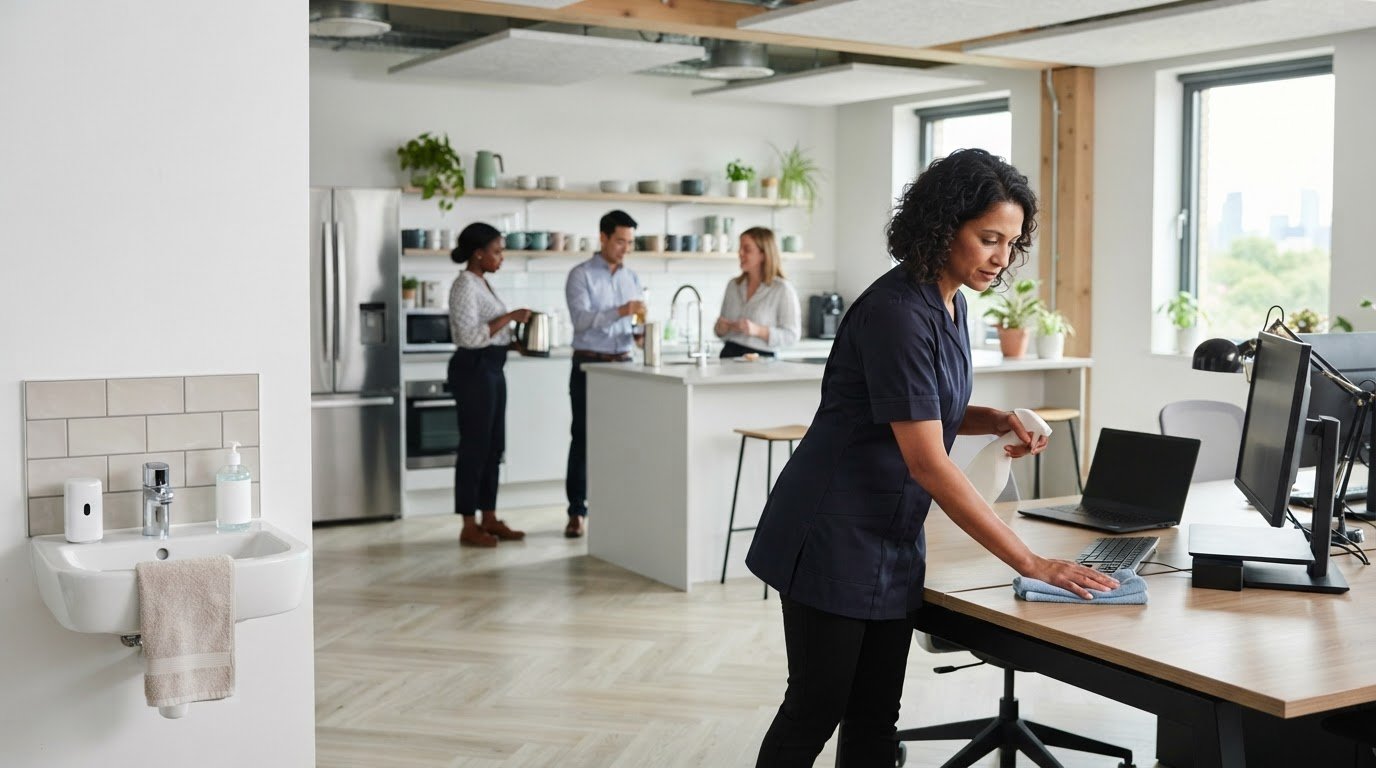
Prioritise high-touch surfaces such as door handles, printer buttons, desk phones, keyboards and shared meeting-room controls. Clean and sanitise frequently used items at least once a day, and clean high-traffic areas several times a day where use warrants it. An average desk can have up to 400 times more bacteria than a toilet seat, making regular attention to work surfaces worthwhile.
For safe, thorough cleaning, match the product to the surface and follow its instructions. Don’t mix cleaning products, and store them securely when they’re not in use. Check labels for any required protective equipment, ventilation and surface suitability. The wrong product can damage equipment or leave residues. Clean keyboards and screens using methods approved for those devices, rather than applying liquid directly.
How often should offices be cleaned and sanitised? Clean and sanitise frequently touched items at least once a day, with extra attention to busy areas as use increases. If maintaining a consistent schedule is difficult, professional office cleaning can complement employees’ day-to-day responsibilities.
3. Kitchen and common-area hygiene
A shared kitchen needs a routine covering food-contact surfaces, appliances and spills. Wipe worktops before and after food preparation, and clean microwave handles, fridge doors and kettle switches regularly. Clean canteen tables, chairs and work surfaces daily. Remove crumbs and residue promptly to help deter pests and keep the space pleasant for everyone.
Set clear, practical rules for food storage. Keep food in designated areas, label personal items where appropriate, and remove spoiled or unwanted food during routine checks. Encourage employees to wash up after using crockery and leave sinks clear. Provide cleaning supplies for small spills, store them safely and make them accessible to staff who need to respond.
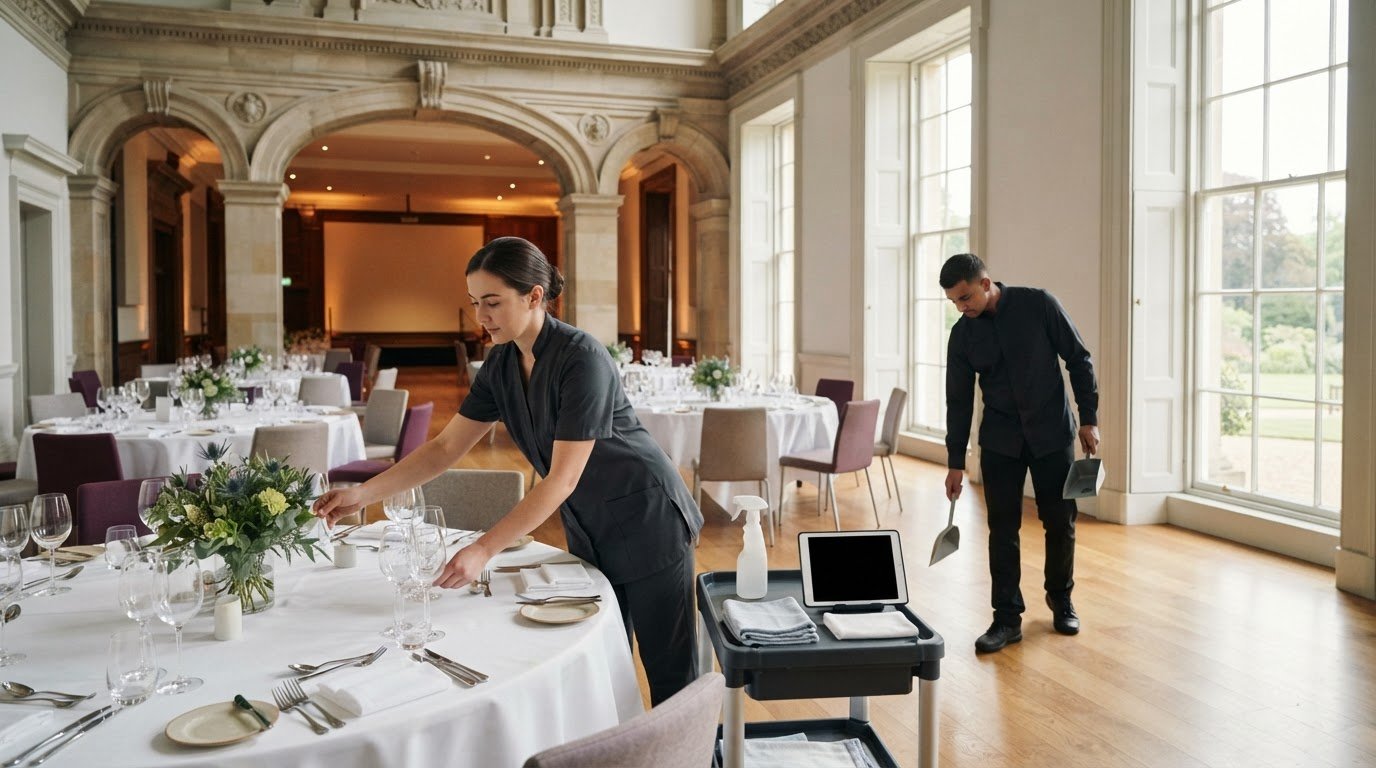
Include shared tables, chair arms and appliance controls in the cleaning plan for break rooms and meeting areas. Deal with spills promptly to prevent slippery floors, and clear packaging or clutter from walkways. A tidy space is easier to clean and more comfortable to use, supporting a considered workplace environment and day-to-day productivity.
Clean and disinfect washroom toilets, washbasins and fittings several times a day. Check toilets twice daily, restock liquid soap, toilet paper and hand-drying supplies, and clean sanitary-area floor tiles once a day. Record checks so staff know when facilities were last serviced and can report issues that need attention.
How should high-touch surfaces, shared kitchens and toilets be cleaned? Remove visible dirt first, then apply a suitable product as directed, allowing disinfectant its stated contact time. Use separate cloths for kitchen and toilet areas to avoid transferring contamination, and include door handles, taps and appliance buttons in the schedule.
Plan deeper cleaning around actual use, including neglected edges, appliance interiors and floor corners. Review the routine when occupancy or room use changes: a busy kitchen may need more frequent attention than a lightly used meeting room. This keeps shared spaces orderly while addressing details daily wipe-downs can miss.
4. Preventing the spread of infection
Consistent cleaning helps remove germs and allergens from shared spaces, desks and equipment. A University of Westminster study found that one-third of workers don’t always clean their desks, making clear expectations important. Set protocols for personal and communal areas, and ask employees to keep work surfaces orderly. Include dusting, vacuuming and disinfecting in daily cleaning routines where appropriate.
Good airflow also supports a healthier workplace. Open windows where appropriate to let in fresh air, and maintain ventilation systems and air-purifying units regularly. Clean or replace filters as needed to limit dust and allergen build-up. These measures complement surface cleaning, but don’t replace handwashing or careful cleaning of frequently used facilities.
During seasonal infection periods, reinforce regular routines rather than relying on a single deep clean. Keep soap and hand-drying supplies available, remind staff to wash their hands, and pay closer attention to shared equipment when its use increases. In communal eating spaces, clean tables and work surfaces daily, and ask employees to clear used crockery and food promptly. Respond quickly to spills and visible soiling.
A practical response plan should explain how staff report illness-related concerns, which areas need attention and who completes each task. Keep cleaning materials accessible for appropriate spot cleaning, but store chemicals safely. Review the plan when office occupancy or use of shared spaces changes, then record completed tasks so missed work can be addressed. This makes infection-prevention steps clear and repeatable.
For workplaces and venues that need structured support for communal spaces, arrange professional cleaning support as part of a consistent hygiene plan.
UF Cleaning: Office Cleaning London
UF Cleaning provides office cleaning for organisations seeking a consistent approach to workplace cleanliness. Cleaning plans can be tailored to the premises, including shared areas and frequently used office spaces, so routine tasks fit naturally into the working environment.
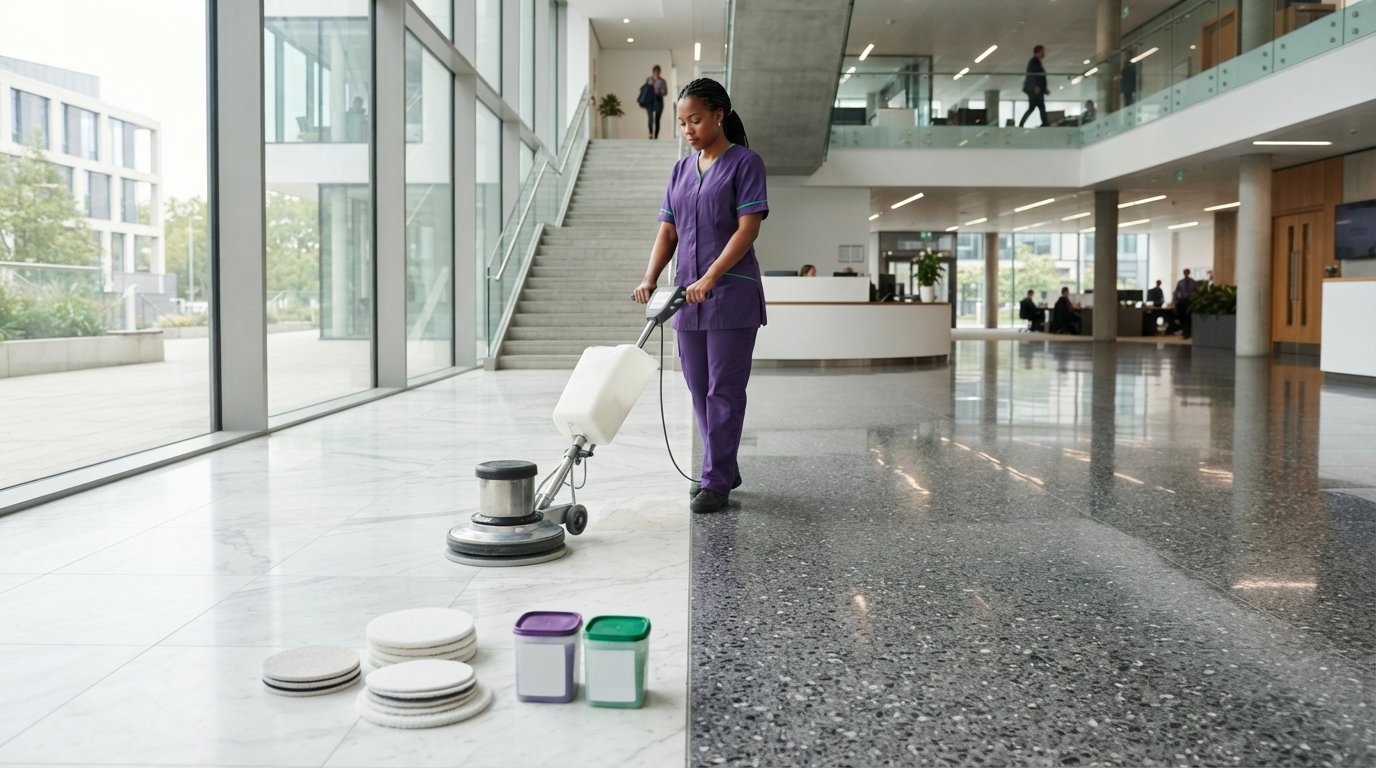
Where floors need particular attention, Office Hard Floor Cleaning can complement the wider cleaning routine. This is a practical option for workplaces where footfall, visible marks or recurring spills make floor care an important part of maintaining a clean setting. UF Cleaning also provides flexible schedules and real-time quality controls, supporting an organised approach to ongoing cleaning.
To discuss office cleaning for your workplace, contact UF Cleaning for a free, no-obligation quote.
Make workplace hygiene part of your routine
A written plan is more useful when each task has a clear owner and fits naturally into the working day. Choose a practical way to review completed work, note recurring concerns and adjust routines when your team or use of the premises changes. This keeps office hygiene maintenance connected to everyday operations instead of leaving it as an occasional task.
For support with a consistent cleaning approach, UF Cleaning provides Office Cleaning London, alongside Housekeeping and Hotel Management. These services address different workplace and hospitality needs; office cleaning is the direct option for organisations seeking support with their premises.
Consider which responsibilities your team can manage internally and where dedicated cleaning support would help maintain a dependable routine. Contact UF Cleaning about office hygiene to discuss your workplace’s cleaning needs. A thoughtful plan can help your team keep its environment orderly and ready for the working day.
Frequently Asked Questions
What are the regulations on workplace hygiene?
UK workplace hygiene is covered by several laws, including the Health and Safety at Work Act 1974 and the Workplace Health, Safety and Welfare Regulations 1992, according to UK Parliament. The Control of Substances Hazardous to Health Regulations 2002 also address risks from chemicals and dust. In practice, employers should translate these requirements into clear cleaning responsibilities, safe product handling and suitable workplace facilities.
Who is responsible for cleanliness in the office & is it a health and safety issue?
Employers are responsible for organising workplace cleanliness, while employees should follow agreed routines and report hazards. Staff can clear their own work areas and report a leaking tap, for example, while a manager ensures shared facilities are included in the cleaning plan. Cleanliness is a health and safety issue because spills, clutter and poorly maintained facilities can create avoidable hazards.
Why is good health and hygiene at work so important?
Good workplace hygiene helps limit exposure to germs and allergens and reduces hazards such as slippery floors or contaminated shared equipment. It also supports an orderly environment for focused work and creates a professional impression for visitors. Clear procedures give employees practical ways to contribute, from promptly reporting a spill to keeping shared resources in suitable condition.
What does office hygiene maintenance include?
Office hygiene maintenance covers planned cleaning of work areas, shared equipment, kitchens, toilets and floors, as well as safe handling of cleaning products. It also means assigning responsibilities, providing suitable supplies and recording completed tasks. For example, a facilities lead might review cleaning logs and arrange follow-up when a meeting room, printer area or washroom repeatedly needs extra attention.
How can offices improve hand hygiene and prevent the spread of illness?
Make handwashing practical by keeping sinks supplied with soap and hand-drying facilities, then remind staff to wash before eating and after using the toilet. Place hand sanitiser where sinks are less accessible, and include shared items such as meeting-room controls in cleaning routines. During periods of increased illness, reinforce these habits and make sure employees know how to report concerns.
What cleaning products are effective and safe for office use?
Use a suitable disinfectant according to its label and stated contact time, choosing a product appropriate for the surface. Check instructions for protective equipment and ventilation, never mix products, and store them securely.