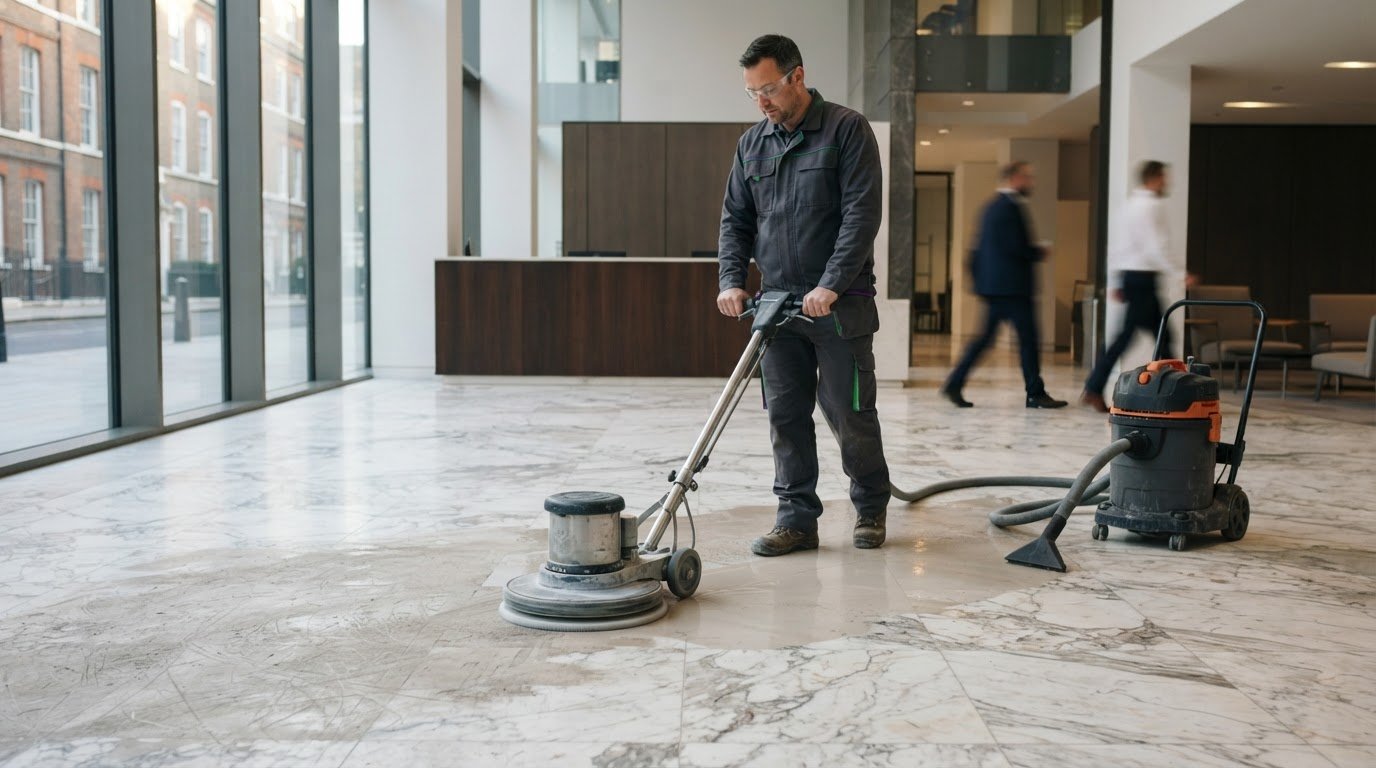
When routine cleaning no longer lifts ingrained soil, dullness or staining, professional hard floor restoration services can refresh the surface with cleaning, repair, polishing or sealing suited to its material. The right treatment depends on the floor: sensitive stone, porous surfaces, wood and laminate each need a considered approach. Restoration is more than a deeper clean; it may also involve repairing damage or renewing protection.
It’s understandable to want a worn floor refreshed without risking further damage or replacing it unnecessarily. With the right method, restoration can improve its appearance and make ongoing care more manageable. Protective treatments can also help reduce everyday wear.
This article explains the signs that a floor may need professional attention, how polishing, sealing and coatings work, and what to consider when protecting restored flooring. It also covers how needs differ between homes and busy commercial spaces, helping you identify a practical next step for your floor.
Key Takeaways
- Consider professional restoration when routine cleaning no longer improves dullness, staining or ingrained soil; the right treatment depends on the floor material and its condition.
- Allow the floor to dry before applying a sealant, polish or protective coating, and choose a treatment compatible with the existing surface.
- Use entrance mats and regular dry cleaning to limit grit, which can scratch or dull restored flooring.
- Different spaces have different restoration needs: assess the floor’s material, damage and use before deciding whether cleaning, repair or refinishing is appropriate.
When does a hard floor need professional restoration?
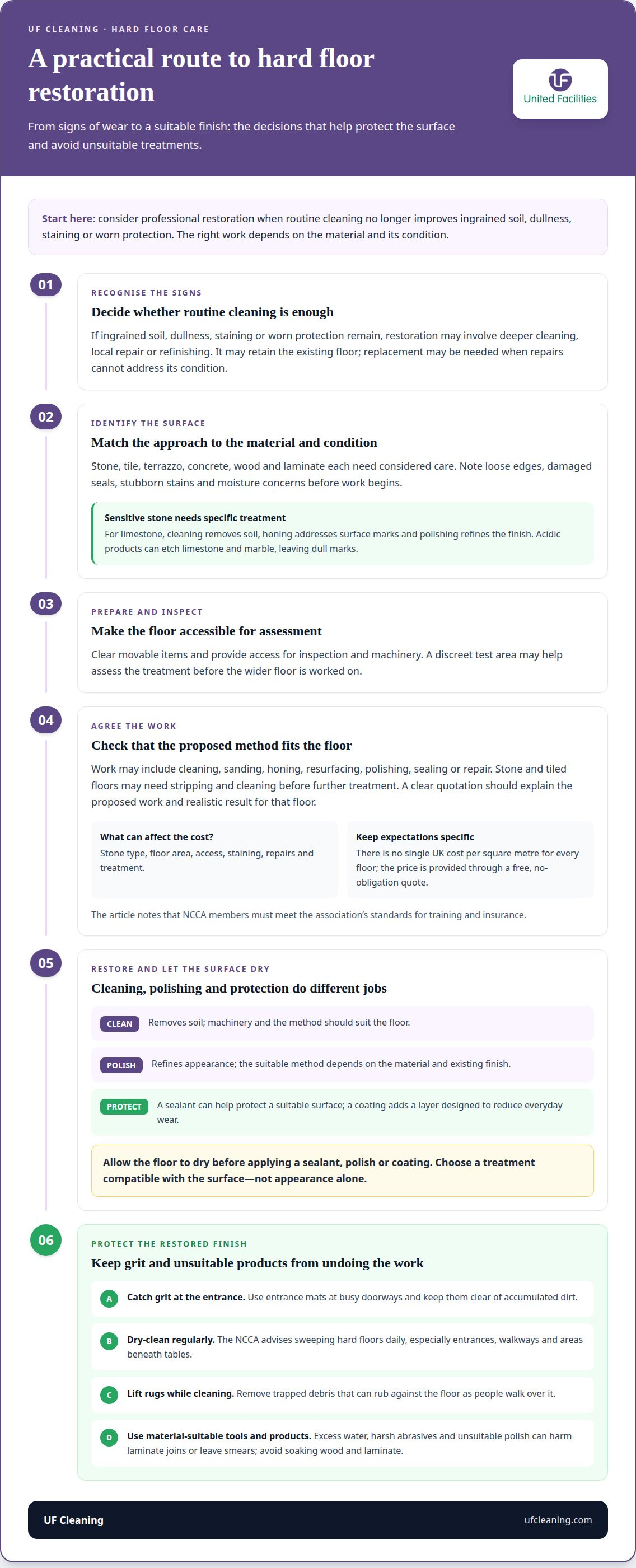
Consider restoration when routine cleaning no longer removes ingrained soil, dullness, staining or worn protection. Professional hard floor restoration services can address the existing surface through cleaning, repair or refinishing. Unlike replacement, restoration may resolve local damage while retaining the floor. Replacement may be necessary when repairs cannot address its condition.
Start by identifying the material and assessing its condition. Professionals may use industrial-strength machinery for a deep clean, then select suitable cleaning, sanding, polishing, sealing or repair methods. Stone and tiled floors may need stripping and cleaning before further treatment.
Natural stone needs material-specific care. On limestone, cleaning removes soil, honing addresses surface marks, and polishing refines the finish. Acidic products can etch limestone and marble, leaving dull marks, so unsuitable cleaners may cause lasting damage.
A useful quotation explains the proposed work and realistic result for that particular floor. According to the NCCA, its members must meet the association’s standards for training and insurance. Compare hard floor restoration services by the clarity of their proposed method and how it relates to the material and damage.
There is no single UK cost per square metre for every floor. The price depends on the individual job and is provided through a free, no-obligation quote. Stone type, floor area, access, staining, repairs and treatment all affect the cost of restoring stone, tile, terrazzo or concrete.
Depending on the floor, work may include cleaning, repairs, honing, resurfacing, polishing, sealing or replacement. The time required, including when the floor can be used again, depends on its condition, the process and drying time before a sealant or coating is applied.
Before work starts, clear movable items and make the floor accessible for inspection and machinery. A discreet test area may help assess the treatment. Identify loose edges, damaged seals, stubborn stains and moisture concerns before restoration begins.
DIY work can cause damage: acidic products may mark sensitive stone, while excess water, abrasives or unsuitable polish can harm laminate joins or leave smears. To find a company serving your area, check that its stated coverage includes your location and that its proposed work suits your floor.
Sealing, polishing and protective coatings
Sealing, polishing and coatings serve different purposes, so the right option depends on the floor and its finish. Let the surface dry before applying any treatment.
Floor sealing and protective coatings
A sealant can help protect a suitable floor surface, while a protective coating adds a layer designed to reduce everyday wear. The existing material matters: choose a treatment for compatibility, not appearance alone. A kitchen floor, for example, may need a different approach from a decorative stone entrance.
Before work begins, establish what the coating is intended to do and how it may affect the finish. The floor needs enough drying time after cleaning, and treatment should only be applied once the surface is ready. Ask about drying times, aftercare and compatibility, then follow the care instructions to preserve the result.
Polishing is distinct from sealing. It can refine a floor’s appearance, but the suitable method depends on the material and existing finish. A polish intended for one surface may not suit another, so avoid household products unless you know how they interact with the floor.
Marble polishing and repair
Marble polishing refines a dull or marked surface. The process should suit the stone’s condition, especially where wear is uneven or marks are concentrated near a kitchen work area. The right treatment can restore a more consistent appearance without assuming every marble floor needs the same work.
Damaged marble may need repair as well as polishing. Identify the affected areas first, then determine whether the surface needs repair before its finish is renewed. Acidic products can etch marble and leave dull marks, so use products intended for the stone.
For offices, regular Office Hard Floor Cleaning can support day-to-day floor care between specialist treatments.
Before choosing a treatment, discuss the proposed work with a restoration provider. Ask how long the floor must dry, what aftercare is needed and whether the coating suits the existing floor. These points help ensure the proposed treatment fits the surface and its requirements.
Protecting floors from scratches and wear
Grit tracked in from outside can dull a restored floor or scratch its surface. Place entrance mats at busy doorways and keep them clear of accumulated dirt. Regular dry cleaning removes loose particles before shoes, chair legs or cleaning equipment move them across the floor.
According to the NCCA, hard floors should be swept daily. Use a soft-bristled broom or suitable dry-cleaning tool, paying particular attention to entrances, walkways and the areas beneath tables. Lift rugs to clean underneath, where trapped grit can rub against the floor as people walk over them.
Use products and tools suited to the material. Excess water, harsh abrasives and unsuitable polish can damage laminate joins or leave a smeared finish. On wood and laminate, avoid soaking the surface; abrasive pads can also mark delicate finishes.
- Use entrance mats to catch grit before it reaches the floor.
- Dry-clean regularly, paying particular attention to busy routes.
- Lift rugs during cleaning so debris does not remain trapped underneath.
- Choose a cleaner and polish suited to the floor material.
Moving furniture is another common cause of scratches. Lift chairs and other movable items instead of dragging them, and keep their contact points clean. If furniture moves frequently, check beneath it for grit and use suitable protective pads to reduce direct friction.
At work, entrances, corridors and shared rooms often collect more tracked-in debris than quieter areas. A focused routine for these zones helps control wear between deeper cleans. Consistent dry care and suitable products help preserve a restored floor’s finish without unnecessary moisture or abrasion.
The guide recommends sweeping hard floors daily, making consistent dry care a practical starting point. Clean thoroughly rather than focusing only on visible areas, so routine cleaning becomes part of ordinary upkeep. This helps reduce avoidable wear without relying on extra moisture or abrasive treatment.
Lift rugs and clean the hard floor beneath them as part of the same routine. This includes covered areas in regular floor care and helps keep cleaning consistent across the surface. Return rugs only after cleaning underneath, rather than treating them as fixed obstacles.
Residential and commercial restoration services
Homes and workplaces place different demands on hard floors. A household hallway may show concentrated wear near the entrance, while a busy reception or corridor sees repeated foot traffic over a wider area. Restoration should reflect the material, damage and pattern of use, rather than applying one treatment throughout.
At home, inspect the floor room by room. Kitchen spills, moving furniture and grit around doorways can leave different marks from those in a quieter bedroom. Solid wood may sometimes be sanded and refinished, while engineered wood needs more cautious treatment because its wear layer is thinner.
Commercial floor care should account for how people move through the building. Entrances, shared corridors and work areas collect soil at different rates, so the condition of each zone helps shape a practical maintenance plan. Safety flooring also needs thorough cleaning without compromising its grip or leaving a slippery product behind.
Before restoration, inspect the surface for loose edges, damaged seals, stubborn staining or moisture concerns. A discreet test area can help assess the proposed treatment. Where grout has failed or become stained, replacing the affected grout may refresh a tiled floor without removing the tiles.
Local damage may be repaired and refinished instead of replacing an entire floor. A useful quotation explains the proposed work and realistic result for that surface. For a home or business, consider the floor’s condition alongside its daily use, then prioritise repairs and cleaning where wear is most visible.
For workplace floors, explore tailored floor-care support for your premises as part of planning ongoing maintenance.
UF Cleaning: Office Cleaning London
UF Cleaning provides Office Hard Floor Cleaning for workplaces that need careful hard-floor maintenance as part of their cleaning routine. It is a practical option for managing everyday soil and wear; restoration treatments such as sanding, repairs or specialist stone polishing address different needs.
For commercial premises across the UK, our tailored floor care supports a consistently maintained working environment, while housekeeping and facilities management serve other property settings. The right service depends on the space and its needs, from routine office floor care to broader cleaning support.
If your workplace needs a structured approach to hard floor cleaning and professional hard floor restoration services, contact UF Cleaning to discuss your requirements.
Plan the right next step for your floors
A considered floor-care plan starts with the surface’s condition and how each space is used. For a workplace, note areas with recurring wear, the flooring material and any routine cleaning needs. This gives you a practical basis for deciding whether ongoing floor care or specialist restoration is the priority.
Professional hard floor restoration services may be appropriate when maintenance no longer addresses the floor’s condition, while regular cleaning helps manage everyday dirt and wear. Distinguishing between these needs sets realistic expectations and directs attention to the work most likely to benefit your premises.
UF Cleaning provides Office Hard Floor Cleaning alongside its wider cleaning support. If you’re planning the next step for a workplace floor, contact UF Cleaning to discuss your floors. A clear conversation about the space and its needs can help you move towards a suitable care plan with confidence.
Frequently Asked Questions
What is the process for restoring ceramic and porcelain tile floors and grout?
Restoration typically involves assessing the tiles and grout, removing loose soil, then cleaning with products and equipment suited to the tile finish. Grout lines need focused attention because their texture can retain dirt that smooth tiles do not. After rinsing and drying, damaged or missing grout can be replaced. Sealing may be considered for grout where appropriate; it is not automatically applied to every tile.
Which hard floor restoration companies serve my area in the UK?
Check that a company’s stated coverage includes your location and that its proposed work suits your floor material and condition.