A clean-looking classroom is not, by itself, evidence that cleaning standards are being maintained. School hygiene compliance cleaning relies on regular hygiene inspections and monthly reviews of cleaning compliance with the contractor. These checks help identify areas needing attention and make standards visible across the school.
It is understandable to want clear evidence that routine cleaning is being completed, especially when classrooms, specialist rooms and washrooms have different needs. This article explains how to monitor cleaning quality and what schedules may cover, from daily tasks and high-touch surfaces to holiday deep cleans. It also looks at how to organise cleaning around the demands of education settings, supporting a consistent environment for pupils and staff.
Key Takeaways
- Plan deep cleans around school holidays to give teams time to address areas beyond routine maintenance.
- Set distinct cleaning routines for classrooms, specialist rooms and washrooms, with tasks matched to how each space is used.
- Use scheduled checks of frequently touched surfaces to make cleaning quality easier to monitor and maintain.
- When managing cleaning chemicals, schools in the UK must comply with the Control of Substances Hazardous to Health Regulations 2002, according to the UK legislation register.
1. What about holidays and deep cleans?
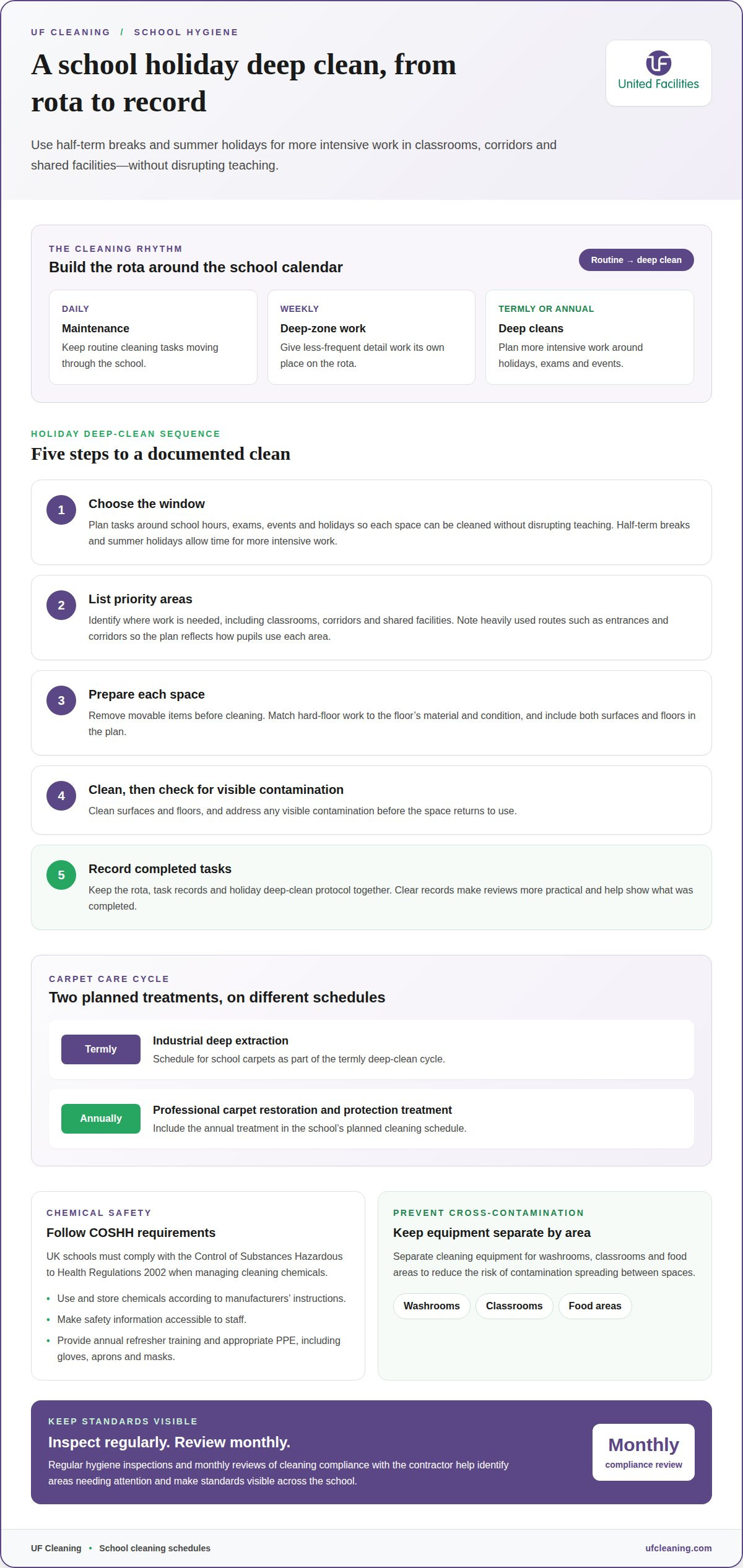
A school rota should distinguish daily maintenance, weekly deep-zone work, and termly or annual deep cleans. Plan tasks around school hours, exams, events and holidays so each space can be cleaned without disrupting teaching.
Half-term breaks and summer holidays provide time for more intensive work in classrooms, corridors, and shared facilities. A practical protocol starts by listing priority areas, then removing movable items, cleaning surfaces and floors, and recording completed tasks. Any visible contamination should be addressed before the space returns to use.
Floors also need a planned cycle. The schedule recommends termly industrial deep extraction for school carpets, alongside annual professional carpet restoration and protection treatment. Cleaning teams can note heavily used routes, such as entrances and corridors, so attention reflects how pupils use each area. Include hard floors in the deep-clean plan according to their material and condition.
For school cleaning schedules, use documented hygiene procedures and applicable guidance. Schools in the UK must comply with the Control of Substances Hazardous to Health Regulations 2002 when managing cleaning chemicals, according to the UK legislation register.
Under COSHH, use and store cleaning chemicals according to manufacturers’ instructions, and make safety information accessible to staff. Infection control also depends on separating equipment for washrooms, classrooms and food areas to reduce cross-contamination.
Poor cleaning can leave contamination in shared spaces and increase infection risks. Consequences for failing applicable requirements depend on the breach. Cleaning staff should receive annual refresher training and appropriate PPE, including gloves, aprons and masks.
Schools can consult their council’s environmental health team or public health service for local advice, particularly when reviewing hygiene procedures or responding to a concern. Keeping the rota, task records and holiday deep-clean protocol together makes reviews more practical.
2. Classroom, specialist-room and washroom cleaning
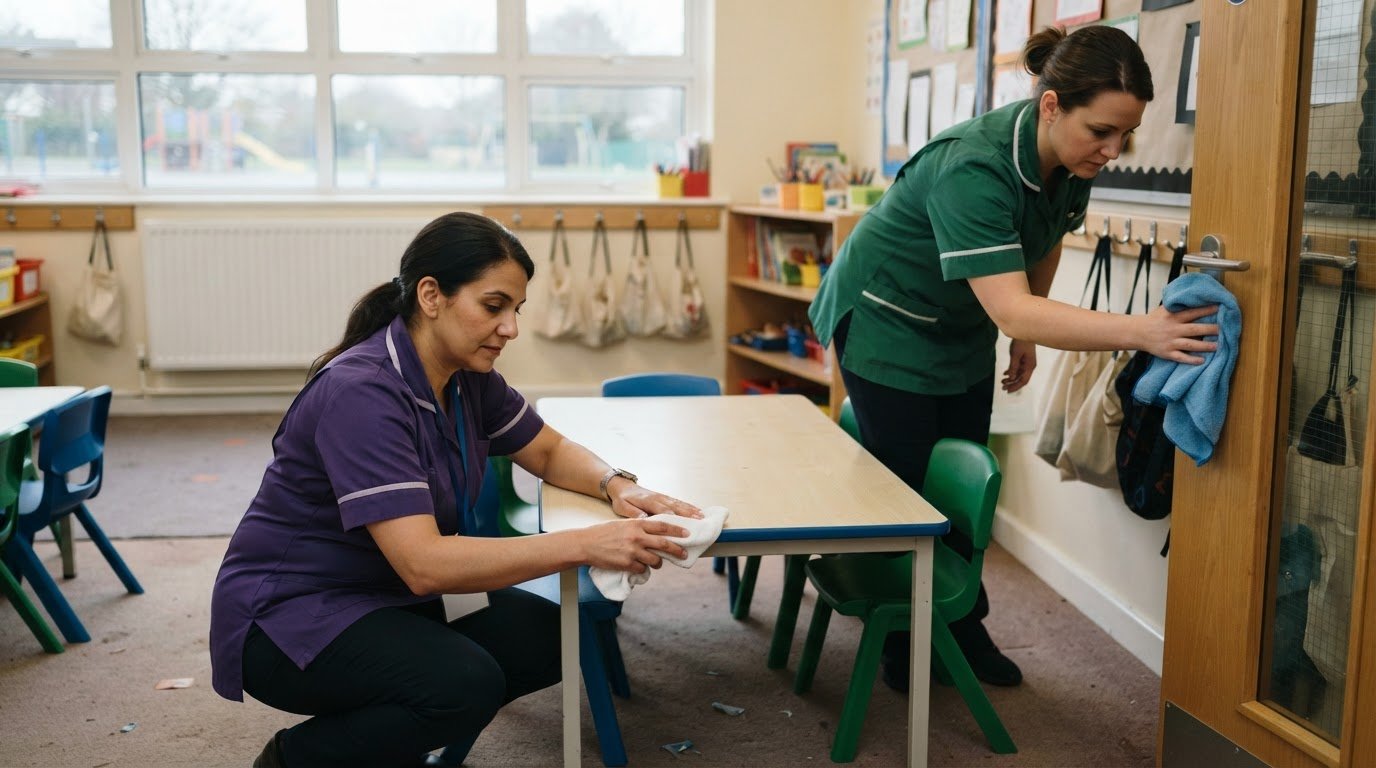
A clear rota separates daily classroom and washroom cleaning from less frequent detail work. Daily tasks can include emptying bins, vacuuming or mopping floors, and disinfecting desks. In specialist rooms, account for the surfaces and shared equipment used in lessons, such as benches, sinks, keyboards and mice.
Weekly duties can cover areas missed during routine cleaning, including high-level dusting, window handles and radiators. Carpets can receive a deeper clean monthly, while hard floors can be scrubbed. High-footfall corridors and shared areas may also need regular attention because pupils move between lessons and touch floors and other surfaces.
Desks, door handles and shared supplies need regular attention as part of infection control. Cleaning shared equipment after use helps reduce the spread of contamination between students. A practical rota identifies each item, task and due time, helping keep classroom cleaning consistent without interrupting learning. Coordinate access with school safeguarding arrangements, particularly when rooms are occupied or equipment is in use.
Washrooms need a separate routine. The busiest periods include 7:30 to 8:30 AM, 10:30 to 11:00 AM, 12:00 to 1:30 PM, and 3:00 to 3:30 PM. Hourly checks during peak use help spot cleanliness issues and identify empty soap dispensers. UK schools should check and refill dispensers every morning, sanitise pupil and staff toilets daily, and restock paper towels and sanitary disposal units.
Deeper washroom cleaning should include areas behind fixtures weekly, with monthly sanitisation of all surfaces. Keeping these tasks distinct from classroom duties makes completion easier to record and review. The schedule then gives facilities teams a practical overview of what was cleaned, when, and where adjustments may be needed during holidays or after a change in room use.
3. High-touch surface disinfection
A consistent disinfection plan identifies the surfaces pupils and staff touch most often. Put door handles, light switches and desks on the daily rota, and match tasks for shared keyboards, mice and equipment to how frequently they are used. Recording each task helps teams spot missed areas and maintain a dependable routine across classrooms and shared spaces.
Schedule disinfection of high-touch surfaces at least twice daily, including during the mid-morning break and after school. These times fit around pupils’ movement through classrooms and corridors, allowing teams to address contact areas without disrupting lessons. Deal promptly with spills or contamination rather than leaving them until the next scheduled round.
Effective disinfection depends on using the product as directed. Staff should follow its label, including the application method and required contact time, and use a product suitable for the surface. BS EN 1276 is a bactericidal standard, while BS EN 14476 is a virucidal standard; these standards describe different activity, so the task and product instructions should align.
School IT suites need particular care because pupils share input devices. The daily checklist recommends sanitising mice and keyboards. An average office computer keyboard can harbour more than 3000 bacteria per square inch, making routine attention to these shared touchpoints a practical part of infection control.
Quality monitoring should make task completion visible. A rota can record the surface, cleaning time and responsible staff member, while a supervisor’s inspection notes missed or visibly soiled areas. Keep cloths and equipment separate between washrooms, classrooms and food areas to reduce cross-contamination. These records make routines easier to review and adjust when room use, pupil movement or school activities change.
4. Cleaning for schools, nurseries and education settings
UK school hygiene requirements combine safe chemical management, suitable routines, and clear records. Schools in the UK must comply with the Control of Substances Hazardous to Health Regulations 2002 when managing cleaning chemicals, according to the UK legislation register. For education settings, leaders should make the cleaning schedule reflect room use, pupil movement, and the different needs of children in nurseries and older students.
A weekly rota can show work due in classrooms, shared spaces, kitchens and washrooms, with responsibility and completion recorded. It should also explain how teams respond promptly to spills or contamination, handle waste safely and manage cleaning during an infectious disease outbreak. Daily and weekly tasks serve different purposes: routine cleaning maintains frequently used areas, while deep cleaning addresses less accessible surfaces and equipment.
Chemical safety requires practical controls. Staff should follow manufacturers’ instructions for dilution, use and storage, and keep COSHH safety data sheets in locked, labelled janitorial stores. Keep cleaning products away from children and provide appropriate PPE, including gloves, aprons and masks. Separate colour-coded equipment for classrooms, washrooms and food areas helps reduce cross-contamination.
Quality checks make the rota a useful management tool. Regular hygiene inspections can identify missed tasks, worn equipment or areas needing a different method. School business leaders should review cleaning compliance with their contractor monthly, using task records and inspection findings to agree practical improvements. Annual refresher training helps staff keep procedures current, while safeguarding arrangements should guide access to occupied rooms and the handling of information encountered on site. Together, these measures help leaders monitor routine delivery and address gaps before they become persistent problems.
Failing to follow hygiene procedures can leave cleaning chemicals and waste unsafe, increase the risk of cross-contamination, and allow missed tasks to become persistent. No penalties are identified.
UF Cleaning: Office Cleaning London
UF Cleaning provides Education Cleaning for schools that need structured cleaning support. Its cleaning schedules and real-time quality controls, including quality checks and client feedback, help make routine delivery visible, with tasks planned to suit the premises.
For school leaders, this article’s principles offer a useful framework for reviewing cleaning routines, recording completed work and identifying areas that need attention. Where your requirements extend to office environments, UF Cleaning can support consistent standards through its office cleaning service. The appropriate approach depends on the premises, the tasks required and how the spaces are used.
Contact UF Cleaning to discuss your office cleaning requirements.
Make your next cleaning review practical
Use your next planning meeting to turn school hygiene compliance cleaning into clear responsibilities, review points and records that suit your premises. Start with the areas that create the greatest day-to-day demands, then agree how to document completed work and follow-up actions. A workable process gives school leaders a shared basis for discussing standards and adapting routines as room use changes.
UF Cleaning provides Education Cleaning, as well as Office Cleaning London, Housekeeping and Hotel Management. For schools seeking cleaning support, discuss the setting’s priorities and practical scope of work with UF Cleaning. A considered plan can support a well-maintained environment without adding unnecessary complexity for staff.
Contact UF Cleaning to discuss school cleaning and take the next step towards a cleaning plan shaped around your premises.
Frequently Asked Questions
How is quality monitored?
UF Cleaning monitors quality through planned inspections, recorded task completion and follow-up on identified issues. For school hygiene compliance cleaning, an inspection record can identify the room, task reviewed, any shortfall and corrective action taken. Comparing records over time can reveal recurring gaps, such as missed touchpoints after room changes, and help managers adjust the rota or clarify responsibilities.
What about holidays and deep cleans?
Holiday periods offer a chance to tackle work that is difficult to complete around lessons. Schools can schedule deeper cleaning during half-term breaks or summer holidays, then record completed areas before rooms reopen. A practical sequence is to prioritise carpets and hard floors, clean less accessible surfaces, and finish with a site review to identify any remaining work.
What makes school cleaning different?
School cleaning must account for children’s movement, shared equipment, changing room use and safeguarding arrangements. Classrooms, food areas and washrooms each need methods suited to their surfaces and purpose. For example, separate colour-coded equipment helps reduce cross-contamination, while coordinating access prevents cleaning from disrupting lessons or entering occupied spaces unexpectedly.
How often should classrooms, toilets, kitchens and shared areas be cleaned?
Classrooms and toilets should be cleaned daily, with tasks adjusted to how each space is used. School kitchen equipment needs daily cleaning and sanitisation, weekly deep cleaning, and monthly professional maintenance that includes internal cleaning. Shared areas need regular attention too: distinguish routine floor care from less frequent extraction work according to footfall and surface type.
What cleaning standards and checklists should schools use?
Use a site-specific checklist that names each area, task, frequency and completion record, alongside safe chemical procedures. Schools in the UK must comply with the Control of Substances Hazardous to Health Regulations 2002 when managing cleaning chemicals, according to the UK legislation register. For disinfectants, BS EN 1276 and BS EN 14476 identify bactericidal and virucidal standards respectively.
How should schools manage cleaning schedules, records and compliance audits?
For school hygiene compliance cleaning, keep schedules, completed task records, inspection findings and corrective actions together so leaders can trace issues from discovery to resolution. Review records with the cleaning contractor monthly and use regular hygiene inspections to identify improvements. When room use changes, update the rota and communicate revised responsibilities to relevant staff.