What if the least disruptive cleaning plan is not the one with the fewest scheduled hours, but the one designed around your facility’s risks and workflow? When comparing industrial cleaning services, consider that industrial cleaning can involve more than a general commercial checklist. A poorly defined scope may leave safety requirements, production schedules or site access unaddressed.
Choosing a provider means looking beyond the headline proposal. Check how tasks are matched to your facility, how work can be organised around operational demands, and how safety arrangements and service quality are documented. Clear responsibilities matter too, particularly when issues need to be reported and resolved.
This guide explains how to compare industrial cleaning providers, assess operational and safety requirements, and prepare a practical brief for a tailored quotation. It covers what to specify, what to ask about risk assessments and quality monitoring, and how to set expectations for schedules, accountability and follow-up. With a well-defined scope, you can compare proposals consistently and assess whether the service suits your site.
Key Takeaways
- Define the cleaning scope around your facility’s processes, surfaces, access and risks. Don’t assume every contractor offers the same specialist tasks.
- Ask how proposed methods, hazard assessments and site coordination will protect people and minimise disruption to operations.
- Give each bidder the same brief, then compare scope, schedules, staffing, supervision, reporting and escalation arrangements.
- Document site requirements, operating windows, constraints, contacts and expected outcomes before assessing service plans.
- Consider whether flexible scheduling and real-time quality monitoring through Taskbe could support visibility and follow-up in a recurring industrial cleaning arrangement.
What industrial cleaning services cover in complex working environments
Industrial cleaning services are planned activities tailored to a facility’s processes, surfaces, access arrangements and risks. The scope may combine routine upkeep with scheduled deep cleaning or specific specialist tasks, but coverage varies by provider and site. For facilities managers searching for industrial cleaning services London, a clear brief helps establish what is required, how often it should happen and exactly what the contractor proposes.
Operational fit matters as much as the task list. In a warehouse, cleaning priorities may include busy routes, storage areas and high-traffic floors. At a manufacturing site, equipment, production schedules and controlled-access zones may determine when and how work can take place. Facilities with similar uses can still differ in surface materials, residues and site procedures.
Which facility needs and cleaning tasks should the brief identify?
Start by recording the areas to be cleaned and the conditions that affect each one. Note floor and other surface types, traffic levels, access restrictions, operating hours and the required frequency for each zone. Separate recurring work, such as floor and touchpoint cleaning, from periodic deep cleaning that may need its own schedule and arrangements.
Include specialist tasks only when they are relevant to the facility, and ask bidders to confirm them explicitly in their proposed scope. Don’t assume a task is included because a provider describes its work as industrial cleaning. Clarify what will be cleaned, which methods and materials are proposed, and whether any requirements need to be agreed with the site team before work begins.
How does industrial cleaning differ from general commercial cleaning?
Industrial environments can place additional constraints on service delivery. Production schedules may limit access to certain areas, machinery may need to remain protected, and site rules may require cleaning teams to follow defined routes or coordinate with responsible personnel. A method suitable for an open warehouse floor may not be appropriate near sensitive equipment or on a surface that could be damaged by unsuitable products or techniques.
Methods should reflect the surface, residue, access and operating procedures, rather than follow a standard checklist. For example, work in a production area may need to be planned around equipment use, while a warehouse route may require a different approach based on traffic and floor condition. Where internal pipework or vessels are cleaned through an automated process without disassembly, Clean-in-Place (CIP) systems provide a distinct example. Don’t assume this is part of a contractor’s cleaning offer. Confirm who is responsible and what the agreed scope covers.
Documenting these differences gives you a consistent basis for comparing proposals against actual site needs. If your shortlist began with a search for industrial cleaning services London, apply the same site-specific criteria to assess each provider’s fit.
How industrial cleaning methods and safety planning fit the site
A suitable cleaning method depends on the surface, the material to be removed, access, equipment and the facility’s procedures. A technique that works on an accessible floor may be unsuitable around operating machinery or where residues could become airborne. Ask providers to explain not only what they propose to do, but why the method is appropriate for each area and task.
Dust is one example of a hazard that needs site-specific consideration. The Health and Safety Executive’s research on dust exposure examines risks associated with industrial cleaning. If hazardous substances are used or created, ask how the relevant COSHH assessment and controls will be addressed. The Control of Substances Hazardous to Health Regulations 2002 require employers to assess and prevent or adequately control exposure to hazardous substances. Check the HSE’s current guidance for how duties apply to your workplace and proposed work.
What should a site-specific cleaning risk review consider?
Ask the contractor to explain how it will identify hazards, restricted areas and the sequence of work. The proposal should show how products and equipment will be selected for the specific task and environment, rather than assume one approach suits every surface or residue.
Clarify who is responsible for approving access and coordinating with site personnel. If your rules require permits, equipment isolations or other controls, agree who authorises them and when. Ask about relevant staff training, supervision and access controls, and how instructions will be communicated to your team.
How can cleaning be scheduled around facility operations?
Compare proposed cleaning windows with production activity, deliveries, shift changes and access requirements. A workable plan should identify areas that need to remain clear, the sequence for avoiding conflicts with operations, and how teams will manage handovers between cleaning and site staff.
Plans can change, so ask how the contractor will receive updates, communicate adjustments and escalate concerns during service. Agree the appropriate contacts on both sides, along with how missed tasks, access issues or unexpected hazards will be reported and followed up. These details make the schedule a practical operating plan, not simply a timetable.
Use your site controls and operating windows to assess whether a proposal is a genuine fit. If you’re considering industrial and manufacturing cleaning, you can discuss a tailored cleaning requirement with UF Cleaning.
How to compare industrial cleaning contractors beyond the headline proposal
A longer task list doesn’t necessarily mean a better fit. To compare providers fairly, give each bidder the same site brief, including the areas, required outcomes, operating constraints and known access arrangements. Then assess how clearly each proposal explains delivery, evidence and accountability. This is more useful than judging proposals by the number of services named or by broad assurances alone.
| Compare | What to check |
|---|---|
| Scope | Are tasks, methods, frequencies, exclusions and expected outcomes clearly stated? |
| Schedule | Does the proposed timetable reflect operating windows, access limits and site activity? |
| Staffing | Who will attend, how are staff inducted, and what cover arrangements apply? |
| Supervision | Who oversees delivery, and how are service concerns recorded and resolved? |
| Reporting | What checks are documented, who reviews them, and how often will updates be provided? |
| Escalation | Who should be contacted about missed work, access issues or changes to the plan? |
Which questions reveal whether a contractor can meet your requirements?
Ask bidders to explain how their proposed methods and frequencies relate to the brief, and to identify any assumptions or exclusions. Clarify who manages day-to-day supervision, communicates with your site contacts and records performance issues. Ask how induction and access management will work, and what happens if an assigned team member is unavailable. Specific answers supported by relevant examples are more useful than an unqualified promise of flexibility.
If a provider cites a certification, request evidence and check its current validity, scope and relevance to the service proposed. Treat credentials as one part of your assessment, not a substitute for a site-specific plan. Search results for industrial cleaning services London may include providers making similar claims. Applying the same questions helps reveal meaningful differences in operational fit.
How should buyers assess quality monitoring and environmental claims?
Find out what quality checks are recorded, who reviews the results and how corrective actions are followed through. Compare the reporting frequency and level of detail with the oversight your facility needs. UF Cleaning describes real-time quality monitoring through Taskbe. Ask any bidder how its reporting process provides visibility and supports follow-up.
Environmental statements also need a defined scope. Ask for evidence and clarify which products, supplies or tasks a claim covers, rather than assuming it applies to every part of the service. A structured comparison keeps the focus on verifiable evidence, practical controls and a plan suited to your facility.
How to prepare an industrial cleaning brief and evaluate the service plan
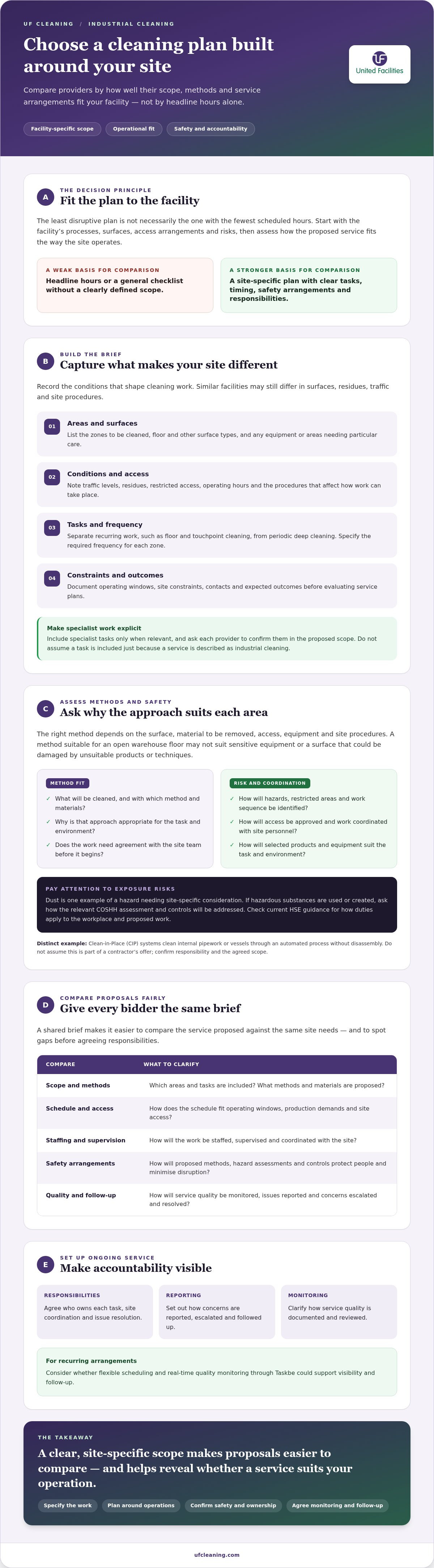
A precise brief gives every provider the same basis for proposing a service and helps you identify assumptions before they become delivery gaps. Set out what needs cleaning, the conditions the work must fit around, and how you’ll assess whether the agreed plan is being followed.
What information should an industrial cleaning brief include?
Use this sequence to organise the information before requesting proposals:
- Document the site. List facility zones, surface types, access arrangements, operating hours and relevant site procedures. Note restrictions that could affect how or when teams work.
- Define the scope. Separate required tasks and frequencies from optional or periodic work. Identify the outcomes you need, such as specified areas being cleaned to an agreed standard, rather than relying on broad labels.
- Set out operational constraints. Record production peaks, deliveries, shift changes and any access approvals or coordination arrangements a provider must account for.
- Name contacts and review needs. Identify the site contact, who approves changes, what reporting you require and how often the service plan should be reviewed.
A site survey may help clarify access, surfaces or other assumptions that are difficult to assess from a written brief. Its format and usefulness will depend on the site and provider. Confirm what any proposed review covers and whether it changes the scope or proposal.
How can you assess the proposed schedule and service levels?
Check that the schedule reflects how the facility is used, including operational peaks and restricted access periods. A timetable that looks workable on paper may need adjustment if it overlaps with deliveries, busy production windows or a handover between shifts. Ask the provider to explain how the proposed sequence accommodates those conditions.
Decide how work and follow-up should be recorded before comparing proposals. For example, you might request confirmation of completed tasks, a route for reporting quality concerns, and a record of agreed remedial actions. Set a review cadence that gives the appropriate site contacts regular opportunities to assess delivery and raise changes.
Read the proposed scope alongside its exclusions, reporting arrangements and escalation route before agreeing service arrangements. Measures should relate to practical outcomes you can review, not unsupported promises of performance. If a task, frequency or responsibility remains unclear, ask for it to be defined in writing so providers can be compared consistently.
With your requirements documented, discuss a tailored industrial cleaning brief with UF Cleaning.
What to expect from UF Cleaning’s industrial cleaning partnership
Once you’ve defined the facility’s requirements and comparison criteria, assess how a provider’s service model could support them over time. UF Cleaning provides industrial and manufacturing cleaning, with recurring arrangements shaped around the agreed scope and schedule. The company has served organisations since 2010, bringing commercial facilities services experience to discussions about ongoing site needs.
How can UF Cleaning’s service model support ongoing site requirements?
Flexible schedules can help align recurring cleaning with a facility’s operating pattern, provided the proposed arrangements suit its access needs and agreed service scope. UF Cleaning states that recurring agreements include labour and eco-friendly supplies. Ask the proposal to specify which tasks and supplies are covered, along with any exclusions, so the written agreement reflects your requirements clearly.
UF Cleaning uses Taskbe for real-time quality monitoring. This gives facilities managers a basis for discussing how monitoring may support oversight and follow-up. Confirm what information will be available to your team, how concerns should be raised, and how any required corrective action will be communicated. Treat the platform as part of the stated monitoring approach, not as evidence of unconfirmed features.
Before agreeing a service, check the proposed tasks, staffing arrangements, cleaning frequency and review process. UF Cleaning also states that 24/7 operational support is available. Clarify how this applies to your contract and distinguish operational support from cleaning-team availability. Setting out these details in the proposal gives both parties a shared reference point as site requirements change.
What happens when you request a tailored cleaning proposal?
Prepare a concise summary of your facility, priority areas, required cleaning outcomes, operating constraints and preferred schedule. Include relevant access procedures and the appropriate site contact, and note any tasks or frequencies that need clarification. This information can make the initial discussion more specific and establish whether a site assessment is needed to confirm assumptions.
The proposal discussion should clarify the intended scope, schedule, supplies, reporting arrangements and responsibilities, including anything outside the agreement. Review these details alongside your brief before deciding whether the service is the right fit. A well-defined proposal should make clear what is included and how the ongoing arrangement will be reviewed.
If you’re considering industrial and manufacturing cleaning, you can request a tailored cleaning proposal from UF Cleaning and discuss your facility’s requirements.
Set your facility up for dependable cleaning
A reliable industrial cleaning arrangement starts with a scope shaped around your facility, its risks and the way work happens on site. Define tasks, schedules, access requirements and review measures before comparing proposals. Then check how each provider will report progress and resolve concerns. This gives you a practical basis for assessing industrial cleaning services London and other proposals on operational fit, not headline claims alone.
UF Cleaning provides industrial and manufacturing cleaning and has served organisations since 2010. Its recurring agreements include labour and eco-friendly supplies, while flexible schedules can be discussed in line with the agreed scope. Real-time quality monitoring through Taskbe can support service visibility, and UF Cleaning states that 24/7 operational support is available. Confirm how these arrangements apply to your requirements, including the specific tasks, reporting and responsibilities set out in the proposal.
To begin a service discussion, prepare your facility details, priorities and operating constraints, then request a free, tailored cleaning quote. A clear brief can help establish a considered plan for your site and a dependable working partnership.
Frequently Asked Questions
What do industrial cleaning services typically include?
Industrial cleaning services typically include planned tasks agreed for a facility’s areas, surfaces and operating conditions. A scope might include routine floor and touchpoint cleaning, alongside periodic deep cleaning where required. Specialist tasks aren’t automatically included, as providers differ in their capabilities and proposed services. Ask for each task, frequency, method and exclusion to be stated clearly, then confirm that the proposal reflects your site’s processes, access arrangements and requirements.
How do I choose an industrial cleaning contractor?
Choose a contractor by comparing how well each proposal fits your site, not by counting listed tasks. Give bidders the same brief, then assess their scope, schedule, staffing, supervision, reporting and escalation arrangements. Ask how staff induction and access will be managed, how performance concerns are recorded, and what evidence supports claims about experience or environmental practices. Confirm that exclusions and review arrangements are clear before agreeing a service.
Can industrial cleaning take place while a facility is operating?
It may be possible, but the cleaning plan must suit the facility’s activities, access rules and risks. Discuss production periods, deliveries, shift changes and areas where staff or equipment will be present. The contractor should explain how proposed tasks will be sequenced and coordinated with your responsible site contacts. Agree how changes to operations will be communicated, and confirm any required access approvals before work begins.
What should an industrial cleaning quotation include?
A useful quotation should describe the agreed areas, tasks, methods and frequencies, alongside the proposed schedule and staffing arrangements. It should also identify exclusions, included supplies, supervision, reporting, escalation routes and how the service will be reviewed. Check that the proposal addresses your site brief and flags assumptions that need confirmation, such as access arrangements or task-specific requirements. Ask for unclear responsibilities to be defined before accepting the proposal.
How often should an industrial facility be cleaned?
Cleaning frequency should reflect how each area is used, its traffic levels, the surfaces involved and the facility’s operational requirements. A busy route may need more frequent attention than a low-use area, while some deeper cleaning may be planned separately from routine tasks. Ask providers to recommend frequencies by zone and explain their reasoning. Review the schedule against observed site conditions and adjust it through an agreed process.
How can industrial cleaning be managed safely around equipment and staff?
Plan cleaning around the equipment, substances, people and procedures present in each work area. Ask the contractor how hazards are assessed, how products and equipment are selected, and how teams coordinate with your site’s responsible personnel. Confirm training, supervision, access controls and any site approvals required for the work. Where hazardous substances are involved, check how COSHH assessments and controls apply to the specific task, and consult current HSE guidance as needed.
Does industrial cleaning include waste removal or pest control?
Don’t assume that waste removal or pest control is included in an industrial cleaning agreement. These are distinct services, and the scope should state clearly what the cleaning provider will and won’t do. UF Cleaning provides industrial and manufacturing cleaning, but does not offer waste management and haulage or pest control. If your facility needs either service, arrange it separately and clarify how responsibilities and site coordination will be handled.