What if outsourcing housekeeping gave your hotel more control over quality, not less? For teams considering hotel housekeeping services, that distinction matters: inconsistent room standards can undermine guest confidence, whilst staff turnover and limited visibility can make it harder to keep rooms guest-ready.
It’s understandable to be cautious about handing a core part of the guest experience to an external team. A dependable arrangement should fit your hotel’s standards, work smoothly with its operations and make cleaning progress easier to monitor, rather than add another layer of uncertainty.
This guide looks at how a data-led partnership can support consistent room quality, stable housekeeping operations and costs based on room volumes. UF Cleaning provides housekeeping and hotel management services, using its Taskbe platform for real-time quality monitoring. Hospitality clients can also access eco-friendly products and 24/7 operational support.
You’ll find practical points to consider when setting cleaning schedules, agreeing quality oversight and integrating a housekeeping team with your hotel’s operations.
Key Takeaways
- Consistent housekeeping helps support guest confidence and a hotel’s reputation.
- Real-time quality monitoring can help teams spot reported issues and follow up.
- Match housekeeping resources to room volumes, and check whether the proposed staffing model fits your operation.
- Agree useful performance measures, such as room inspection results, turnaround times and guest feedback.
- When choosing hotel housekeeping services London, assess operational integration, responsibilities and quality oversight.
The Strategic Importance of Hotel Housekeeping Services
Housekeeping is not simply a behind-the-scenes task. It shapes a guest’s first impression of a room, influences their confidence in the wider hotel and can affect how they describe their stay. A consistently prepared room supports the promise made by a hotel brand; a missed detail can make other service strengths less visible.
The hotel housekeeping department has a broad role in maintaining guest spaces, but a rota alone may not provide the oversight an operation needs. Hotels must coordinate room readiness with occupancy, communicate priorities across teams and identify quality issues before they affect guests. When comparing housekeeping services, assess not only the cleaning tasks performed, but also how the work fits into hotel operations.
Guest Expectations in the Modern Hospitality Landscape
Guests can share impressions quickly through social media and review platforms, making visible cleanliness an important part of the overall stay. A room may appear tidy yet still fall short if touchpoints, bathroom presentation or replenished items have been overlooked. “Guest-ready” means applying a consistent, detailed standard that reflects the hotel’s own expectations, rather than relying on a basic room-cleaning checklist. Small details communicate care and can shape perceptions of the wider service.
The Operational Burden of In-House Staffing
Managing an in-house team involves more than filling shifts. Recruitment, induction, training, absence cover, supervision and quality checks all require time and coordination. These responsibilities can be harder to balance when occupancy changes, while a fixed staffing plan may not align with the rooms that need attention.
A managed housekeeping arrangement gives hotel managers an alternative to handling every staffing task internally. Its value depends on clear responsibilities, agreed standards and schedules designed around the property’s needs. Rather than treating outsourcing as a simple transfer of labour, consider how a provider will coordinate with hotel teams, report progress and address concerns. Bespoke schedules can help align resources with room volumes, while operational support offers a point of contact when plans need attention.
UF Cleaning provides housekeeping and hotel management services across the UK. Hospitality clients can access 24/7 operational support, and cleaning schedules can be shaped around each hotel’s requirements. Agree responsibilities and communication routes in advance so the housekeeping team can fit into the operation and managers can retain oversight.
Real-Time Quality Control: A Modern Approach to Housekeeping
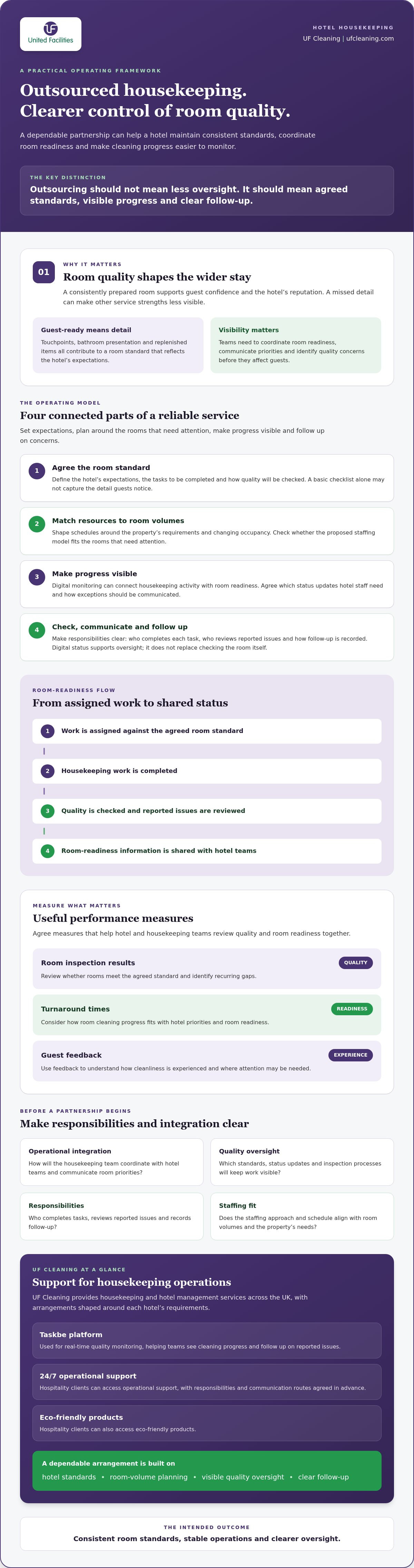
A room’s appearance is the visible result of a larger process: work must be assigned, completed to the agreed standard, checked and communicated to the teams managing arrivals. Real-time quality control is a systematic way to monitor cleaning progress through digital platforms. Used thoughtfully, it can connect housekeeping activity with hotel management, rather than treating cleaning as separate from room readiness.
The guest-facing value is clear, but so is the operational case. The Institute of Hospitality discusses the strategic importance of cleanliness to guest satisfaction. When assessing hotel housekeeping services London, ask how a provider makes standards visible and how your team can raise and track concerns.
The Taskbe Platform: Supporting Room Oversight
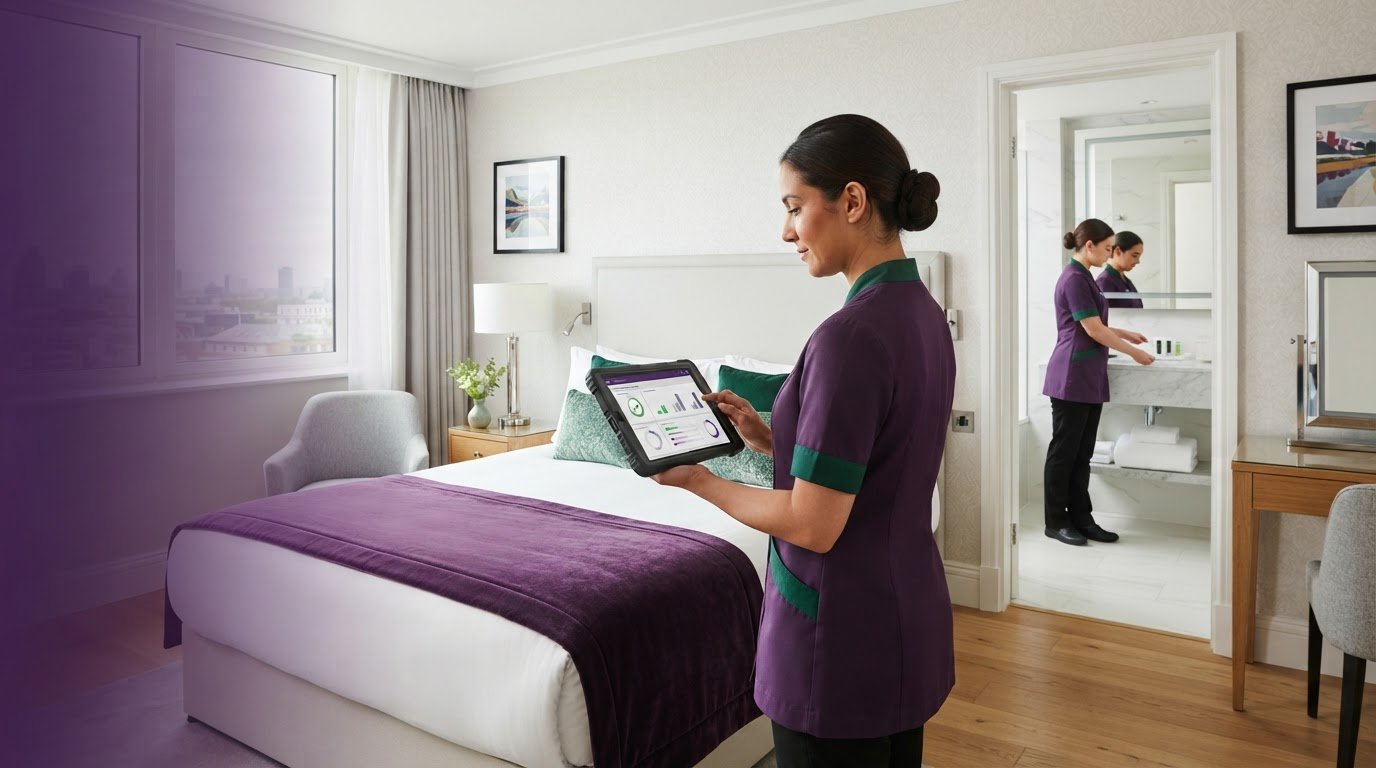
UF Cleaning uses its Taskbe platform for real-time quality monitoring. Before service begins, agree how digital oversight will support your hotel’s procedures. Set out the room standards to be followed, which status updates hotel staff need and how exceptions should be communicated. This helps reception and management share an understanding of room readiness, while recognising that a digital status does not replace checking the room itself.
Accountability depends on more than recording activity. A useful process makes responsibilities clear: who completes each agreed task, who reviews reported issues and how follow-up is recorded. This gives managers a practical basis for discussing recurring gaps and recognising reliable work, whilst keeping the hotel’s standards central to the partnership.
Closing the Quality Gap in Outsourced Services
A quality gap can emerge when a hotel cannot see what has been completed or how a concern is being handled. Regular monitoring can help reveal patterns, such as repeated reports about a particular room or an unresolved hygiene concern. Managers and providers can investigate the cause, agree corrective action and review whether the issue returns. This is more useful than relying on occasional feedback alone.
Transparency also requires a shared escalation route. Agree which updates matter, who receives them and how time-sensitive issues are raised. UF Cleaning provides 24/7 operational support for hospitality clients, giving them a point of contact for operational matters. Combined with monitoring, clear communication gives both parties a consistent process for addressing concerns.
To review the service and discuss how it could fit your procedures, explore UF Cleaning’s housekeeping services.
Flexible Staffing Models for High-Occupancy Environments
Housekeeping demand can shift with occupancy, seasonal patterns and events, while the standard expected of each room remains constant. Assess a staffing model not only by the team’s usual size, but by how responsibilities and resources can adjust when the number of rooms requiring attention changes. When comparing hotel housekeeping services, agree how flexibility will work in practice without compromising brand standards or guest comfort.
A fixed staffing arrangement can provide continuity and familiar routines, but may be less responsive when room volumes rise or fall. A volume-based approach links resourcing more closely to the work required, although it relies on clear forecasts, communication and agreed service expectations. Clarify how changes are requested, who confirms priorities and how quality oversight will be maintained during busy periods.
National coverage alone does not explain how a provider prepares or supervises its teams. Ask how hospitality etiquette and your hotel’s standards are communicated, and how team members are introduced to room requirements and guest-facing behaviour. These details matter: staff may work out of sight, but their coordination with front-of-house can affect the guest experience.
Scalability: From Boutique Stays to Larger Hotels
The required team size depends on room numbers, expected turnover and the time available to prepare rooms. Agree how resources will be reviewed when demand changes and what information the provider needs to plan effectively. Distinguish intensive cleaning tasks from routine room preparation, and agree their timing and responsibilities rather than assuming they are included in the same schedule.
For hotels with event spaces or high-footfall areas, housekeeping plans should account for both guest rooms and shared spaces. UF Cleaning offers housekeeping and Events & Venues Cleaning, so hotels can discuss how these requirements may fit within their operational arrangements.
The Importance of Bespoke Cleaning Schedules
A bespoke schedule should reflect the hotel’s guest patterns and room priorities. Agreeing task timing with front-of-house can support smooth handovers: teams can share priority rooms, flag changes and confirm when updates are needed. This helps avoid unnecessary disruption to guests.
Plan periodic work alongside daily routines. UF Cleaning offers carpet and window cleaning, which can be scheduled with consideration for occupancy and hotel operations. Clear sequencing, assigned responsibilities and regular communication help the housekeeping team work in the background while managers retain oversight.
Measuring Success: KPIs for Outsourced Housekeeping
Useful performance measures show more than whether rooms are cleaned quickly. They help hotel managers assess whether agreed standards are being met, where recurring issues arise and how the service supports the wider guest experience. When comparing hotel housekeeping services, agree a focused set of measures with the provider, define how each will be assessed and review the results together.
Consider guest feedback alongside operational records. A pattern of comments about room presentation, for example, can help identify where an inspection or process needs attention. Site audits and performance reviews add context, allowing the hotel and provider to compare findings, discuss exceptions and agree practical follow-up rather than treating a single score as the whole picture.
Quantitative and Qualitative Performance Measures
Turnaround time can indicate how efficiently rooms move through housekeeping, but it should not stand alone. Pair it with cleanliness inspection results and guest feedback to check that speed is not coming at the expense of thoroughness. Useful measures may include:
- Room readiness: time taken to complete agreed work, reviewed alongside inspection outcomes.
- Guest experience: recurring themes in comments about room cleanliness and presentation.
- Quality follow-up: issues identified, actions agreed and whether similar concerns recur.
- Resource continuity: staff retention and team consistency, considered alongside service observations.
Agree how product use will be reviewed. UF Cleaning uses eco-friendly products as standard; managers can discuss how these fit the hotel’s housekeeping requirements and what information is available. The aim is a transparent, shared understanding, not simply a count of products used.
Assessing the Wider Return
Premium housekeeping can support a hotel’s value proposition, but a direct link between cleaning scores and a higher average daily rate (ADR) should not be assumed. Hotels can review guest feedback, room-quality results and ADR together over time, while considering other influences on rates. This provides a more considered view of whether operational standards support the experience the hotel intends to offer.
Asset care and staff experience also belong in the review. Consistent, appropriate care of room furnishings and surfaces may help managers monitor their condition and plan upkeep. A well-organised environment may also contribute to a more composed working day for hotel teams. Assess these outcomes through site observations and staff feedback, rather than treating them as guaranteed savings or productivity gains.
Set review intervals, assign responsibility for actions and revisit measures when operating needs change. To discuss performance measures for your hotel, contact UF Cleaning about hotel housekeeping.
Partnering with UF Cleaning
A long-term housekeeping partnership works best when it supports the hotel’s existing standards and management structure, rather than imposing a one-size-fits-all routine. For managers assessing hotel housekeeping services, look beyond the cleaning tasks themselves: consider how responsibilities, schedules, quality oversight and communication will fit the way your hotel operates.
UF Cleaning provides housekeeping and hotel management services across the UK. Cleaning schedules can be shaped around each hotel’s requirements, eco-friendly products are used as standard, and hospitality clients can access 24/7 operational support. These are practical foundations for a partnership, while day-to-day expectations still need to be agreed with each hotel.
Experience and Operational Reliability
Experience matters when a service must fit into a complex hospitality operation. Ask how the team will work with hotel management, how quality concerns will be communicated and how agreed standards will be reviewed. UF Cleaning has provided services since 2010 and serves organisations across the UK; operating arrangements should reflect each property’s needs.
Managers can also discuss how the provider’s eco-friendly products align with the hotel’s housekeeping requirements. Clear communication about standards, responsibilities and operational support helps establish confidence without making assumptions about the property’s processes.
Implementing a Bespoke Housekeeping Strategy
A considered transition begins with listening and planning. Hotel managers and the provider can work through the requirements together:
- Set the service priorities: identify room volumes, quality standards and operational expectations.
- Agree the working arrangements: clarify team responsibilities, communication routes and coordination with hotel management.
- Shape the schedule: plan cleaning routines around room demand and the guest experience.
- Review performance: agree how quality will be monitored and how feedback or recurring concerns will be addressed.
This collaborative approach helps protect the hotel’s identity while making the partnership accountable to agreed standards. It also gives managers a clear basis for assessing whether the arrangement continues to meet operational needs as they change. Discuss the implementation process and responsibilities directly with the provider.
To discuss a tailored approach, contact UF Cleaning for a bespoke hotel housekeeping consultation.
Choosing Hotel Housekeeping Services London
Consistent housekeeping depends on more than a completed room rota. Clear quality oversight, staffing arrangements that reflect changing demand and agreed performance measures help hotels protect the guest experience while maintaining operational visibility. These practices make outsourcing a considered management partnership, not simply a change in who carries out the work.
For hotel managers assessing hotel housekeeping services London, UF Cleaning provides housekeeping and hotel management services across the UK, real-time quality monitoring through its Taskbe platform and 24/7 operational support for hospitality clients. Its schedules can be shaped around a hotel’s requirements, with eco-friendly products used as standard.
If your team is considering a different housekeeping arrangement, discuss your priorities and operational needs with UF Cleaning. Request a quote for hotel housekeeping and explore an approach designed to work behind the scenes while supporting the standards your guests expect.
Frequently Asked Questions
What are the benefits of outsourcing hotel housekeeping services?
Outsourcing can give hotels access to a managed housekeeping team, clearer quality oversight and a service model planned around room volumes. It may also reduce the in-house administrative work involved in recruitment, training and day-to-day coordination. The value depends on how well the provider integrates with hotel operations, communicates room status and follows agreed standards. Define responsibilities and performance measures before choosing a partner.
How does real-time quality control improve hotel cleaning standards?
Real-time quality control makes cleaning progress more visible, helping hotel teams and providers identify reported issues and follow up through an agreed process. UF Cleaning uses its Taskbe platform for real-time quality monitoring. Ask what information the platform provides and how it fits your procedures. Digital monitoring supports oversight, but it should complement clear standards, appropriate inspections and communication between housekeeping and hotel management.
Can an outsourced housekeeping team adapt to our hotel’s specific brand standards?
An outsourced arrangement can be shaped around a hotel’s brand standards when expectations are discussed and agreed with the provider. Set out the required room presentation, cleaning priorities, guest-facing etiquette and communication methods before service begins. Bespoke schedules can reflect the property’s operating needs, while regular reviews help managers and the provider address gaps and keep the approach aligned with the guest experience.
What should I look for in a hotel housekeeping contract in the UK?
Look for a clear description of the housekeeping scope, how staffing is arranged and how room volumes or dedicated staffing hours affect the service. The contract should explain responsibilities, quality monitoring, reporting, issue escalation and how changes to requirements are agreed. Clarify which cleaning products are used and how the provider works with hotel management. Review notice and transition arrangements carefully, and seek professional advice if contract terms are unclear.
How do flexible staffing models help manage hotel occupancy fluctuations?
Flexible models can align housekeeping resources with changing room volumes, rather than relying solely on a fixed team size. UF Cleaning’s hospitality services can be tailored around room volume or dedicated staffing hours. Discuss how demand is forecast, how changes are communicated and how service standards will be maintained during busy periods. Agreeing these arrangements in advance helps front-of-house and housekeeping coordinate priorities and room handovers.
Are eco-friendly cleaning products effective in a high-traffic hotel environment?
Eco-friendly products can be suitable for hotel housekeeping when selected for the surfaces and tasks involved and used according to their instructions. Effectiveness depends on appropriate product choice and consistent working practices, not the environmental description alone. UF Cleaning uses eco-friendly products as standard. Discuss product suitability for your property, any relevant preferences and how cleaning outcomes will be checked in high-use guest areas.
How does UF Cleaning ensure the security and integrity of hotel guests’ belongings?
Confirm procedures for handling guest belongings directly with UF Cleaning before service begins. Ask how staff access is managed, what team members should do if they find an item, and how concerns are reported and recorded. Agreeing a clear protocol with hotel management helps ensure housekeeping staff understand the property’s expectations and escalation routes.
What is the typical process for switching housekeeping providers?
A switch generally starts with reviewing existing arrangements and identifying the hotel’s standards, room volumes and operational priorities. Next, agree the new provider’s scope, responsibilities, schedule, communication routes and quality measures. Plan the handover with hotel management and front-of-house so room status and outstanding concerns are clear. After the transition, review performance together and refine arrangements where needed. Confirm specific timelines and contract requirements with both providers.