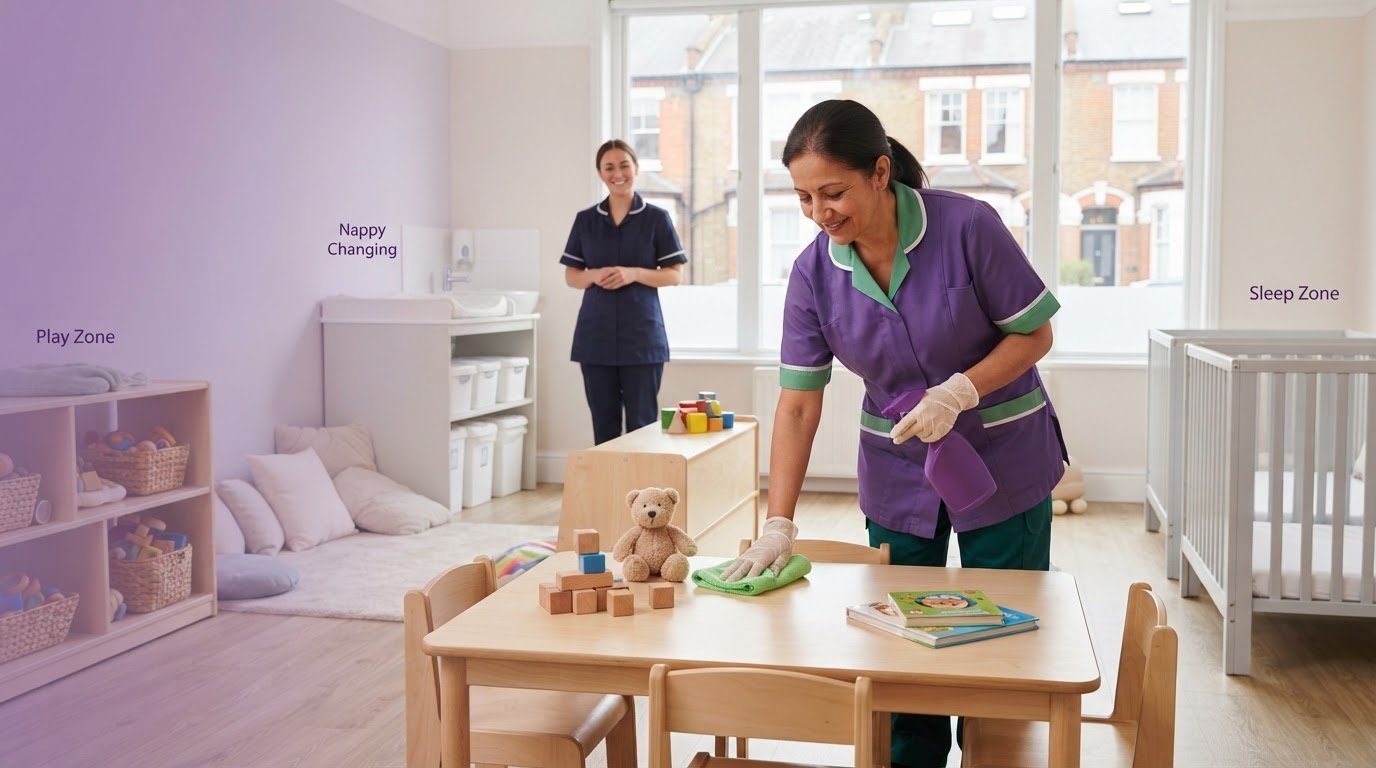
A reliable nursery cleaning plan isn’t necessarily the longest checklist. It’s one that reflects how each room is used. A busy playroom, sleep area and nappy-changing space have different hygiene needs, so applying the same routine everywhere can leave gaps or disrupt care. Staff also need clear instructions on what gets cleaned, when, by whom and how products are used safely around children.
Consistent standards needn’t add uncertainty to an already busy day. A practical plan sets out routine tasks, accounts for high-use areas and defines responsibilities for staff and cleaning teams across rooms and shifts.
This guide explains how to build age-appropriate routines around room use and traffic, assess specialist education cleaning providers, and review standards so missed tasks can be addressed. It also covers how to coordinate cleaning with daily care, helping maintain a hygienic environment without relying on one-off efforts.
Key Takeaways
- Shape nursery cleaning around how each room is used, so routine tasks reflect the setting’s practical needs.
- Build a schedule by identifying tasks, assigning responsibility and setting suitable timings for staff and cleaning teams.
- Choose cleaning methods and frequencies with the surface, manufacturer’s instructions and setting’s risk assessment in mind.
- Assess providers on relevant experience, clearly defined tasks, schedule flexibility and how they communicate changes or interruptions.
- Agree reporting and review arrangements from the outset, making it easier to spot recurring gaps and adapt as nursery operations change.
Why nursery cleaning needs a routine built around children and room use
Effective nursery cleaning is a planned set of cleaning and hygiene tasks shaped around the setting’s rooms, daily activities and documented procedures. A playroom used throughout the day has different needs from a sleep space, entrance or food area. A clear routine tells staff and cleaning teams which surfaces and shared items need attention, when visible soiling or spills require a response, and who is responsible.
These tasks support everyday infection prevention alongside practices such as hand hygiene. The Infection control principles describe how environmental cleaning can form part of efforts to limit the spread of infection. Routine cleaning should sit alongside, not replace, periodic or specialist tasks. Regular attention addresses ongoing use, while less frequent work can cover needs identified in the setting’s plan. The appropriate scope and frequency depend on the rooms, surfaces and procedures involved.
Early years settings across the UK should check current guidance relevant to their nation, as well as the requirements that apply to their own premises. Use that guidance alongside the setting’s risk assessments and documented procedures to shape a practical approach, rather than relying on a generic checklist.
Which nursery areas need particular attention?
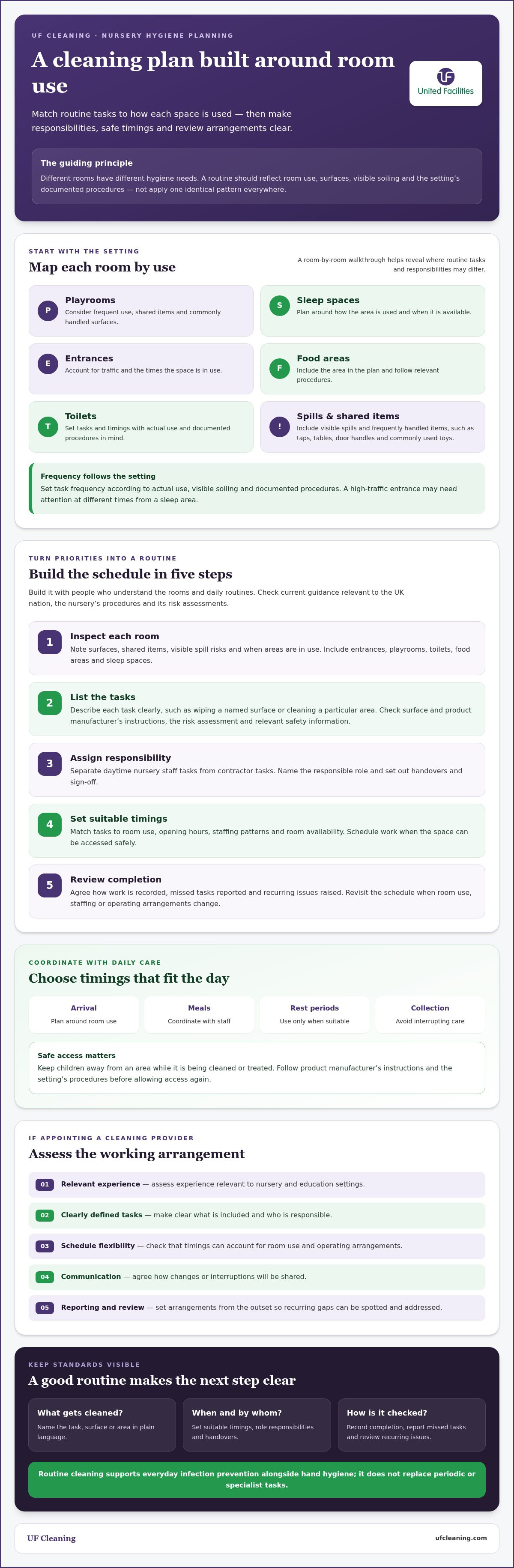
Walk through the setting and map each area according to how it is used. Include playrooms, entrances, toilets, food areas and sleep spaces. Note the surfaces and shared items children and staff handle frequently, such as door handles, tables, taps and commonly used toys. Include visible spills in the plan so staff know how to respond promptly and consistently.
Set frequency according to actual use, visible soiling and the setting’s documented procedures. A high-traffic entrance may need attention at different times from a sleep area. A room-by-room walkthrough helps identify these differences and assign clear responsibilities.
How should cleaning fit around children’s routines?
Where operationally suitable, plan tasks around arrival, meals, rest periods and collection. Coordinate with staff so cleaning does not interrupt care. Keep children away from an area while it is being cleaned or treated, and follow the product manufacturer’s instructions and the setting’s procedures before allowing access again.
Task timing must reflect room use because children move between shared spaces and handled items throughout the day, while cleaning can temporarily make an area unsuitable for access. A schedule built around those patterns supports consistent hygiene without treating every room or moment as identical.
How to build a practical nursery cleaning schedule step by step
A useful schedule turns the setting’s hygiene priorities into specific tasks, named responsibilities and review points. Build it with people who understand the rooms and daily routines, then check current UK guidance and the nursery’s own procedures before agreeing task frequencies. Treat examples as planning prompts, not universal legal requirements.
- Inspect each room. Walk through the setting and note surfaces, shared items, visible spill risks and when areas are in use. Include entrances, playrooms, toilets, food areas and sleep spaces.
- List the tasks. Describe each task clearly, such as wiping a named surface or cleaning a particular area. Check the surface and product manufacturer’s instructions when choosing a method, and consult the setting’s risk assessment and relevant safety information.
- Assign responsibility. Separate tasks carried out by nursery staff during the day from those allocated to a cleaning contractor. Name the role responsible and set out when tasks are handed over or signed off.
- Set suitable timings. Match tasks to room use, opening hours, staffing patterns and room availability. Schedule work when the relevant space can be accessed safely, rather than assuming every room can be cleaned at the same point in the day.
- Review completion. Decide how staff will record completed work, report missed tasks and raise recurring issues. Revisit the schedule when room use, staffing or operating arrangements change.
How do you assign tasks and responsibilities?
Use role names instead of vague instructions such as “staff to clean”. Describe the expected result in plain language so different shifts follow the same standard. Specify who receives a handover, when sign-off happens and how an incomplete task is reported. Agree who follows up unresolved issues, so a missed item stays visible rather than being silently carried forward.
How can a nursery document completion?
An accessible paper checklist or digital record can capture the task, time and completion status, with a field for exceptions or follow-up. Keep records proportionate to the schedule and consistent with the nursery’s procedures. A completed record supports oversight, but it doesn’t by itself prove that a task was carried out to the required standard. Pair records with proportionate checks and clear communication between staff and any contractor.
For settings considering scheduled education cleaning support, review UF Cleaning’s education cleaning services as one option. Confirm that any proposed scope and timings suit the nursery’s requirements.
How to choose nursery cleaning methods, products and task frequencies
Choose methods and timings according to the surface, how the area is used and the nursery’s documented risk assessment. Product labels and manufacturer instructions should guide correct use, including any directions about dilution, contact time, ventilation and when an area can be used again. Check applicable COSHH requirements and setting procedures before agreeing how products will be handled.
The following comparison is a planning framework, not a fixed schedule. Assign each task to a named role in the setting’s agreed cleaning plan.
| Task type | Purpose | Responsible role |
|---|---|---|
| Routine cleaning | Maintain commonly used rooms, surfaces and shared items as part of the planned schedule. | Nursery staff, cleaning contractor or shared responsibility, as agreed for each task. |
| Spill response | Address visible soiling promptly using the method and products specified in the setting’s procedures. | The designated staff member or cleaning role identified in the spill-response procedure. |
| Periodic cleaning | Cover less frequent tasks identified in the cleaning plan, such as attention to areas not included in routine work. | The role assigned in advance, with timing arranged around room use and availability. |
How should nurseries think about cleaning products?
Don’t choose a product based on a broad claim alone. Check its label and relevant safety information, confirm it is suitable for the surface and intended task, and follow the nursery’s procedures for storage and use. Where a product falls within COSHH requirements, check the applicable assessment and control measures rather than assuming its name or marketing description is sufficient. Eco-friendly products may be an option to discuss with a provider, but that description alone doesn’t guarantee suitability or safety for a particular task.
How often should nursery cleaning tasks be completed?
Set frequencies according to room use, how often surfaces and items are handled, visible soiling and the setting’s documented procedures. A food area, toilet and sleep space may have different patterns of use, so one daily or weekly frequency won’t suit every nursery. Record the reason for each frequency and who reviews it.
Plan cleaning around care rather than letting it compete with care. Coordinate access with staff, schedule work when a room is available where operationally suitable, and follow product instructions before children return to a treated area. Review the schedule when attendance patterns, activities or room use change so nursery cleaning stays aligned with the setting’s needs.
How to assess a nursery cleaning provider before appointing one
A provider’s proposal should explain how the service will work in your setting, not rely on broad assurances. Compare relevant experience, schedule flexibility, clearly defined tasks and communication arrangements. Ask for practical examples of how the proposed plan reflects room use, operating hours and the nursery’s documented procedures.
What questions should you ask during a provider assessment?
Use the discussion to establish how work will be delivered and overseen. Ask:
- How will the cleaning plan reflect the way our rooms are used and the hours they’re available?
- Which tasks, supplies and equipment are included, and which remain the nursery’s responsibility?
- Who supervises the work, and how will we raise, track and receive updates on a concern?
- How will access be arranged, and what happens if a room is unavailable or planned work is interrupted?
- What quality checks are carried out, how are issues recorded, and who follows up corrective action?
Ask the provider to explain any claims about insurance, staff procedures, training or compliance, then verify the details directly rather than assuming they are part of the service. Confirm how responsibilities will be handed over between the nursery team and contractor, including who responds to an urgent cleaning need during the day.
How can you compare service proposals fairly?
Give each provider the same outline of rooms, tasks, timings, responsibilities and reporting expectations. Compare like with like. A proposal covering fewer tasks or different access arrangements shouldn’t be judged on the same basis as one with a wider scope. Request written clarification wherever wording is unclear, and distinguish confirmed service details from assumptions that still need agreement.
Look for a clear route from task completion to oversight. UF Cleaning provides education cleaning and uses the Taskbe platform for real-time quality monitoring. Confirm whether the current service scope suits your nursery and what the monitoring would cover in your setting. The platform is one detail to discuss, not a substitute for agreeing tasks, responsibilities and follow-up in writing.
A considered assessment helps you select support that fits the setting’s operating pattern and gives staff a dependable point of contact. To explore whether education cleaning support may suit your requirements, discuss a tailored cleaning plan.
How to introduce, monitor and improve a nursery cleaning service
A well-planned start helps turn an agreed scope into dependable day-to-day delivery. Before work begins, confirm the written task list, timings, responsibilities, points of contact and escalation route. Make sure the nursery and provider share the same understanding of what is included, which tasks remain with nursery staff and how changes will be communicated.
What should happen during service mobilisation?
Brief the cleaning team on site-specific access arrangements, room use and any operational requirements that affect when spaces are available. Explain how staff can raise a concern, who will receive it and how urgent issues should be escalated. Agree how updates to rooms, schedules or priorities will reach the people carrying out the work so changes don’t rely on informal handovers.
Keep the agreed arrangements accessible to relevant nursery staff and the provider’s contact. A clear starting record gives both parties a shared reference if a task is missed or the setting’s needs change.
How can you maintain consistent standards over time?
Set review points that suit the service. Use them to discuss completed-task records, quality observations and recurring issues. If a standard needs attention, record the action, the person responsible and a follow-up date. Then check whether the change resolved the issue, rather than allowing the same concern to reappear without ownership.
Review the arrangement when room use, attendance patterns or operating requirements change. Real-time monitoring can make completion information and emerging issues more visible, but it supports oversight rather than guaranteeing an outcome. UF Cleaning uses the Taskbe platform for real-time quality monitoring and offers flexible schedules. Ask how these could fit the setting’s agreed requirements, and confirm the service scope before proceeding.
For nursery cleaning to remain consistent, the review process should connect what was agreed, what was recorded and what staff observe in practice. Keep communication open between the nursery and provider, and update the plan when evidence shows that tasks, timings or responsibilities need adjustment.
If you’re considering scheduled education cleaning support, you can review UF Cleaning’s commercial cleaning support and discuss whether the proposed scope is appropriate for your setting.
Make consistent hygiene part of everyday care
Reliable nursery cleaning starts with a routine shaped around room use, children’s daily activities and the setting’s procedures. Clear task ownership helps staff and cleaning teams work consistently, while regular reviews make it easier to identify missed tasks and respond when needs change.
Choosing external support is another practical step. UF Cleaning lists education cleaning among its services, with flexible schedules, real-time quality monitoring through the Taskbe platform and 24/7 operational support. Discuss your requirements directly, including whether the proposed scope is suitable for your nursery and how timings can fit the setting’s operations.
A well-defined plan gives your team greater clarity and a dependable basis for maintaining standards. Request a tailored cleaning discussion to explore whether UF Cleaning’s education cleaning services could support your setting. Clear responsibilities and thoughtful oversight help build a consistent approach.
Frequently Asked Questions
How often should a nursery be cleaned?
There’s no single cleaning frequency that suits every nursery. Set the nursery cleaning schedule according to room use, visible soiling, contact patterns and the setting’s documented procedures. Distinguish routine tasks from periodic work, then review the plan when attendance, activities or room use changes. Before adopting frequencies, managers should check current guidance and procedures relevant to their setting rather than treating an example schedule as a universal rule.
What areas of a nursery need the most frequent cleaning?
Assess areas and items according to how often they’re used and touched. Shared toys and equipment, door handles, tables, toilets and food spaces may warrant particular attention, as should any visibly soiled surface. The exact routine depends on how the nursery operates and its documented procedures, so don’t assume every room needs identical tasks or timing. Record who is responsible for each area and task to support consistent handovers.
Can children be in a nursery while cleaning takes place?
Whether children can remain in a nursery during cleaning depends on the task, product instructions, room layout and the setting’s procedures. Where practical, plan work around children’s activities and coordinate access with staff. Keep children away from an area until it’s appropriate for them to re-enter, following relevant product information and current setting-specific guidance. Managers should agree clear arrangements for communicating when a room is being cleaned or is ready to use.
What cleaning products should a nursery use?
Choose products according to the surface and task, following the product label, manufacturer’s instructions, the nursery’s risk assessment and its procedures. Check relevant safety information, including applicable COSHH requirements, and ask providers to explain which products they propose and how they’ll be used and stored. Don’t assume an eco-friendly label alone establishes that a product is suitable for a particular purpose. Check instructions and intended use before selecting products.
What should a nursery cleaning checklist include?
A useful checklist identifies each room and task, when it should be completed, the responsible role and how completion is recorded. Include shared items and frequently touched surfaces where appropriate, alongside space to note issues and follow-up actions. Make responsibilities clear between nursery staff and any contractor, and keep the checklist aligned with the setting’s procedures. Review it periodically. A completed record supports consistency but doesn’t replace checking that tasks meet the agreed standard.
How do I choose a nursery cleaning company?
Compare providers against the same rooms, tasks, timings and responsibilities, then ask how their proposed service will fit the nursery’s operations. Discuss relevant education-setting experience, schedule flexibility, supervision, quality checks, issue reporting and which supplies are included. Verify claims about insurance, training, staff procedures and compliance directly rather than assuming they’re standard. UF Cleaning lists Education Cleaning as a service; confirm directly whether its proposed scope meets your nursery’s specific requirements.