Poor office hygiene can contribute to illness-related staff absences. One consequence of poor office hygiene on staff absenteeism is that germs on shared surfaces, along with dust and other irritants, can expose employees to potential causes of illness. Cleanliness is not the only factor behind absence, but it is one part of a healthier workplace.
When someone is off sick, the immediate disruption is easy to notice. Repeated absences can also interrupt routine work, affect colleagues and place extra pressure on a team. Considering workplace conditions alongside other possible causes helps put the issue in perspective.
This article explains how workplace hygiene may affect illness and attendance, what absences can mean for a business, and which cleaning practices can help maintain a cleaner, more dependable working environment.
Key Takeaways
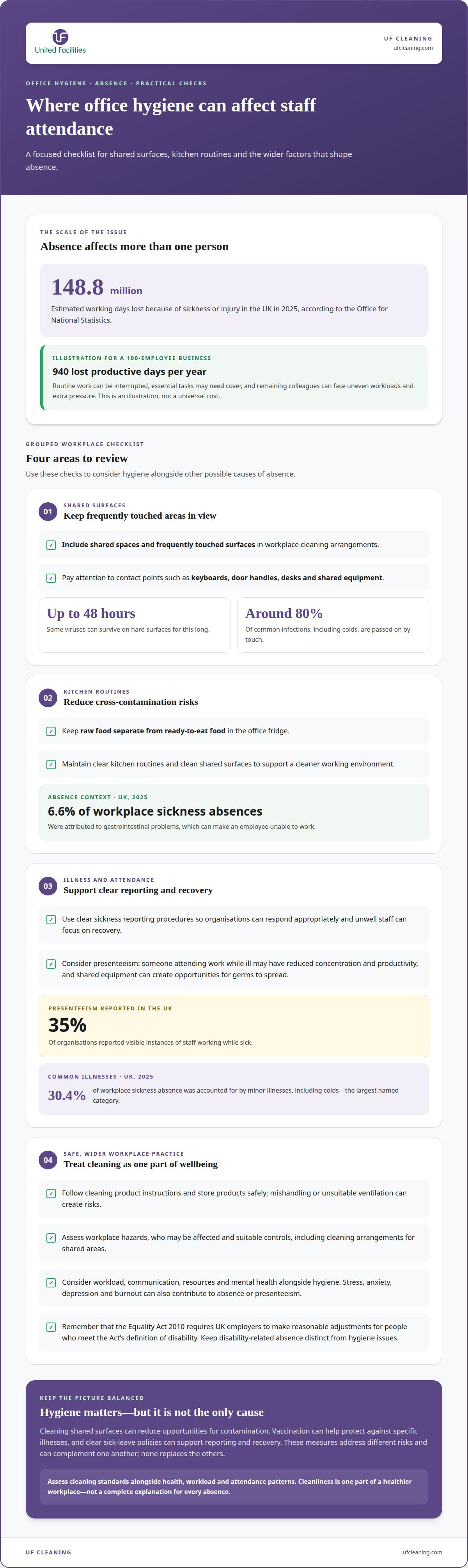
- According to the Office for National Statistics, sickness or injury accounted for an estimated 148.8 million lost working days in the UK in 2025, showing the scale of workplace absence.
- Consider how absences can affect more than attendance: they may disrupt workflows, increase cover demands and place extra pressure on colleagues.
- Learn why shared surfaces and overlooked cleaning routines can contribute to the spread of minor illnesses and gastrointestinal problems.
- Explore how consistent, targeted office cleaning can support a cleaner workplace and help address hygiene-related risks.
Additional costs and pressure on healthy employees
Absence affects more than the employee who is unwell. In a 100-employee business, 940 lost productive days per year can interrupt routine work and leave remaining team members covering essential tasks. When several colleagues are absent, deadlines may slip, workloads become uneven and employees can feel pressure to complete work at speed. That pressure can affect concentration, accuracy and the quality of service.
The financial impact can include sick pay, temporary cover, recruitment and lost productivity. This is an illustration, not a universal cost: the actual effect depends on pay arrangements, delayed work and how readily duties can be reassigned. Compensation and benefits are only part of the picture.
Poor working conditions can also weaken the employee experience. Unpleasant shared spaces, neglected surfaces or persistent dust may add to concern about hygiene and the spread of illness. In the UK, 35% of organisations reported visible instances of staff working while sick. Presenteeism can leave an employee less able to work effectively, while increasing exposure for other members of the team.
Engagement and wellbeing matter alongside cleaning standards. Among organisations investing heavily in workplace wellbeing frameworks, 38% reported a measurable enhancement in employee performance. A supportive environment can help people focus, but cleaning alone cannot resolve every cause of low engagement or absence. Managers also need to consider workloads, communication and whether employees have the resources to do their work well.
Workplace adjustments are another important consideration. The Equality Act 2010 places a legal duty on UK employers to make reasonable adjustments for people who meet the Act’s definition of disability. Adjustments should reflect the person’s needs and working conditions; they may help an employee carry out their role without treating disability-related absence as a hygiene issue. Separating these factors supports fair decisions and more accurate absence records.
Is poor workplace hygiene costing you staff attendance?
Workplace hygiene can influence exposure to illness, but it is only one possible cause of absence. To assess the consequence of poor office hygiene on staff absenteeism, consider cleaning standards alongside health, workload and attendance patterns.
Hygiene and workplace illness
Workplace hygiene includes maintaining shared spaces and frequently touched surfaces to help limit opportunities for germs to spread. Keyboards, door handles, desks and shared equipment pass between employees throughout the day. Some viruses can survive on hard surfaces for up to 48 hours, making overlooked contact points relevant to staff health. Around 80% of common infections, including colds, are passed on by touch.
According to the Office for National Statistics, an estimated 148.8 million working days were lost because of sickness or injury in the UK in 2025. Absence may be planned or unplanned; habitual, unplanned absence differs from an authorised sick day or other legitimate leave. The consequence of poor office hygiene on staff absenteeism is therefore best considered alongside the reasons behind individual absences.
Measures to reduce absence
Hygiene measures, vaccination and sick-leave policies address different risks and can complement one another. Cleaning shared surfaces can reduce opportunities for contamination, vaccination can help protect against specific illnesses, and clear sick-leave procedures support reporting and recovery. None replaces the others.
Mental health conditions, including stress, anxiety, depression and burnout, can also contribute to absence or presenteeism. Employers can assess workplace risks by identifying hazards, who may be affected and suitable controls, including cleaning arrangements for shared areas. The Health and Safety at Work Act (1974) requires UK employers to protect employees’ health, safety and welfare so far as is reasonably practicable, according to UK legislation.
Cleaning products can pose risks if mishandled or used without suitable ventilation. Following product instructions and storing products safely helps limit exposure. Considering these factors together gives employers a clearer basis for improving hygiene and assessing its possible effect on attendance.
Minor illnesses and gastrointestinal problems as causes of absence
Minor illnesses can disrupt attendance and productivity, while gastrointestinal problems may raise additional hygiene concerns. Cleaning frequency can be tailored to office use, shared facilities and periods of increased illness risk.
Gastrointestinal problems and absence
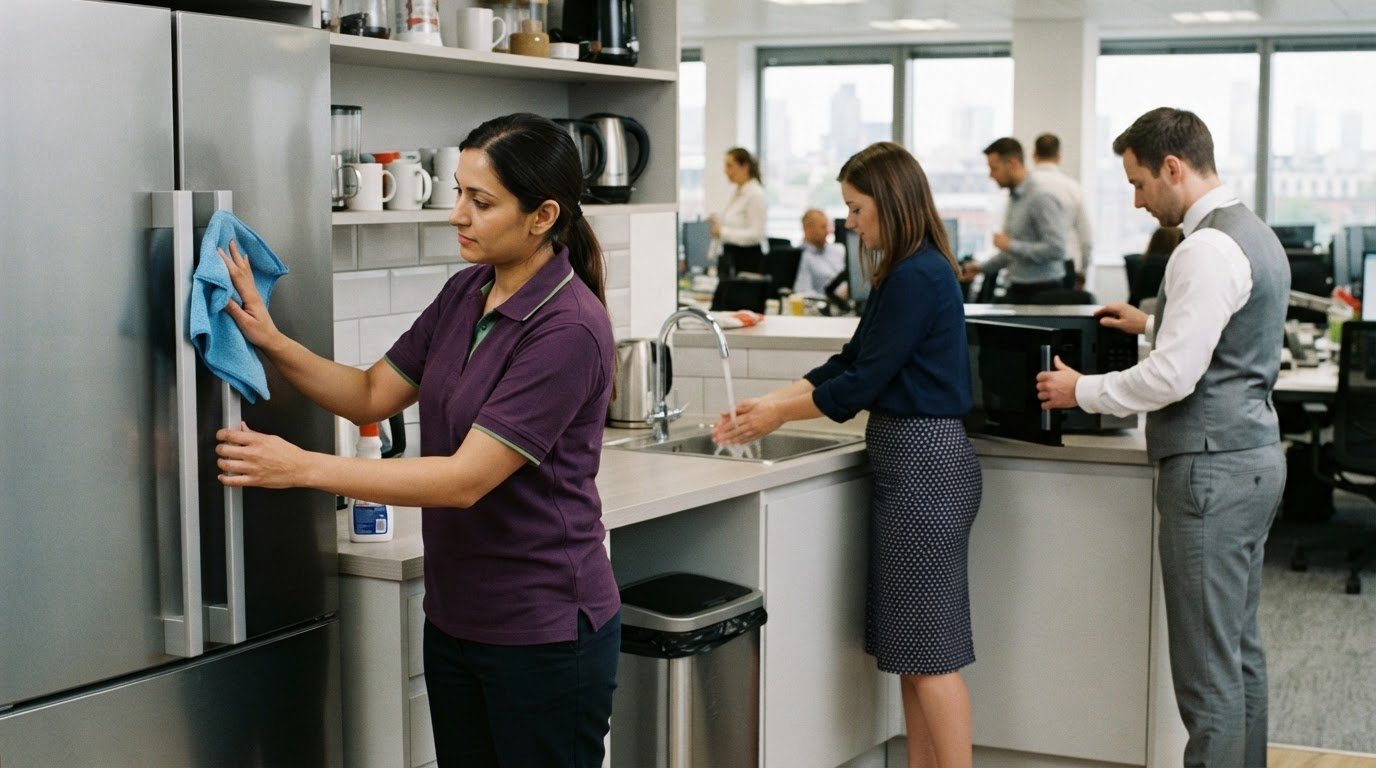
Gastrointestinal problems affect the digestive system and can make an employee unable to work. They accounted for 6.6% of UK workplace sickness absences in 2025. In a shared kitchen, poor handling of food and unclean surfaces can create cross-contamination risks. Storing raw food separately from ready-to-eat food in the office fridge helps limit that risk. Clear kitchen routines also support a cleaner working environment.
Presenteeism and illness transmission
Presenteeism means attending work while ill, even when symptoms affect a person’s ability to work. Someone with a minor illness may have reduced concentration and productivity, while shared desks and equipment create opportunities for germs to spread. If symptoms worsen, presenteeism may also precede a longer absence. Clear sickness reporting helps organisations respond appropriately and gives unwell staff time to focus on recovery.
Common illnesses spread by poor hygiene
Minor illnesses, including colds, were the largest named category of workplace sickness absence in the figures for 2025, accounting for 30.4%. That figure describes minor illnesses, not every absence caused by infectious illness. UK workers lost an average of 4.4 working days each to sickness or injury that year. Clean keyboards, phones, desks and door handles to reduce contamination on frequently shared surfaces.
A daily cleaning service is recommended for workplaces, with attention to desks, kitchens and washrooms. The right routine depends on how often each area is used, how many employees share it and whether illness is circulating. Increase cleaning frequency during higher-risk periods, such as flu season, and prioritise touchpoints and shared facilities. This helps maintain consistent standards without treating every office area as equally exposed.
What illnesses are commonly spread by poor workplace hygiene?
Poor office hygiene can create opportunities for common infections to spread. Colds and flu may circulate through close contact, while contaminated shared surfaces and kitchen areas can contribute to gastrointestinal illness.
Viruses can survive on hard surfaces for up to 48 hours, so a contaminated desk or door handle may remain a concern after contact. Cleaning shared touchpoints helps reduce this route of transmission, especially where employees use the same equipment. Before targeted hygiene interventions, 64.4% of tested shared computer keyboards and mice showed active microbial colony growth. This illustrates why visible cleanliness alone may not address overlooked contact points.
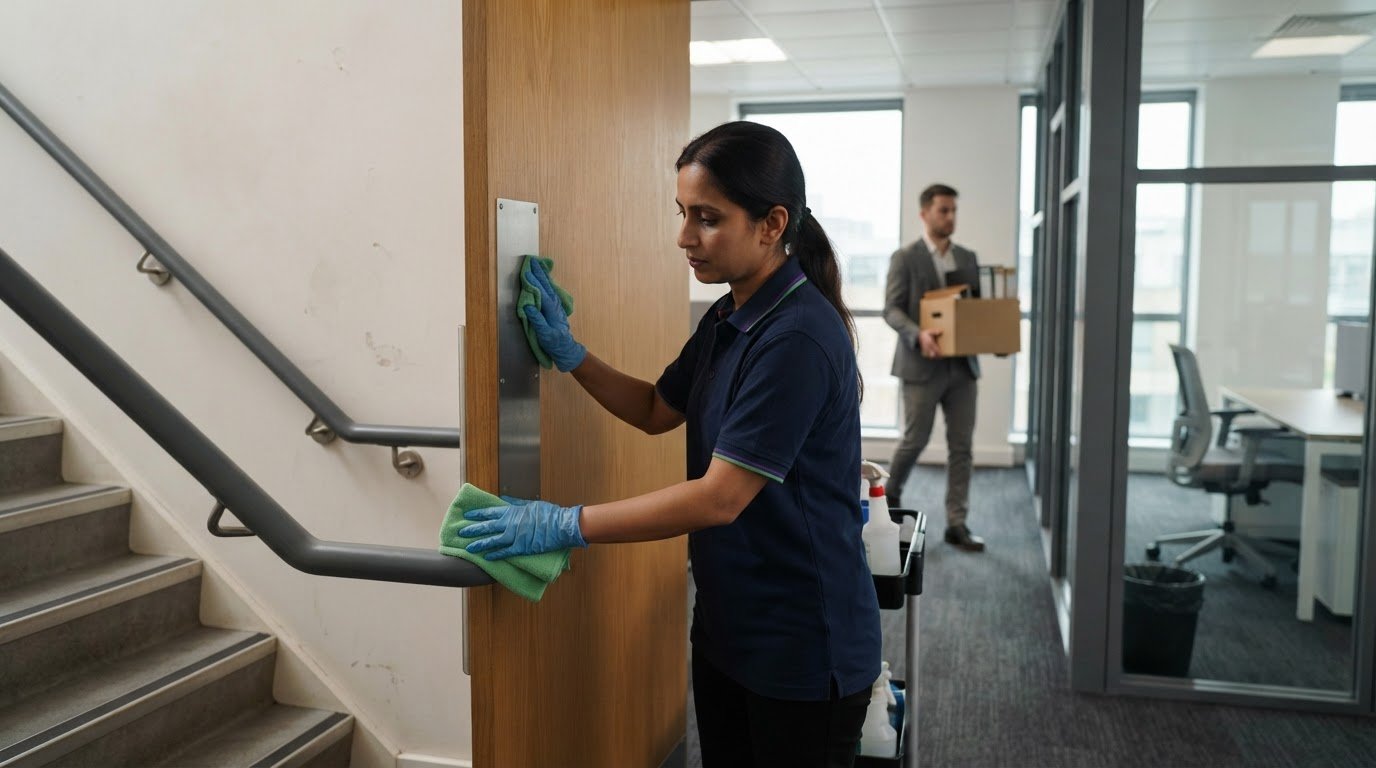
Workplace cleaning habits can leave these surfaces unattended. In a survey of more than 650 members of the public workforce, 31% said their work keyboard was never cleaned, while 28% said the same of their work telephone. A further 36% reported that their computer mouse was never cleaned. These findings identify practical areas for a routine: keyboards, mice, phones, desks and door handles.
Kitchen hygiene matters too. Gastrointestinal problems accounted for 6.6% of UK workplace sickness absences in 2025. Shared fridges and food-preparation surfaces can become contamination points if cleaning and food storage are inconsistent. Keep raw foods separate from ready-to-eat items, clean food-contact surfaces and ensure staff wash mugs daily. These measures support a more controlled shared environment.
Cleaning should be consistent and targeted, with frequency adjusted during higher-risk periods such as flu season. A routine can prioritise high-touch surfaces, shared equipment and kitchen areas, then include deeper cleaning where accumulated dust or dirt is evident. An average work telephone carried 25,127 germs per square inch in the cited survey, reinforcing the value of regular attention to shared devices. Arrange targeted office cleaning to address high-contact areas through a consistent routine.
UF Cleaning
UF Cleaning helps organisations maintain cleaner workplaces through office cleaning. If recurring absences have raised concerns about shared spaces, a tailored cleaning plan can address desks, kitchens, washrooms and other frequently used areas.
Cleaning plans reflect occupancy, access arrangements, floor types and the spaces that need the most attention. UF Cleaning also provides Housekeeping, Hotel Management and Office Hard Floor Cleaning for relevant facilities needs.
Contact UF Cleaning to discuss your workplace cleaning requirements.
Build a more considered workplace hygiene plan
The effect of poor office hygiene on staff absenteeism can be difficult to separate from other workplace pressures. Treat hygiene as part of attendance planning: review which shared spaces are used most, whether cleaning routines address them consistently, and how staff can raise concerns. This gives managers a practical basis for improving standards without assuming every absence has the same cause.
Small operational decisions can make cleaning routines more responsive. Align priorities with how the office is used, give shared areas attention during periods of increased illness, and keep expectations clear for employees. These measures support a well-managed environment while recognising that health, workload and personal circumstances also influence attendance.
If you’re considering how professional cleaning could fit your workplace, talk to UF Cleaning about office hygiene. A considered approach can help you plan the next steps with greater clarity and support a workplace where people can focus on their work.
Frequently Asked Questions
How does poor office hygiene affect staff absenteeism?
Poor hygiene can increase opportunities for germs to pass between people and may contribute to illness-related absence. It is one possible factor, not an explanation for every employee’s sick days. For a more useful assessment, compare attendance patterns with workplace conditions. Note whether absences cluster after shared-space use or coincide with reported hygiene concerns, while considering other health and personal factors.
What evidence links office cleanliness to sickness absence?
Evidence includes findings about contamination on shared work surfaces, although contamination alone does not prove that cleanliness caused a particular absence. One reported comparison found an average desk harboured 400 times more bacteria than an average toilet seat. This points to potential hygiene concerns, rather than measuring sick leave directly. Attendance records and workplace observations provide different forms of evidence and should be interpreted together.
Which office areas are most likely to spread germs?
Shared touchpoints and communal facilities deserve particular attention because many people use them throughout the day. Examples include kitchen taps, fridge handles, washroom door latches, printer controls and meeting-room equipment. Observe how staff move through the workplace and which surfaces they repeatedly touch to identify priorities. Cleaning plans can then reflect actual use rather than treating every area identically.
What steps can employers take to reduce hygiene-related staff absence?
Employers can assign clear cleaning responsibilities, schedule attention for frequently used shared spaces and make it easy to report spills or missed areas. Review the routine when office use changes, such as after teams move desks or begin sharing meeting equipment. Staff guidance on hand hygiene and keeping communal areas orderly can complement cleaning, while clear sickness reporting supports appropriate absence management.
What are the costs of sickness absence to UK employers?
Sickness absence can create direct costs, such as sick pay, and indirect costs, including temporary cover, recruitment and reduced productivity. The balance depends on sick-pay arrangements, the roles affected and how much work colleagues can absorb. Delayed tasks and errors can add operational pressure beyond payroll costs. Reviewing these categories separately helps organisations understand where absence affects their work most.
What percentage of employee absence is linked to infectious illness in the UK?
Minor illnesses, including colds, accounted for 30.4% of workplace sickness absences in the UK in 2025.