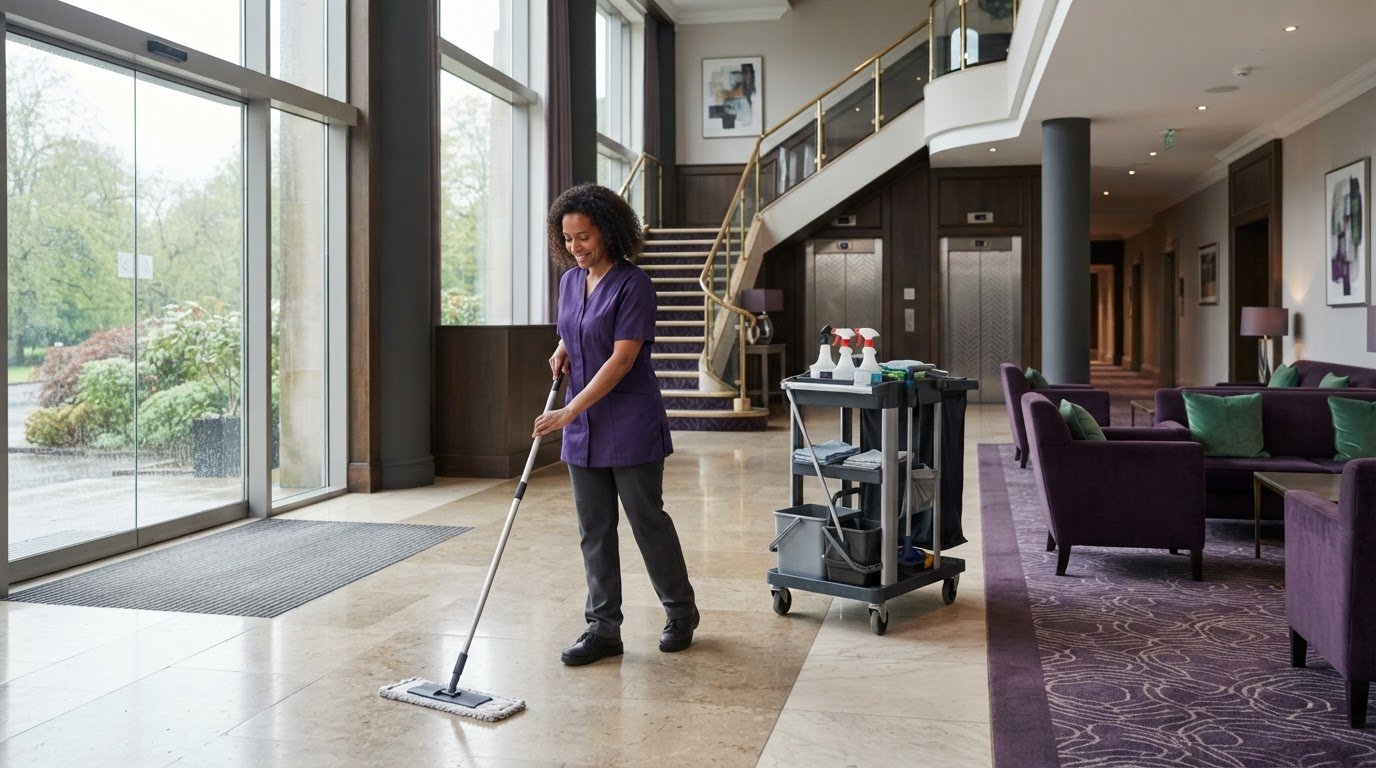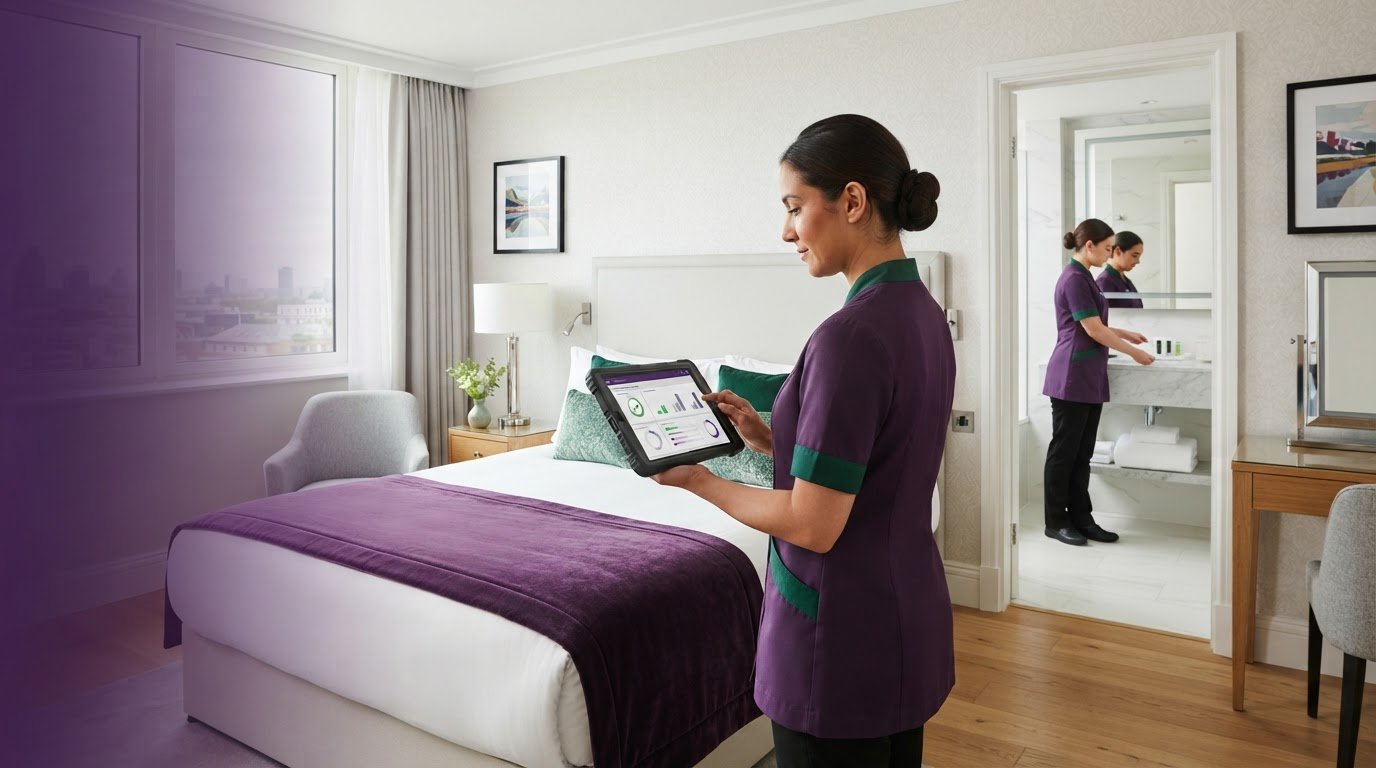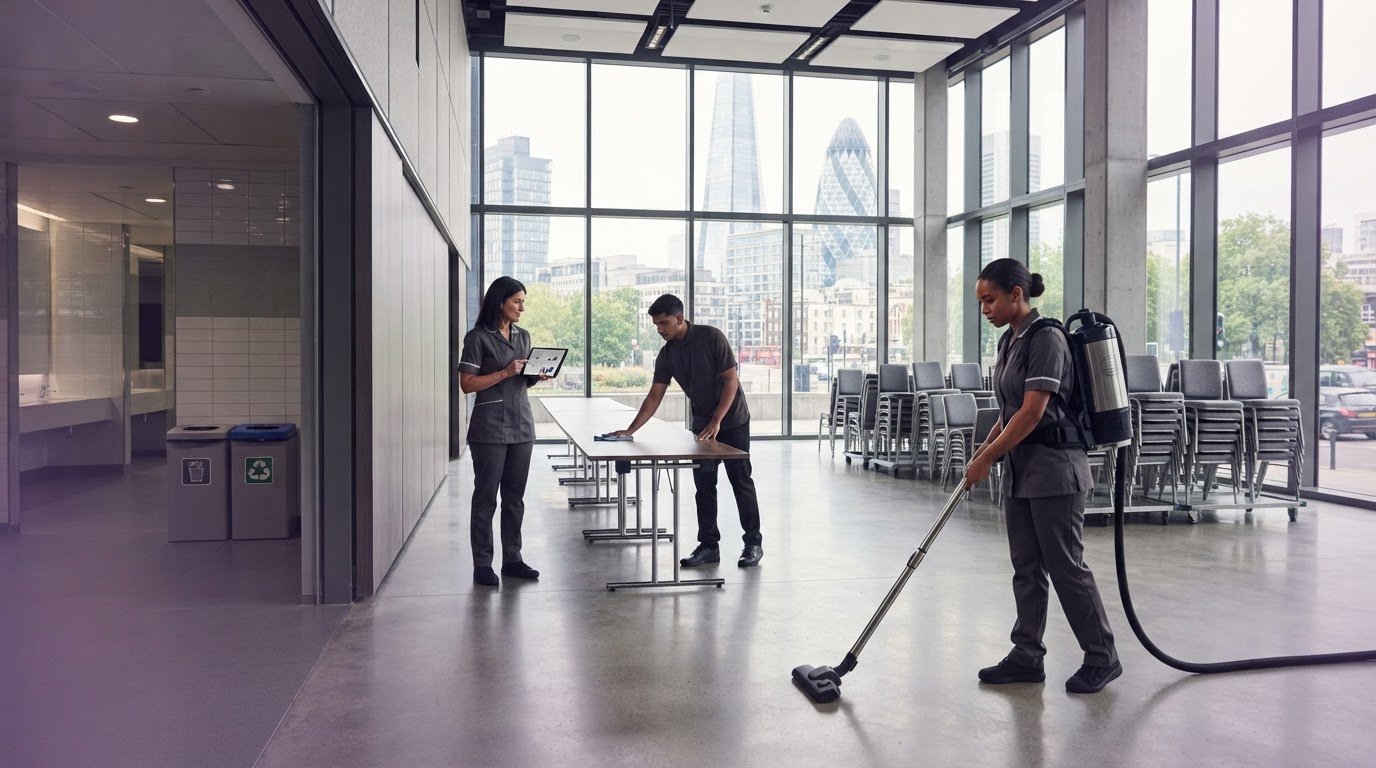
What if the real test of an event is not the final applause, but how smoothly the venue is ready for its next use? A post-event clean is more than a quick tidy: it is a recovery plan shaped around the event, the spaces used and the handover deadline. A professional post-event cleaning company event organisers can brief clearly helps bring those details together, so the work is planned rather than left to the last minute.
Different events create different cleaning priorities. A reception, conference or live performance can affect floors, seating, washrooms and shared spaces in different ways. Tight turnaround times leave little room for missed tasks or unclear access arrangements.
This guide explains what post-event cleaning can involve, how to plan it around a venue’s layout and schedule, and what to include in a clear service brief. You’ll also find practical ways to coordinate access, set priorities and check the handover. UF Cleaning provides event and venue cleaning before, during and after scheduled functions, with flexible scheduling and real-time quality monitoring through Taskbe.
Key Takeaways
- Plan post-event cleaning as a venue reset, with the scope based on what the next booking requires.
- Agree access, priorities and the areas used before deciding the task sequence.
- Match cleaning priorities to the event format: conferences, exhibitions, festivals and hospitality functions can create different needs.
- Prepare a clear brief covering timings, access, areas, surfaces and the required handover condition.
- UF Cleaning provides event and venue cleaning around scheduled functions, with real-time quality monitoring through Taskbe.
What does post-event cleaning involve, and why plan it as venue recovery?
Post-event cleaning is the planned reset of event spaces after guests, equipment and activity have cleared. Instead of treating it as a final tidy, define what needs attention, which areas take priority and what condition the venue needs to be in before its next use. A well-scoped clean supports hygiene and presentation while helping the venue return to normal operations or prepare for another booking.
Routine venue maintenance addresses a property’s regular needs. Event cleaning responds to what has happened on site: attendance, room layout, catering, equipment and guest movement. A reception with food service may create different priorities from a seated conference or an exhibition with temporary displays. The scope should reflect these differences, along with the access window and required handover condition.
Which areas commonly need attention after an event?
Start with the spaces guests and staff used, then consider how the event affected them. Entrances and circulation routes can collect tracked-in dirt, while seating areas and shared surfaces may need attention after sustained use. Depending on the brief, cleaning may also cover floors, tables, chairs, washrooms, catering areas and other event spaces.
Surface type matters. A hard floor and a carpeted meeting area can need different cleaning methods. Specialist floor or carpet cleaning may be appropriate where the material or condition calls for it. The brief should also set out how event waste is to be collected and handled. Waste management principles provide useful context for how waste is collected, transported and disposed of.
Why does post-event cleaning need its own plan?
Layouts and patterns of use change the work. A standing reception may concentrate activity around refreshment points, while a theatre-style arrangement may put more focus on seating rows, aisles and entrances. Identifying these priorities in advance lets the cleaning sequence reflect how the venue was used instead of relying on a generic checklist.
Timing matters just as much. Access arrangements need to fit around event clear-down and the venue’s next booking or reopening. Establish when each space will be available and what must be ready first. Post-event cleaning is a scheduled venue reset shaped by use, timing and scope. This gives organisers a practical brief for a post-event cleaning company London venues can work with, with expectations aligned to the event and handover.
How does a post-event cleaning team restore a venue step by step?
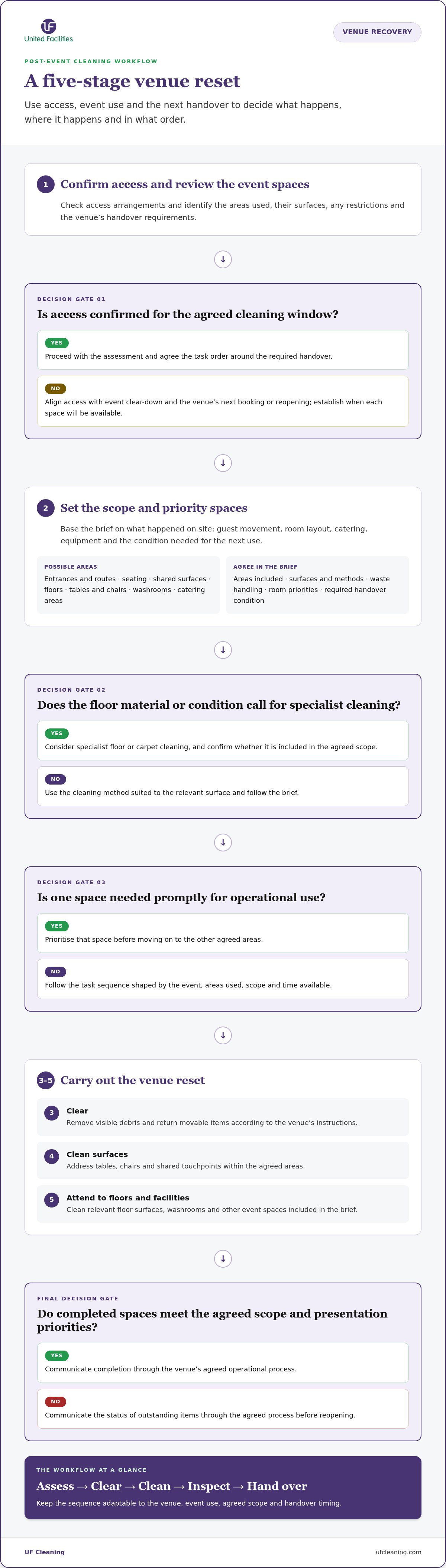
A reliable workflow gives the team direction without imposing the same checklist on every venue. The sequence should respond to the event, the spaces used, the agreed scope and the time available before reopening. A conference room with rows of chairs, for example, may need a different task order from a venue where guests have moved between several event spaces.
What happens during the initial venue assessment?
Start by confirming access arrangements and reviewing the areas used for the event. Identify the surfaces, priority spaces and any restrictions that affect the work. Then agree the task order around the handover requirements, including which rooms must be ready first and whether specialist floor or carpet cleaning is part of the scope.
The work can then follow a practical sequence:
- Clear: Remove visible debris and return movable items according to the venue’s instructions.
- Clean surfaces: Address tables, chairs and shared touchpoints within the agreed areas.
- Attend to floors and facilities: Clean relevant floor surfaces, washrooms and other event spaces included in the brief.
- Inspect: Review completed work against the agreed scope and presentation priorities.
- Hand over: Communicate completion or outstanding items through the venue’s agreed operational process.
In short, the sequence is assess, clear, clean, inspect and hand over. It provides a useful framework while allowing the order and detail to adapt to the site. If one space is needed promptly for operational use, prioritise it before moving on to the other agreed areas.
How should the final inspection and handover work?
Use the original brief for the final review: have the specified spaces been addressed, and do they meet the agreed presentation priorities? If anything remains outstanding, communicate its status through the venue’s agreed process before reopening. UF Cleaning supports real-time quality monitoring through the Taskbe platform, giving clients visibility of cleaning quality.
A clear scope and handover process make coordination more straightforward. A post-event cleaning company event teams work with should align the task sequence with venue access and operational timings, rather than treating every event as identical. UF Cleaning provides event and venue cleaning before, during and after scheduled functions, with flexible scheduling shaped around venue requirements. Explore UF Cleaning’s event and venue cleaning when planning a coordinated recovery process.
How do event type and venue use change the cleaning scope?
The event format is a useful starting point, but it does not determine a fixed checklist. Guest movement, room layout, catering and surface use all affect which areas need attention first. A practical scope connects these details with the venue’s next use, so the cleaning sequence reflects the event rather than a standard assumption.
Use the comparison below to identify likely priorities, then refine them around the venue layout and handover requirements.
| Event format | Likely cleaning priorities | Planning considerations |
|---|---|---|
| Conference | Seating layouts, meeting spaces, circulation routes and catering areas. | Consider room resets between sessions and which spaces must be ready first for the next booking. |
| Exhibition | Shared aisles, visitor routes and high-use areas around stands. | Coordinate the scope with stand clear-down and access to public-facing spaces. |
| Festival | Multiple event zones, entrances and the spaces most used by attendees. | Agree priorities for each zone and account for how movement between areas affects task order. |
| Hospitality event | Seating, shared surfaces and catering or refreshment areas within the agreed scope. | Identify where activity was concentrated and the presentation condition required for the next use. |
What changes between conferences, exhibitions and festivals?
At a conference, the cleaning sequence may follow the room plan, with meeting spaces and circulation routes addressed according to reopening needs. An exhibition can direct attention towards shared aisles and visitor areas, while stands may have separate arrangements. A festival may involve several distinct zones, so agree which areas take priority rather than treating the site as one continuous space.
How do venue surfaces and the next booking affect priorities?
Surface type influences the appropriate task: carpeted areas and hard floors have different cleaning requirements, so the scope should reflect the material and its use. Specialist carpet cleaning or hard-floor cleaning can form part of venue support when relevant to the project. The priority is not to cover every area in the same order, but to prepare the spaces needed first for the next booking or reopening.
For a clear brief, pair each event zone with its main surfaces, expected use and handover priority. This enables a post-event cleaning company to tailor the scope to the project without assuming every event needs the same tasks, staffing or duration.
What should organisers include in a post-event cleaning brief?
A clear brief turns venue requirements into an organised plan. It gives the cleaning team the information needed to coordinate access, prioritise spaces and prepare for the next use, while reducing uncertainty about what is included. Share the details with the venue contact and cleaning team before the event concludes, particularly if access depends on clear-down or room handover.
What information helps coordinate cleaning efficiently?
Keep the brief practical and specific. Include the event schedule, venue layout, access instructions and points of contact. Then describe the required handover condition and reopening time. A post-event cleaning company can use these details to shape the service around the venue’s operations.
Use this checklist to prepare the brief:
- Timings: Note when the event ends, when spaces will be accessible and when the venue needs to reopen or be handed over.
- Access: Set out entry instructions, access restrictions and who will coordinate on site.
- Areas used: Identify the rooms and shared spaces involved, including priority areas and any spaces outside the agreed cleaning scope.
- Surfaces and tasks: Record relevant carpet, hard-floor and other surface types, alongside the tasks required in each area.
- Next use: Explain what the venue will be used for next and the presentation condition expected at handover.
Flag known constraints too, such as areas that cannot be accessed until equipment has been removed. This helps establish a workable task order and directs attention to the spaces that matter most for reopening.
How can quality and communication stay consistent?
Agree how the team will communicate completed work and outstanding items, and who should receive those updates. A straightforward reporting route helps venue staff understand the handover status and follow up through the right operational process. UF Cleaning supports real-time quality monitoring through the Taskbe platform and provides 24/7 operational support.
A tailored brief is a useful starting point for planning event cleaning around your venue’s schedule and priorities. Request a free quote for event cleaning to discuss a plan for your requirements.
How does UF Cleaning support post-event venue recovery?
Venue recovery works best when cleaning is coordinated with the event timetable and the spaces that need to be ready next. UF Cleaning provides event and venue cleaning before, during and after scheduled functions, helping organisations plan support around each stage. The team has served organisations since 2010 and can shape arrangements around the venue, event priorities and required handover condition.
What can a tailored event cleaning service bring together?
A considered plan starts with agreed priorities: which areas need attention, when they become accessible and what condition they need to be in for the next use. Flexible scheduling helps align cleaning with venue operations, whether support is needed before an event, during a scheduled function or after guests have departed. This keeps the scope relevant instead of assuming that every event needs the same tasks.
Where the venue and project requirements call for it, event cleaning can sit alongside related commercial services such as carpet and window cleaning. These services can be included when they fit the spaces, surfaces and requested outcome. UF Cleaning uses eco-friendly cleaning products and provides 24/7 operational support to help coordinate service around venue requirements.
Oversight matters too. Real-time quality monitoring through the Taskbe platform provides visibility of cleaning quality and supports consistency across the agreed service. For organisers, this is part of a coordinated commercial venue service, with priorities and scheduling shaped around the event.
How can organisers take the next step?
To begin planning, share the event timing, areas in use, access arrangements and the condition required for handover. Include the next planned use to clarify which spaces need priority and how the schedule should fit around venue operations. These details give UF Cleaning a practical basis for tailoring service arrangements to the project.
If you’re looking for a post-event cleaning company to brief around your venue requirements, outline the event and handover priorities. Request a tailored quote for your event and venue through Request a free quote for event cleaning.
Plan a smoother handover for your next event
A dependable venue reset starts with a clear scope: identify the areas used, match cleaning priorities to the event, and agree access arrangements and the required handover condition. This gives organisers a practical way to coordinate the work around the venue’s next booking instead of relying on a generic checklist.
For organisations seeking a post-event cleaning company, UF Cleaning brings experience serving organisations since 2010. Flexible schedules, eco-friendly products and 24/7 operational support help shape service arrangements around venue requirements, while real-time quality monitoring through Taskbe supports oversight of cleaning quality.
Share your event timing, the spaces involved and the condition required for handover to help establish a tailored plan. Request a free quote for event cleaning and take the next step towards a well-coordinated venue recovery.
Frequently Asked Questions
What does post-event cleaning usually include?
Post-event cleaning usually covers the agreed areas used during a function, with tasks shaped by the venue and event. This may include cleaning floors, tables, chairs, shared surfaces and washrooms, as well as attention to entrances, circulation routes or catering areas. Define the required handover condition and identify any spaces outside the scope, so the team can focus on agreed priorities.
How soon after an event should venue cleaning begin?
Cleaning can begin once the event has ended, guests and equipment have cleared the relevant areas, and the agreed access arrangements allow work to start. There is no single interval that suits every venue. The schedule should account for event clear-down, access restrictions and the next booking or reopening. Identify priority spaces in advance if they need to be ready first.
Can post-event cleaning be scheduled around a venue handover?
Yes. A cleaning schedule can be planned around the venue’s handover and next-use requirements. Share when areas will become accessible, which spaces need priority and the condition expected before reopening. UF Cleaning offers flexible schedules for event and venue cleaning, helping align agreed tasks with venue operations. Clear timings and access instructions support an orderly transition to the venue’s next use.
How does event type affect the cleaning plan?
Event type helps determine which areas and tasks should take priority. A conference may centre on meeting rooms, seating and catering areas; an exhibition may require attention to shared aisles and visitor routes; a festival may involve several separate zones. The plan should also reflect guest movement, layout, surfaces and the next booking, rather than applying the same checklist to every event.
What information should I provide when requesting post-event cleaning?
Provide the event schedule, venue layout, access instructions and a point of contact, then list the spaces used and their surface types. Note priority tasks, access constraints, any areas outside the agreed scope and the required handover condition. This gives a post-event cleaning company a practical basis for shaping the service around the venue and its next use.
Can post-event cleaning include carpet or hard-floor cleaning?
Yes, carpet cleaning or hard-floor cleaning can be included where it suits the surfaces and project requirements. These tasks are not needed after every event, so identify relevant floor types and any areas requiring particular attention in the brief. UF Cleaning provides carpet and window cleaning, as well as hard-floor cleaning, which can form part of a tailored commercial cleaning plan.
How can venue managers monitor the quality of event cleaning?
Venue managers can agree how completed work and outstanding items will be communicated, then review the result against the agreed scope and handover priorities. UF Cleaning supports real-time quality monitoring through the Taskbe platform, providing oversight of cleaning quality. Establish the venue’s preferred communication process in advance so updates reach the appropriate operational contact.