What if the most impactful step towards your ESG goals isn't found in a bottle of eco-friendly spray, but in the data-driven precision of your service delivery? When exploring what is sustainable action in commercial cleaning, many facility managers find themselves caught between the urgent need to meet carbon reduction targets and the fear that green alternatives won't stand up to the rigours of a high-traffic office. It's a common concern that choosing the planet might mean compromising on the meticulous standards your stakeholders expect.
This guide clarifies how modern maintenance evolves beyond simple product swaps to a comprehensive, tech-enabled strategy. You'll learn how to distinguish genuine environmental stewardship from superficial greenwashing by using a clear, evidence-based framework for evaluating providers. We'll explore how innovations like the Taskbe platform reduce resource waste and how precision sanitisation protects both your building's microbiome and your bottom line. By the end of this article, you'll have the arguments needed to choose a partner that offers stability, efficiency, and a measurable commitment to a healthier future.
Key Takeaways
- Understand what is sustainable action in commercial cleaning by moving beyond simple product swaps to a model that integrates ethical labour and resource-efficient technology.
- Recognise the importance of social sustainability by ensuring that fair pay and staff wellbeing are prioritised as fundamental components of a modern, responsible cleaning contract.
- Discover how real-time monitoring platforms and IoT sensors eliminate resource waste by transitioning from rigid, traditional schedules to proactive, demand-based maintenance.
- Equip yourself with a clear framework for evaluating prospective partners, focusing on verified evidence of concentrated chemical systems and high-performance microfibre technology.
- Learn how a long-term commitment to premium standards allows professional providers to deliver meticulous hygiene whilst maintaining a minimal environmental footprint.
Defining Sustainable Action in the Modern Cleaning Sector
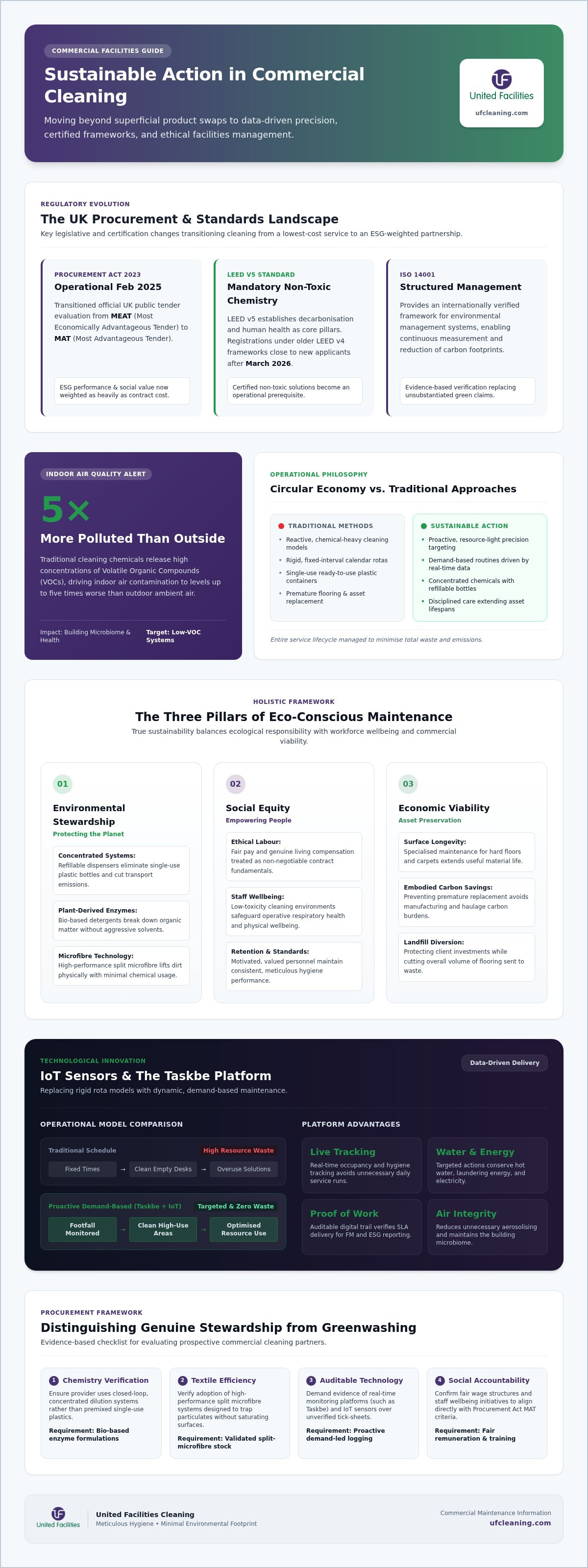
Understanding what is sustainable action in commercial cleaning requires a shift in perspective from mere surface hygiene to a comprehensive operational philosophy. Traditional methods often rely on a reactive, chemical-heavy approach that prioritises immediate visual results over long-term environmental health. In contrast, modern sustainable cleaning is proactive and resource-light, utilising precision technology to target maintenance only where it's truly required. This evolution aligns with the principles of a circular economy, where every resource, from water to equipment, is managed with its entire lifecycle in mind to minimise waste and extend the lifespan of building assets.
By 2026, sustainability has moved from a secondary consideration to a critical KPI for UK procurement teams. Under the Procurement Act 2023, which became fully operational in February 2025, the evaluation of tenders has shifted from the "Most Economically Advantageous Tender" (MEAT) to the "Most Advantageous Tender" (MAT). This legal change empowers decision-makers to weight ESG performance and social value as heavily as cost. It ensures that partners are chosen for their long-term integrity and carbon reduction roadmaps rather than just their baseline price point.
The Evolution from Green Cleaning to Sustainable Action
Whilst the term "green" often focuses on the procurement of eco-friendly products, sustainable action encompasses the entire service lifecycle. It's a move beyond simply replacing traditional chemicals with bio-based detergents to examining the broader impact of every operational choice. By adhering to established green cleaning methods and principles, providers can significantly reduce the presence of Volatile Organic Compounds (VOCs), which can make indoor air up to five times more polluted than the air outside. Sustainable action is the precise balance of people, planet, and performance, ensuring that high standards of hygiene never come at the cost of human health or environmental stability.
Regulatory Drivers and UK Standards
Rigorous standards now define excellence in the facilities management sector. The rollout of LEED v5 in late 2025 has established decarbonisation and human health as core pillars, making certified non-toxic chemistry a mandatory prerequisite for building managers. Registrations for older project frameworks like LEED v4 close to new applicants after March 2026, cementing v5 as the definitive standard. Similarly, ISO 14001 provides a structured framework for environmental management systems, allowing an organisation to measure and improve its carbon footprint systematically. As UK businesses strive for Net Zero, these certifications provide the evidence-based assurance that a cleaning partner is operating with genuine intentionality and meticulous care.
The Three Pillars of Eco-Conscious Commercial Maintenance
To truly grasp what is sustainable action in commercial cleaning, one must look beyond the surface of a polished floor. It is a three-dimensional framework that balances environmental health, social equity, and economic viability. When these elements align, they create a silent, efficient force that maintains the integrity of the workspace whilst protecting the people within it. This holistic approach ensures that hygiene standards remain high without depleting the resources of the future.
The economic pillar is frequently overlooked, yet it remains vital for long-term sustainability. By implementing rigorous maintenance schedules for specialised surfaces, such as office hard floor cleaning or carpet care, providers extend the lifespan of expensive building assets. This prevents the premature replacement of materials, which avoids the significant carbon cost associated with manufacturing and transporting new flooring. A disciplined maintenance plan protects the client's investment and reduces the total waste sent to landfill.
Environmental Stewardship and Chemistry
Modern environmental action focuses on the elimination of single-use plastics and the reduction of transport-related carbon emissions. By utilising concentrated chemical systems and refillable containers, providers significantly lower the volume of plastic waste generated by a single contract. These concentrated solutions are often bio-based, employing plant-derived enzymes that break down organic matter without the need for harsh solvents. Adhering to EPA guidelines for greener cleaning products helps facilities managers identify chemistry that is effective yet safe for the building's occupants. Additionally, the transition from traditional mops to ultra-microfibre textile systems can reduce water consumption by 70% to 90%, representing a substantial conservation of natural resources.
Social Responsibility and Labour Ethics
The social pillar of sustainability focuses on the human capital required to maintain premium standards. High staff turnover is a hallmark of an unsustainable operation; it leads to inconsistent quality and increased training waste. Ethical recruitment, fair pay, and a genuine commitment to staff wellbeing foster a stable workforce that takes immense pride in the details. When cleaners are treated as professional partners, they operate with a level of meticulous care that safeguards public health, particularly in high-traffic retail or educational venues. This stability creates a reassuring presence for clients, ensuring that complex tasks are handled with seamless efficiency by a team that understands the specific needs of the environment. Ultimately, a well-supported workforce is the most reliable tool for delivering a healthy, productive indoor space.
The Intersection of Technology and Resource Conservation
Technology serves as the sophisticated backbone of modern environmental stewardship, transforming cleaning from a rigid, manual task into an intelligent, responsive service. When facility managers ask what is sustainable action in commercial cleaning, the answer increasingly lies in the digital architecture supporting the teams on the ground. By moving away from traditional, calendar-based schedules, providers can now implement demand-driven maintenance that targets resources only where they are truly required. This shift is facilitated by IoT sensors that monitor foot traffic and room occupancy, allowing teams to bypass empty zones and focus their efforts on high-use areas. Such precision ensures that water, energy, and cleaning solutions are never squandered on surfaces that haven't been utilised.
Precision dosing systems further enhance this resource-light approach by eliminating the guesswork often associated with manual chemical mixing. These closed-loop dilution units ensure that the exact amount of product is used every time, preventing the "over-dosing" that leads to chemical residue and unnecessary waste. This level of operational rigour aligns with the ISSA CIMS Sustainability standard, which provides a definitive benchmark for evaluating the environmental performance and equipment efficiency of commercial contractors. For stakeholders, the result is total data transparency, providing the evidence needed to prove ESG compliance and carbon reduction progress during corporate audits.
Data-Driven Efficiency via Taskbe
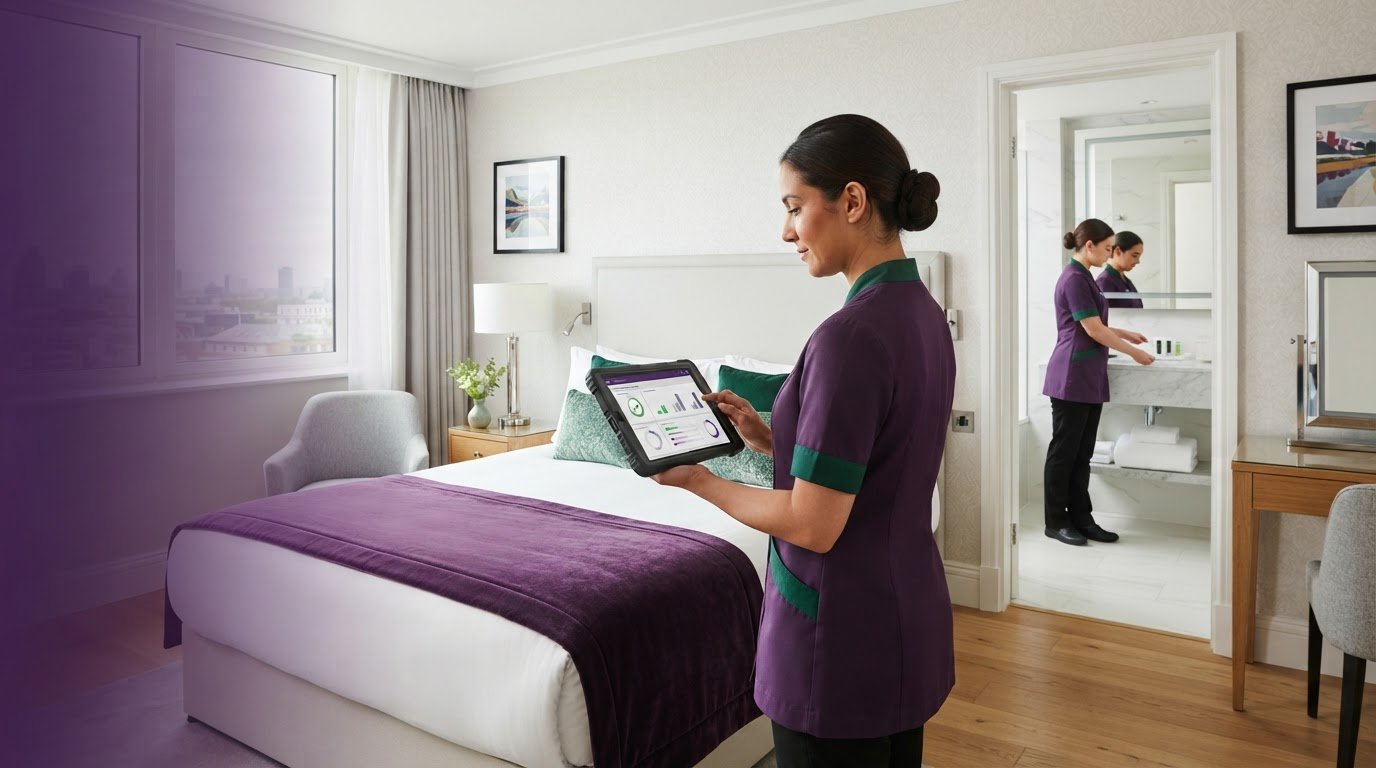
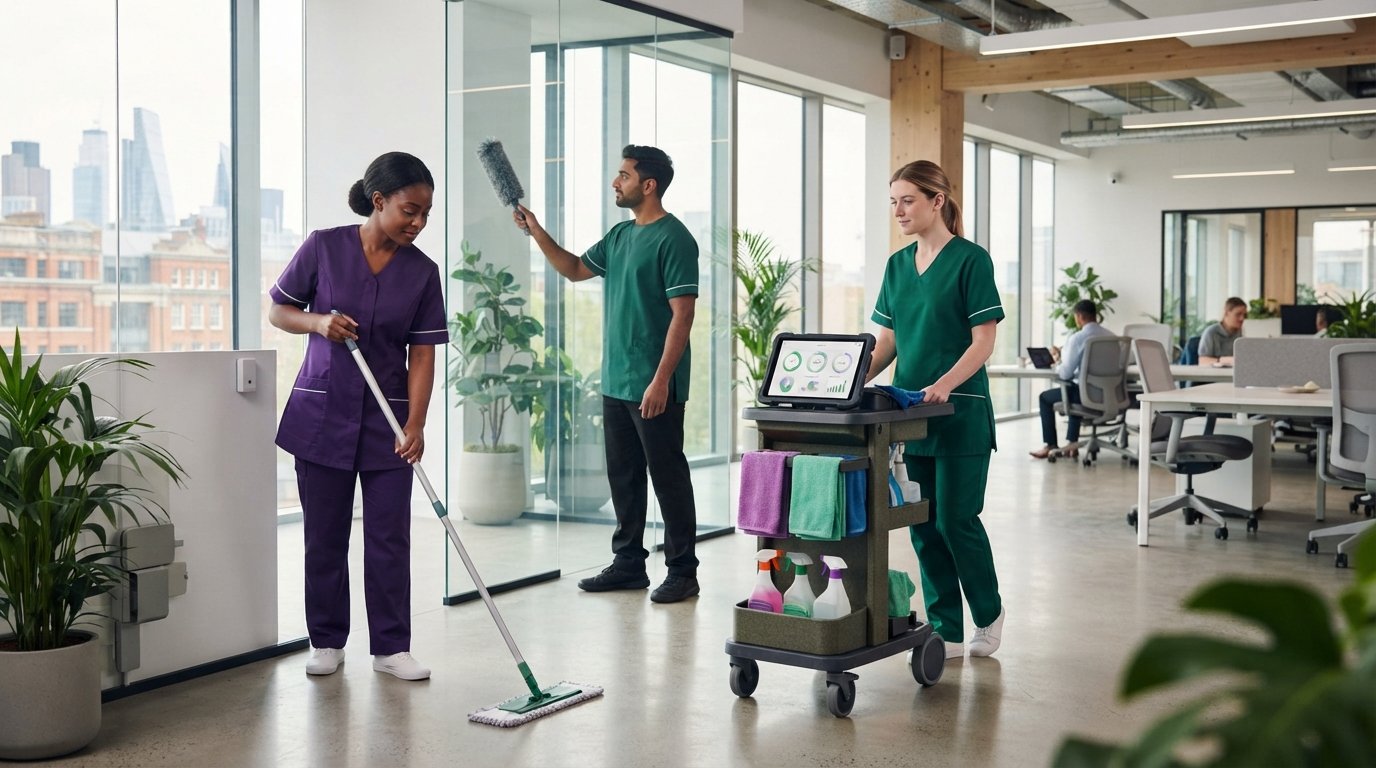
The utilisation of the Taskbe platform represents a significant leap forward in operational sustainability. By providing real-time quality control and monitoring, the platform ensures that every action is part of a well-considered plan rather than a random occurrence. Digital reporting replaces traditional paper-based logs, contributing to a reduction in physical waste whilst providing an immutable record of service delivery. Smart scheduling through the platform also helps to reduce the energy footprint of operations by optimising cleaning routes and timing, ensuring that high-intensity tasks are performed in the most energy-efficient manner possible.
Equipment Longevity and Energy Ratings
Sustainability also demands a disciplined approach to the equipment used within a facility. Modern providers prioritise vacuums equipped with HEPA filtration and high energy efficiency ratings, which protect indoor air quality whilst minimising electricity consumption. Maintaining this equipment with meticulous care is essential; regular servicing extends the lifecycle of the machinery and significantly reduces the accumulation of e-waste. Furthermore, by utilising advanced floor care technology, teams can preserve expensive corporate assets for longer. This meticulous care prevents the premature degradation of carpets and hard surfaces, ensuring that the building's interior remains in premium condition without the need for frequent, resource-heavy replacements.
Evaluating Sustainability in Commercial Cleaning Procurement
Procurement teams often find it challenging to distinguish between superficial marketing and deep-rooted operational integrity. When investigating what is sustainable action in commercial cleaning during the tender process, it's essential to look for specific, verifiable evidence rather than broad promises. A truly sustainable contract is one where every operational detail, from the logistics of chemical delivery to the social welfare of the cleaning team, is documented and transparent. This meticulous approach ensures that your service provider functions as a dependable partner in achieving your corporate ESG targets.
Facilities managers should move beyond a simple price comparison and evaluate the total impact of a service proposal. A low-price bid often signals a compromise in sustainable labour practices or the use of cheaper, more harmful chemical formulations. Instead, seek partners who can demonstrate the use of concentrated chemical systems to reduce transport emissions and a commitment to the Real Living Wage. Assessing the transparency of their reporting and quality control systems is equally vital for proving ESG compliance to stakeholders and maintaining high standards across your estate.
Key Questions for Prospective Partners
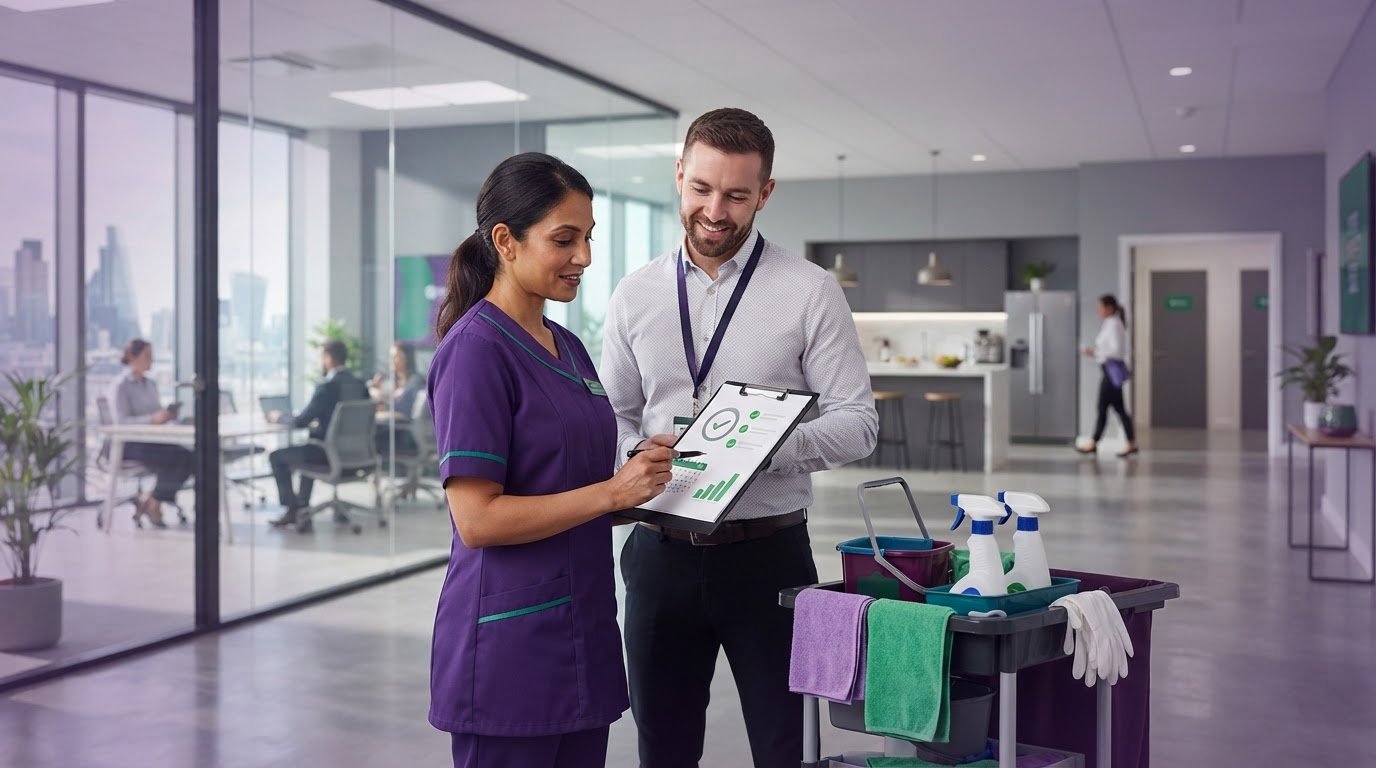
Effective evaluation requires asking the right questions to uncover the reality of a provider's operations. Prospective partners should be able to explain how they track and report on resource usage throughout the duration of the contract. Ask if they utilise concentrated products to minimise transport-related carbon emissions and if they can provide evidence of high staff retention rates. A genuine commitment to social value is often reflected in the longevity of their workforce and the precision of their training programmes, ensuring that your environment is handled with consistent, expert care.
Identifying Greenwashing in Service Proposals
Greenwashing remains a significant hurdle in the UK market. Vague claims of being "carbon neutral" or using "natural" products lack the weight of independent, Type-I eco-labels such as the EU Ecolabel or Cradle to Cradle certification. It is also vital to scrutinise the ingredients of supposedly eco-friendly products; some may still contain harmful phosphates or high VOC levels that compromise indoor air quality. Understanding what is sustainable action in commercial cleaning involves recognising that a "green" quote is meaningless without a framework of accountability. A sustainable partner will provide a clear breakdown of their supply chain and chemical safety data sheets as standard.
For those seeking a partner with a proven record of integrity since 2010, UF Cleaning offers a service-oriented approach that combines premium standards with meticulously documented sustainability.
Partnering for Long-Term Impact: The UF Cleaning Commitment
Since its establishment in 2010, UF Cleaning has focused on the meticulous delivery of premium hygiene services that do not compromise the environment. For our clients, what is sustainable action in commercial cleaning is demonstrated through a long-term commitment to operational integrity and the seamless integration of eco-friendly supplies into every recurring contract. This stable foundation allows us to function as a silent, efficient force, handling complex tasks with the quiet competence that modern facility managers require. By prioritising high standards from the outset, we ensure that every action is part of a well-considered plan, providing a service that is as reliable as the results we produce.
The longevity of our business serves as clear evidence of sustainable economic practice, proving that high-end hygiene and environmental stewardship can coexist. We avoid the high-pressure tactics of the broader market, opting instead for a service-oriented approach that builds trust through consistent performance. Our national capability allows us to serve diverse sectors, from corporate offices to educational facilities, with a level of precision that preserves both the aesthetic and the functional life of the building. This dedication to excellence ensures that our clients enjoy total peace of mind, knowing their environments are maintained by a disciplined and authoritative expert.
Bespoke Solutions for Every Sector
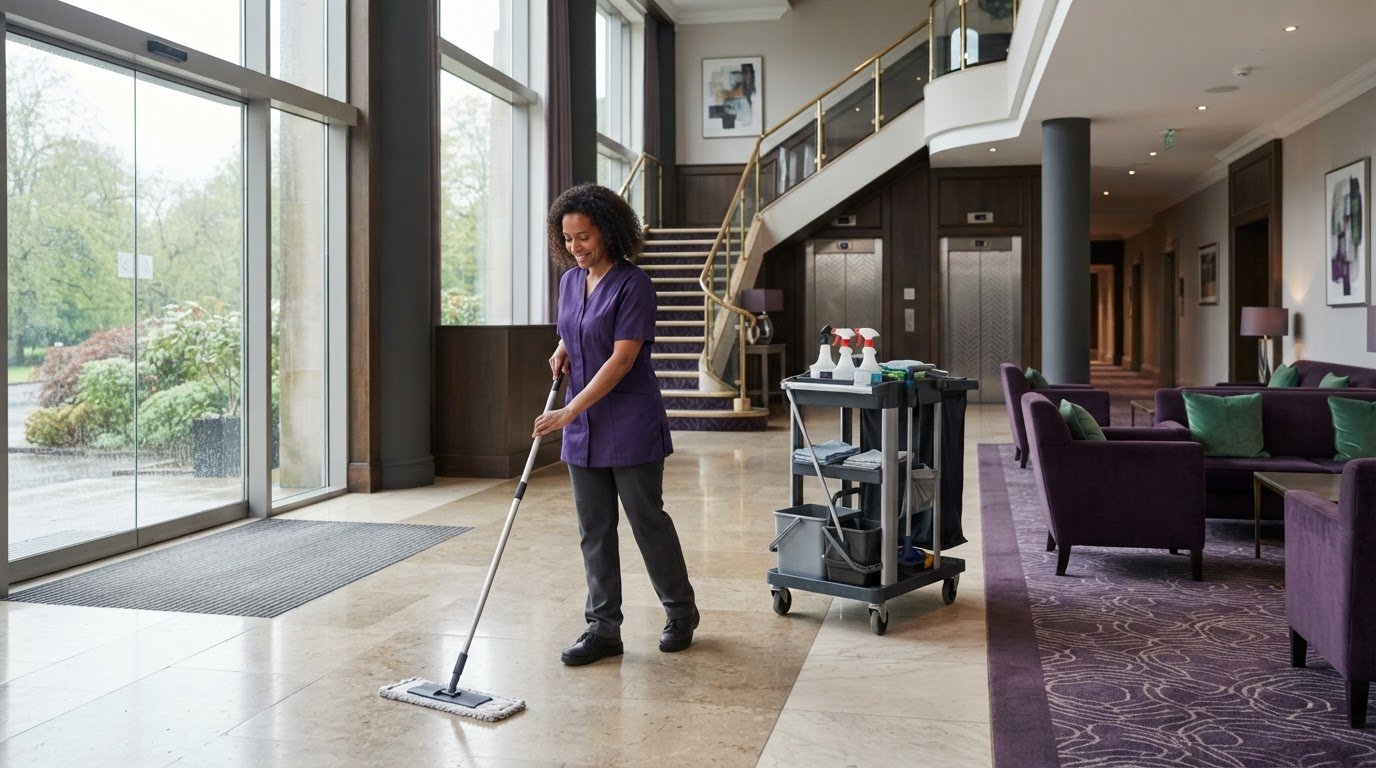
Every environment presents unique challenges, requiring a tailored approach that respects both the property and the planet. Whether managing the high-turnover demands of hotel management or the rigorous hygiene standards of schools, our national capability ensures that sustainable practices are adapted to specific sectoral needs. We preserve the integrity of high-traffic environments, such as retail centres or industrial sites, by utilising precision technology and ultra-microfibre systems. This ensures that cleanliness is achieved with minimal water and chemical impact, protecting the surfaces and the air quality for all occupants. This bespoke methodology builds a partnership based on stability, where the meticulous care of your assets is handled by a team that understands the weight of your environmental responsibilities.
The Future of Sustainable Maintenance
Looking ahead to the evolving ESG landscape, our ongoing investment in the Taskbe platform and ethical training programmes positions us as a leader in operational sustainability. By providing real-time quality control and monitoring, we eliminate the waste associated with unnecessary cleaning cycles and ensure total transparency for your stakeholders. We believe that what is sustainable action in commercial cleaning must also include the protection of human capital through fair wages and continuous professional development. Choosing a partner with over 16 years of industry experience is more than a procurement decision; it's a strategic investment in your organisation's ESG future. We remain dedicated to refined hygiene practices that protect your building's occupants and the wider world with seamless efficiency.
Request a bespoke quote for your sustainable cleaning requirements to see how our expertise can support your long-term environmental goals.
Securing the Future of Your Facility
Transitioning to a truly eco-conscious model requires more than a change in chemistry; it demands a fundamental shift in operational philosophy. By integrating real-time quality control through the Taskbe platform and prioritising ethical labour, your organisation can move beyond simple compliance to achieve genuine environmental stewardship. This comprehensive understanding of what is sustainable action in commercial cleaning ensures that every resource is used with intentionality, protecting both your building's assets and the wellbeing of its occupants.
Since 2010, UF Cleaning has maintained premium standards whilst providing national UK coverage and 24/7 operational support. Our approach combines meticulous care with advanced resource conservation to help you meet your ESG targets without compromise. We're ready to help you transform your maintenance strategy into a pillar of corporate responsibility, ensuring that your facility remains a safe and productive environment for all.
Request a Free Quote for Sustainable Commercial Cleaning
Investing in a responsible cleaning partnership today creates a cleaner, more resilient environment for everyone tomorrow.
Frequently Asked Questions
What is the difference between green cleaning and sustainable cleaning?
Green cleaning typically refers to the use of environmentally friendly products, such as bio-degradable sprays or recycled cloths. However, what is sustainable action in commercial cleaning goes much further by integrating the entire service lifecycle. It encompasses ethical labour standards, water conservation, and the use of technology to reduce carbon footprints. This holistic approach ensures that every operational decision, from supply chain logistics to staff wellbeing, supports long-term ecological and social stability.
Does sustainable commercial cleaning cost more than traditional methods?
Sustainable cleaning is often perceived as more expensive, but it frequently results in long-term savings through operational efficiency. By utilising real-time monitoring platforms like Taskbe, providers can eliminate unnecessary cleaning cycles and reduce chemical waste. Additionally, using professional maintenance techniques for specialised surfaces extends the lifespan of carpets and hard floors. This prevents the significant capital expenditure required for premature replacements, making a sustainable contract a fiscally responsible choice for any organisation.
Are eco-friendly cleaning products as effective as traditional chemicals?
Modern eco-friendly formulations, such as plant-based enzymes and bio-detergents, are just as effective as traditional solvent-based chemicals. These advanced solutions break down organic matter at a molecular level without releasing harmful Volatile Organic Compounds (VOCs) into the air. When paired with high-performance microfibre technology, these products deliver a level of hygiene that meets the most rigorous standards. This ensures a meticulously clean environment that is safe for both building occupants and the natural world.
How does technology like Taskbe contribute to sustainability?
The Taskbe platform is a vital tool for operational sustainability because it provides real-time quality control and resource monitoring. By tracking exactly where and when cleaning occurs, it allows teams to avoid over-cleaning empty zones and focus on high-traffic areas. This demand-driven approach significantly reduces the volume of water and chemicals used during a contract. Digital reporting also replaces paper-based logs, contributing to waste reduction whilst providing immutable data for ESG compliance reporting.
What certifications should I look for in a sustainable cleaning company?
When evaluating a provider, look for recognised standards such as ISO 14001 for environmental management and ISO 9001 for quality systems. Certifications like the EU Ecolabel or Cradle to Cradle provide assurance that the chemistry used meets strict toxicity and biodegradability criteria. Additionally, alignment with the ISSA CIMS Sustainability standard or LEED v5 frameworks demonstrates a commitment to industry-leading practices. UF Cleaning has maintained these premium standards since 2010, ensuring a reliable and transparent service.
Can sustainable cleaning help my business achieve BREEAM or LEED status?
Sustainable cleaning is a crucial component for businesses seeking BREEAM or LEED certification. Under the LEED v5 framework, a Green Cleaning Policy is a mandatory prerequisite for Indoor Environmental Quality credits. By implementing non-toxic chemical systems, high-efficiency HEPA-filter vacuums, and data-driven waste reduction strategies, a cleaning partner provides the documentation needed to secure these points. This collaborative approach helps building managers achieve their decarbonisation goals whilst maintaining an environment that meets international excellence standards.
How does sustainable cleaning impact employee health and productivity?
Transitioning to sustainable methods has a direct, positive impact on employee health by significantly improving indoor air quality. Traditional chemicals often release fumes that can lead to respiratory irritation and headaches, whilst eco-friendly alternatives eliminate these risks. A healthier workspace reduces staff absenteeism and fosters a sense of wellbeing amongst the workforce. When employees see a commitment to meticulous care and environmental integrity, it often boosts morale and enhances overall productivity within the office.
Is sustainable cleaning suitable for high-traffic areas like hotels and schools?
Sustainable practices are perfectly suited for high-traffic environments like hotels, schools, and retail centres. Precision sanitisation techniques target contact points effectively without the need for blanket chemical fogging, which can be disruptive in busy spaces. High-performance microfibre systems and closed-loop dilution units ensure that hygiene standards remain impeccable whilst conserving water. This disciplined approach handles complex hygiene tasks with seamless efficiency, providing a safe and welcoming environment for students, guests, and the general public.