A guest’s impression of a hotel often begins when they enter their room. Hotel room cleaning services prepare rooms and suites by focusing on cleanliness, presentation and the details guests notice during their stay. The work can be tailored to the property’s standards and the needs of different accommodation types.
Guests expect rooms to feel fresh, orderly and ready, while hotel teams need routines that keep pace with arrivals and departures. Feedback can show whether those expectations are being met, from the condition of bathrooms and bedding to the care given to less obvious details.
This article explains what hotel room cleaning can involve, how the work is organised and which practical factors shape service requirements. It also looks at guest testimonials as one way to assess the experience and identify what to consider when reviewing housekeeping for a hotel or suites.
Key Takeaways
- Assess room and suite cleaning against the details guests notice, and use their feedback to identify where routines could improve.
- Understand how room types, cleaning requirements and scheduling shape a service quote, rather than relying on a single standard rate.
- Consider whether outsourced housekeeping could help align cleaning routines with your hotel’s operational needs.
- Review how safe working practices and suitable products and equipment support consistent room care.
- Use guest testimonials as one measure of service quality, alongside the cleanliness and presentation of rooms.
Hotel rooms and suites
Hotel room cleaning services need to account for more than a bed and bathroom. A standard room, a multi-bedroom residence and a suite each create different tasks. The Milestone Hotel & Residences illustrates this variety, with 43 deluxe rooms, 13 individually designed suites and six residences. Each residence has two or three bedrooms, so preparation involves more spaces and surfaces than a single-room turnover.
Room design affects the work required. At The Milestone, individually designed suites call for staff to recognise distinct layouts, furnishings and decorative features. A consistent checklist can define core tasks, while property-specific notes help protect delicate finishes and preserve each room’s intended presentation. Staff can follow the same sequence without treating every suite as identical.
For a two- or three-bedroom residence, a practical sequence is to check each sleeping area, bathroom and shared space, then inspect the entry, surfaces, floors and guest-facing items. This room-by-room approach helps prevent missed areas when several spaces need preparation. A final walkthrough can catch misplaced items or details overlooked during cleaning.
Guest feedback can help refine the checklist. A testimonial mentioning dusty surfaces, for example, points to furniture edges and less visible areas that may need closer attention. Comments about bathroom presentation can prompt checks of taps, mirrors and replenished items. Record recurring themes, assign each to a specific task, then review later feedback to see whether the change addresses the concern.
For a property with different room types, use a simple room matrix to organise the work:
- Deluxe room: List its regular sleeping, bathroom and presentation tasks.
- Individually designed suite: Add layout-specific details and care notes.
- Multi-bedroom residence: Track each bedroom, bathroom and shared area separately.
- Guest feedback: Connect recurring comments to a reviewable cleaning task.
The Milestone’s 43 deluxe rooms and 13 suites show why room counts alone don’t describe the workload. Layout, furnishing and the number of separate spaces also shape the schedule. For example, two properties with similar room counts may need different task plans if one includes multi-bedroom residences. A tailored room inventory gives housekeeping teams a clearer basis for allocating work.
Keep the record practical: identify each room type, note its distinct features, and capture recurring guest comments alongside relevant tasks. This gives staff a useful reference for preparation and quality checks. For hotel management, the structure can help align housekeeping routines with the room mix, while guest testimonials add context about the finished rooms.
Room preparation can also account for temperature controls and seasonal measures. Hotel V Frederiksplein places fans in rooms and lowers blinds during warmer months to help keep rooms cool. Housekeeping checks can confirm these features are in place, and the guest-ready handover can explain how they support comfort in warmer conditions.
Room scale also varies: Hotel Cipriani in Venice has 55 rooms and 20 suites. Hotel Cipriani's suites in Venice measure 50-80 m². Recording suite size alongside room type can help teams plan the space to inspect without assuming every suite has the same footprint. Every Hotel V Oosterpark room has a fancoil unit that lets guests raise or lower the temperature, so staff can ensure the control remains accessible for guests to adjust.
How much does hotel room cleaning cost in the UK?
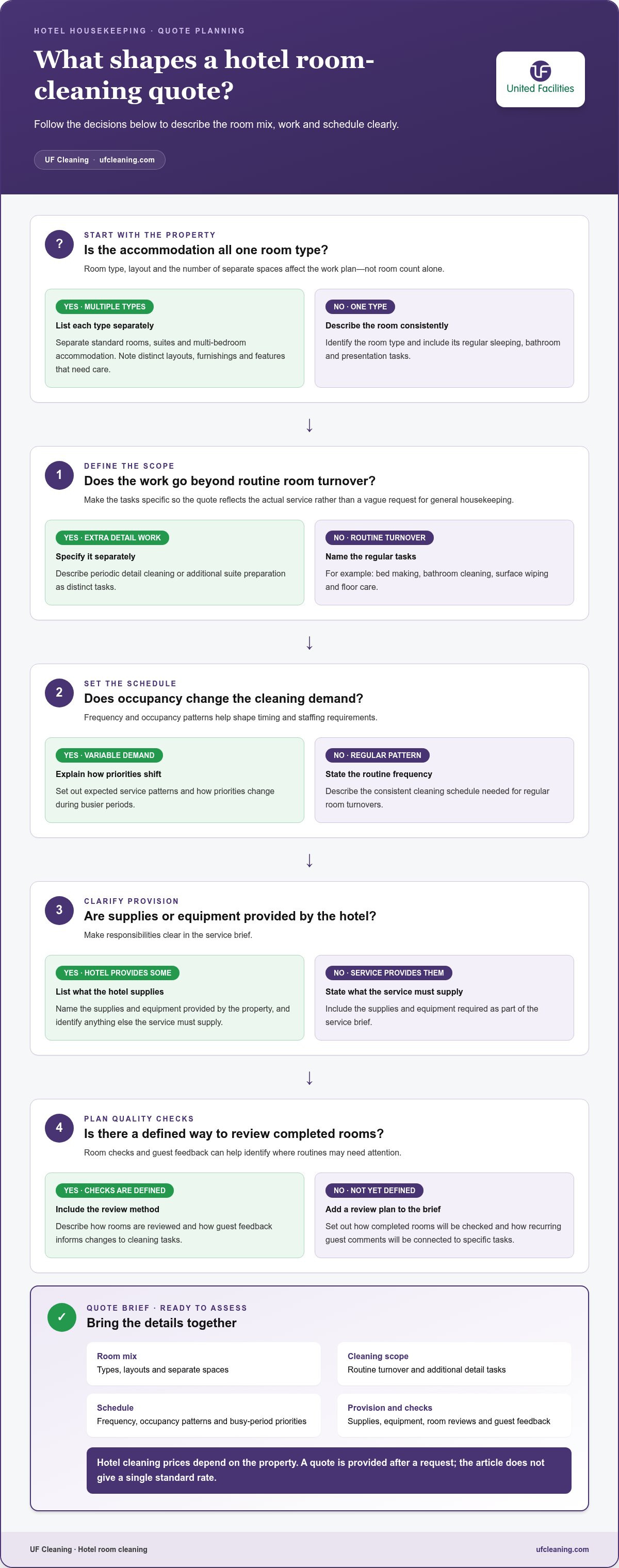
Hotel cleaning prices depend on the property and are provided after a quote request. Key factors include the number of rooms, cleaning frequency, occupancy patterns and tasks required. Room turnovers and bathroom cleaning, for example, call for a different scope from detailed suite preparation or shared-area cleaning.
Start by defining the work. A hotel needing departure-room cleaning can list bed making, bathroom cleaning, surface wiping and floor care. If the service also includes periodic detail work, specify those tasks separately. This helps ensure the quote reflects the actual schedule rather than an unclear request for general housekeeping.
Room mix also affects the work plan. A compact guest room and a multi-bedroom suite require different levels of attention and preparation. Furnishings, bathroom layouts and guest-facing details can add tasks. Describe these differences in the service brief, then group rooms with similar requirements to give the provider a clearer basis for assessing the workload.
Frequency matters as much as scope. A hotel with regular turnovers may need a consistent routine, while a property with variable occupancy may need a schedule that responds to changing demand. Set out expected service patterns and explain how priorities shift during busy periods. These details help shape staffing and timing without relying on a generic room rate.
Before requesting a quote, prepare a concise brief covering:
- Room types: Separate standard rooms, suites and multi-bedroom accommodation.
- Cleaning tasks: Specify routine turnover work and any additional detail cleaning.
- Schedule: Explain cleaning frequency and how occupancy affects demand.
- Supplies and equipment: State what the hotel provides and what the service must supply.
- Quality checks: Describe how completed rooms are reviewed and how guest feedback informs changes.
For example, a brief for a hotel with several suite layouts should identify features that need extra care. A property receiving recurring comments about bathroom presentation can specify the relevant checks. Clear details make it easier to compare quotations on the same scope, rather than comparing figures for different tasks or schedules.
Review the quote against the brief: confirm the included tasks, frequency, staffing assumptions and any exclusions. Ask for the work to be described clearly, so adjustments can be understood if occupancy or room requirements change. For a tailored estimate based on your property’s needs, submit a hotel cleaning enquiry with these details.
What are the benefits of outsourcing hotel housekeeping?
Outsourcing can give a hotel a defined housekeeping structure without requiring its managers to coordinate every cleaning task themselves. A service arrangement can set out room preparation, shared-area responsibilities, quality checks and reporting. For example, a hotel manager can focus on guest operations whilst the housekeeping team follows an agreed routine for room readiness.
Resourcing is another practical consideration. Occupancy and departure patterns affect the number of rooms needing attention. An outsourced arrangement can be planned around the expected workload, with priorities agreed for busy arrival periods and quieter days. Clear communication about room status helps reception and housekeeping coordinate and reduces confusion over which rooms are ready.
Defined procedures can support consistency across different room types. A hotel may set a core checklist for bedrooms and bathrooms, then add property-specific instructions for suites or distinctive furnishings. Staff can follow the agreed sequence while supervisors review completed work against the hotel’s standards. This gives managers a clearer basis for discussing recurring guest comments.
- Operational focus: Hotel managers can devote more attention to guest service and room operations.
- Planned routines: Cleaning tasks and priorities can be organised around occupancy patterns.
- Clear responsibilities: A documented scope helps distinguish housekeeping tasks from other hotel duties.
- Reviewable standards: Checklists and feedback records make recurring issues easier to identify.
Outsourcing can make responsibilities easier to review when the service scope is documented. A hotel can record which tasks are included, how room readiness is communicated and how concerns are escalated. For instance, if a guest reports a missed bathroom detail, the hotel can link that comment to the relevant checklist item and discuss the process with the housekeeping supervisor.
Guest feedback is most useful when it leads to a specific action. Hotel teams can group comments by topic, such as bed presentation, bathroom cleanliness or replenishment, then share relevant patterns through agreed reporting. This creates a practical feedback loop: record the concern, identify the task, review the routine and monitor later comments for signs of progress.
Outsourcing is not automatically the right arrangement for every property. A hotel should compare the management time required to run an in-house team with the coordination involved in an external service. A clear scope, communication route and review process help determine whether outsourced housekeeping fits the hotel’s operating model and guest expectations.
That comparison should consider how housekeeping accommodates the property’s character, not just room turnover. The Stables Bar at The Milestone Hotel & Residences was once used to house the building’s horses. A hotel with distinctive spaces can document their care requirements and include relevant instructions in the agreed scope. This aligns routine work with the property’s identity and gives supervisors a clear basis for review.
Before choosing an arrangement, managers can weigh operational focus against the need to communicate expectations and monitor service. A defined scope, accessible reporting and a process for responding to feedback make the arrangement easier to manage. The best fit supports guest-facing priorities without overlooking the details that make a hotel distinctive.
What UK health and safety rules apply to hotel room cleaning?
In UK hotels, safe room cleaning starts with identifying hazards for each task and setting controls before work begins. Bathrooms present different risks from bedrooms: wet floors, cleaning chemicals and awkward spaces need specific precautions. A written task plan helps staff understand the hazards, safe methods and who to tell about problems.
Chemical handling requires clear instructions. Keep products in labelled containers, follow the manufacturer’s directions and store them securely between tasks. Staff should know which product is intended for each surface, how to use it and what to do after a spill. Never mix cleaning products, as combining chemicals can cause dangerous reactions.
Equipment and personal protective equipment should suit the task. Suitable gloves, for example, can help protect hands during bathroom cleaning, while a stable vacuum reduces the need to reach across furniture. Check equipment before use, remove damaged items from service and keep electrical leads away from wet areas. Store tools so they do not obstruct corridors or exits.
Manual handling matters during linen changes and room preparation. Staff can reduce strain by keeping loads manageable, using a trolley where practical and placing supplies within easy reach. Someone moving a bundle of used linen should avoid twisting while carrying it. Training and clear work methods help teams recognise when a task needs adjusting.
- Before cleaning: Identify hazards, prepare the room and place warning signs where floors are wet.
- During cleaning: Follow product instructions, use suitable protective equipment and keep walkways clear.
- After cleaning: Store chemicals and equipment safely, then report hazards or damaged items.
Guest and staff movement also affects room safety. A cleaner working in an occupied corridor should position the trolley without blocking the route. Wet-floor signs should remain visible until the surface is dry. If a guest enters during cleaning, pause the task and secure chemicals and equipment before continuing.
Hotels should make procedures clear to everyone doing the work. Before working independently, a new team member needs instruction on chemical labels, equipment, linen handling and incident reporting. Supervisors can observe tasks, correct unsafe practices and record recurring issues, such as a slippery bathroom entrance or a damaged vacuum lead.
Guest feedback can also reveal safety concerns. A report about a wet bathroom floor, for example, can prompt a review of signage, drying methods and room-release checks. Recording the concern, assigning a follow-up action and reviewing the outcome provides a practical way to improve cleaning procedures and protect guests and staff.
What cleaning products and equipment are used in hotel housekeeping
Hotel housekeeping teams select products and equipment according to the surface, soil and task. A bathroom basin, carpet and bedside table need different cleaning methods. Using one product on every material can leave residue or damage finishes, so room instructions should identify suitable options.
General-purpose cleaners remove everyday marks from washable surfaces such as desks and bedside tables. Glass cleaner helps leave mirrors and windows clear. Bathroom cleaners are formulated for fittings and hard surfaces, while floor products need to suit the material. Staff should follow product labels and hotel procedures for correct use.
Microfibre cloths, dusters and mop systems help housekeeping teams work across different areas. Colour-coded cloths can separate bathroom cleaning from bedroom surfaces, reducing the risk of transferring soil between tasks. A practical routine is to gather the right cloths and products before entering a room, then change or launder cloths according to the property’s process.
- Surfaces: Use a compatible cleaner and cloth for desks, mirrors, bathroom fittings and other finishes.
- Floors: Match a vacuum, mop or floor-cleaning method to carpet, tile or hard flooring.
- Guest items: Use clean cloths for touchpoints such as handles, switches and bedside surfaces.
- Room setup: Keep products and tools organised on a trolley, with supplies separated from used cloths.
Equipment should suit the room layout. A compact vacuum can reach around beds and furniture, while an appropriate mop helps clean bathroom floors. A trolley keeps linen, cloths and products organised as staff move between rooms. Before starting, check that tools are clean and working properly, then return them to their designated storage area after use.
Product selection should account for the hotel’s materials and finish standards. A polished surface, for example, may need a non-abrasive cloth, while carpet requires equipment designed for textile floors. Clear labels and room-specific instructions help staff choose correctly. If a guest reports residue on a mirror, review the product, cloth and wiping method together.
Thoughtful organisation supports consistency. Separate clean cloths from used ones, keep products in their original labelled containers and restock the trolley before the next room. A supervisor can review supplies during routine checks and note when equipment needs attention. To plan a tailored hotel housekeeping approach, outline the room surfaces, floor types and cleaning tasks that matter to your property.
UF Cleaning: Office Cleaning London
UF Cleaning provides professional housekeeping and hotel management support for organisations seeking help with hotel operations and guest-facing spaces. These services can suit a property reviewing its housekeeping arrangements, refining room preparation routines or coordinating cleaning with wider management needs.
A clear outline of your room types, cleaning priorities and guest feedback gives the conversation a practical starting point. It helps identify where housekeeping or hotel management support may suit your property. UF Cleaning also provides office cleaning and hard floor care for workplaces with separate cleaning needs nationwide.
For a considered discussion about housekeeping or hotel management support for your property, contact UF Cleaning.
Make guest feedback part of your next step
Guest comments can be more than a record of past stays. Use them to shape a practical service brief by identifying which room details matter most and how your team will review them. This gives hotel room cleaning services a clear purpose: supporting a guest experience that reflects your property’s standards, rather than following a routine without context.
As you consider your next steps, decide whether your current housekeeping arrangements provide the consistency and oversight your hotel needs. UF Cleaning offers Professional Housekeeping and Hotel Management Support for organisations seeking help with guest-facing spaces and hotel operations.
Share your priorities and discuss an approach suited to your property. Contact UF Cleaning today to begin a considered conversation about your requirements. A clear plan can help turn guest feedback into meaningful improvements for the rooms and suites your guests experience.
Frequently Asked Questions
What services are included in hotel room cleaning?
Hotel room cleaning commonly includes bedroom and bathroom cleaning, bed making, surface care and replenishing guest supplies. The agreed scope may also cover public areas, depending on the property’s requirements. For example, a hotel might include refreshing the room, cleaning bathroom fittings and replenishing toiletries, while assigning corridor cleaning separately. UF Cleaning’s housekeeping includes room care and replenishment, with tasks organised around the hotel’s needs.