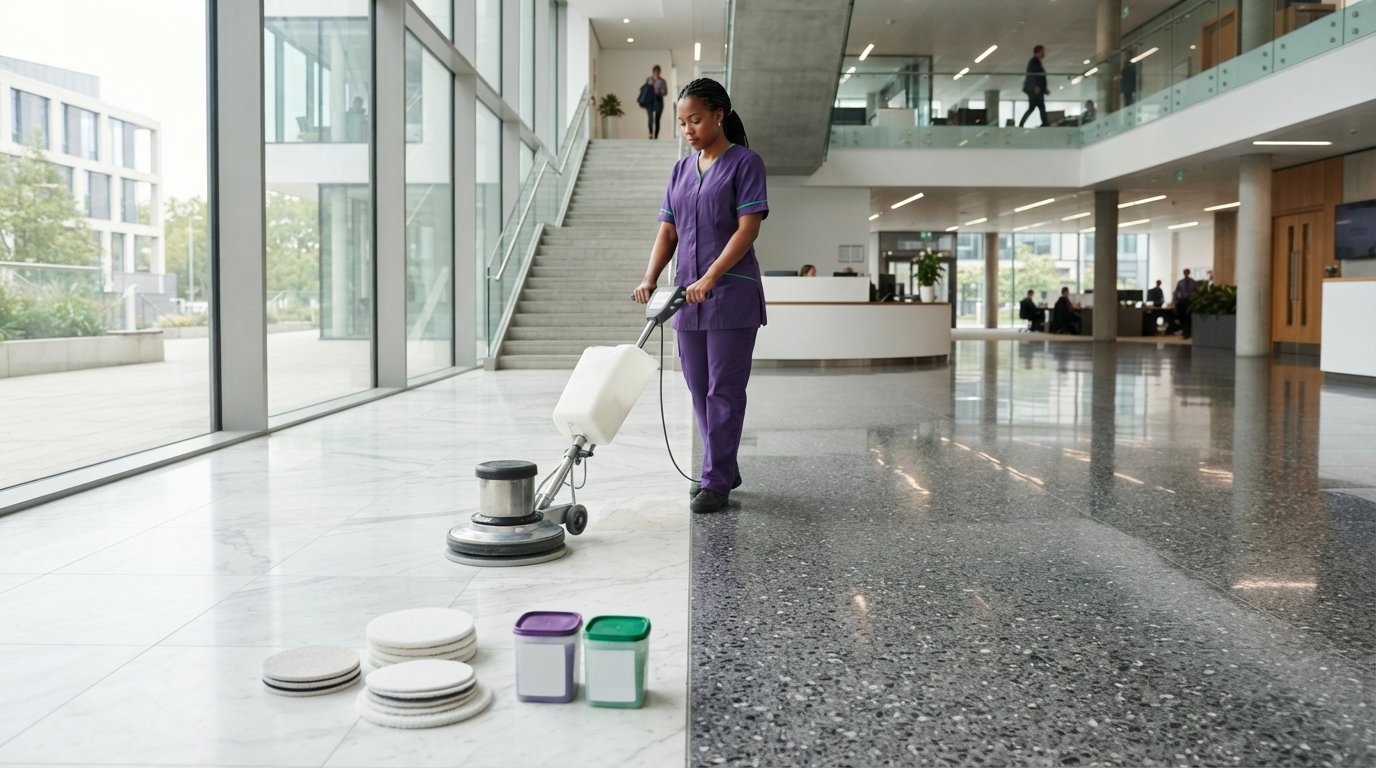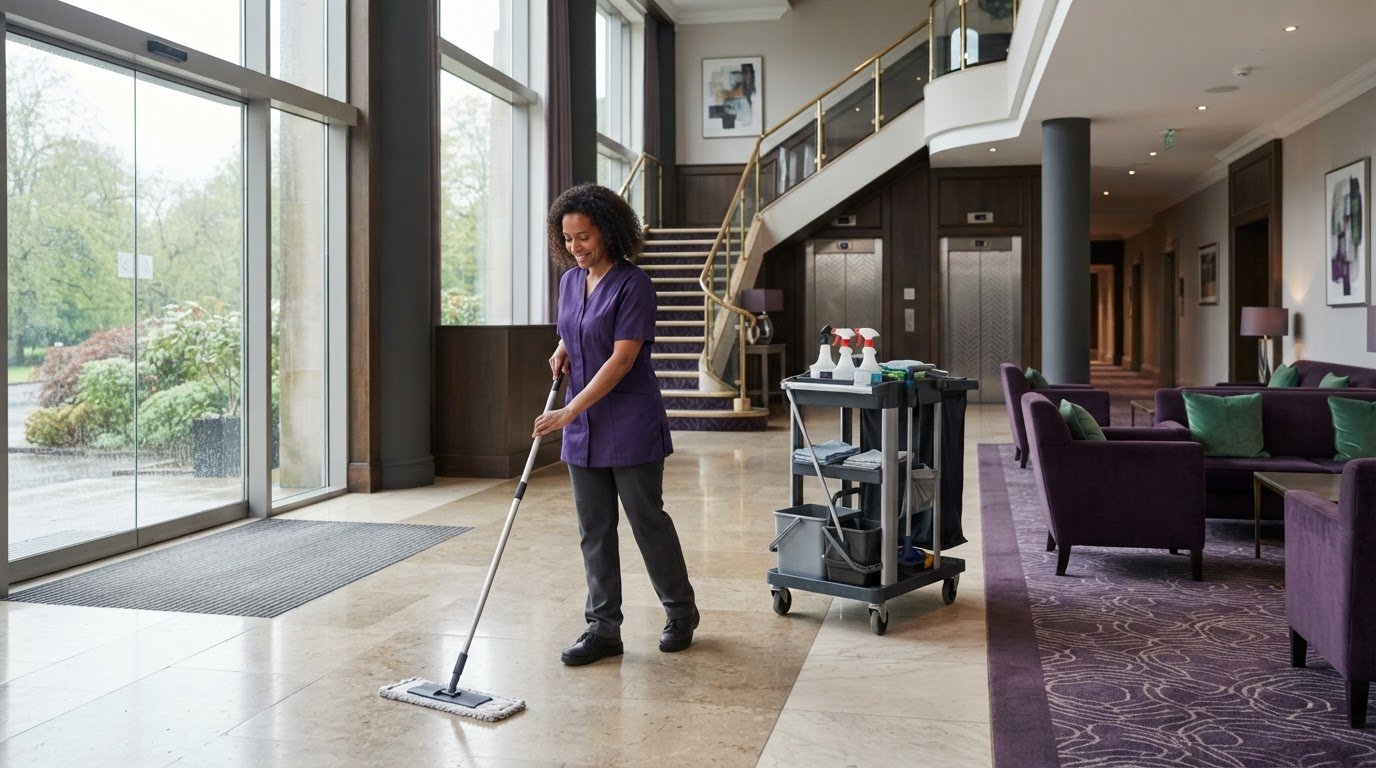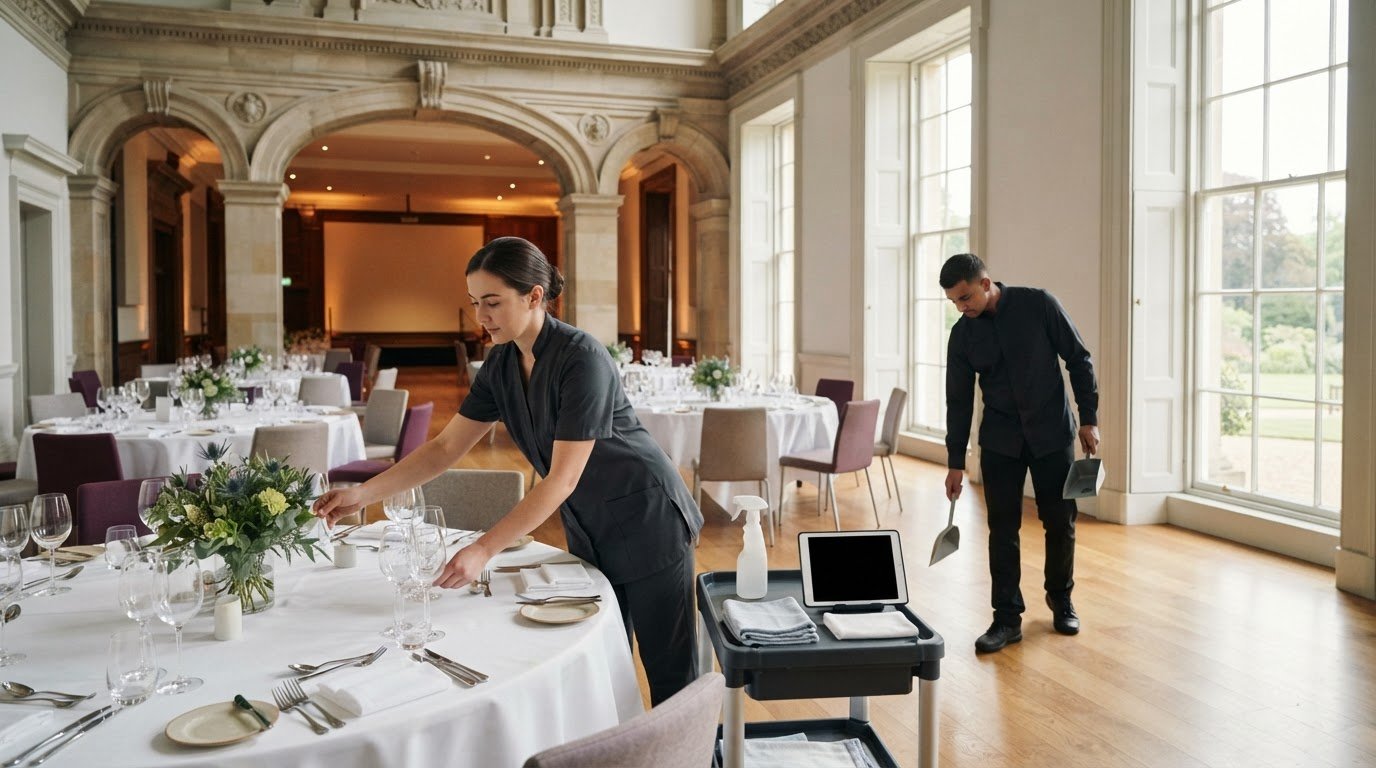
What if your cleaning plan followed the event programme rather than a standard venue checklist? With commercial cleaning for event spaces, timing matters as much as presentation. Build-up, guest-facing hours and breakdown each bring different demands, and poor coordination can affect the visitor experience and the venue’s readiness.
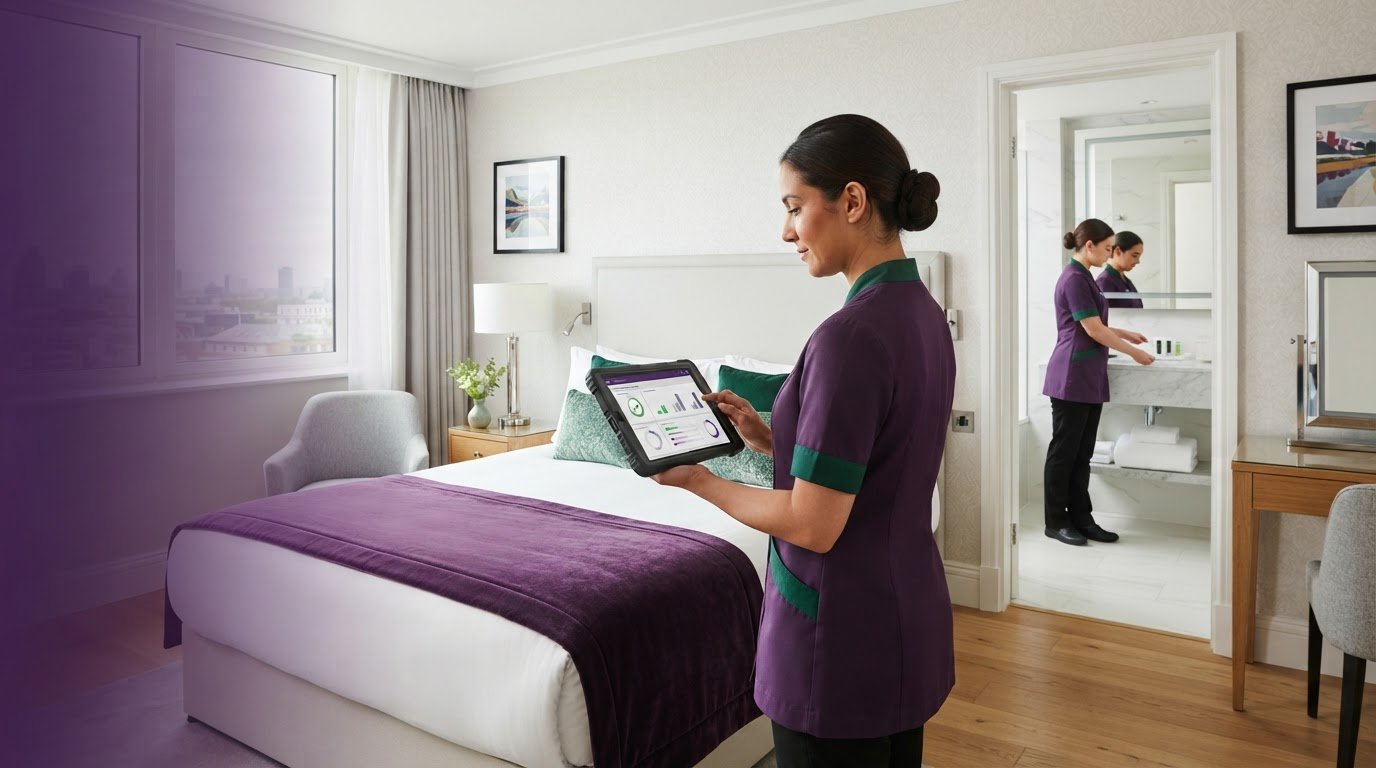
A well-planned service fits around access arrangements and operating hours, with clear responsibilities and a practical way to report issues. UF Cleaning’s directly employed, vetted, background-checked and uniformed in-house teams work without subcontractors. The Taskbe platform provides real-time activity updates, staff/rota visibility and fast issue reporting, giving venue teams oversight throughout the event cycle.
This guide explains how to plan cleaning before, during and after an event, account for changing priorities across the venue and maintain clear communication with your cleaning team. You’ll also learn what to look for in the service process, from initial assessment and planning through to cleaning, quality checks and client feedback.
Key Takeaways
- Plan commercial cleaning for event spaces around the programme, visitor movement and venue access, rather than relying on a standard checklist.
- Set distinct priorities for pre-event sparkle, live janitorial support and post-event breakdown, with tasks and timing matched to each stage.
- Build a clear brief covering venue areas, operating hours, access arrangements and the cleaning tasks required.
- Look for visible service oversight: UF Cleaning’s in-house teams are directly employed, vetted, background-checked and uniformed, while the Taskbe platform provides real-time activity updates, staff/rota visibility and fast issue reporting.
- Use an Assess, Plan, Clean and Quality Check approach, with quality checks and client feedback guiding service delivery.
Why commercial cleaning for event spaces needs an event-led plan
Event spaces change purpose and pace as an event moves from preparation to public access and, eventually, handover. A conference, exhibition or live performance can bring different visitor routes, room layouts and operating hours. A fixed cleaning routine may not match the work required at each point. The brief should reflect what is happening in the venue, where activity is concentrated and when cleaning teams can access each area.
An event-led cleaning plan aligns tasks with the event schedule, helping the space stay ready, welcoming and presentable as activity changes. This approach connects practical cleaning arrangements with event management principles, where venue logistics, supplier coordination and breakdown are part of the wider operation. For cleaning, that means planning around the programme rather than treating the venue as though it were in routine use.
What makes event-space cleaning different from routine venue cleaning?
Routine cleaning generally follows a recurring pattern; event cleaning responds to a specific schedule. A hall may need detailed preparation before exhibitors arrive, discreet attention to visitor-facing areas during opening hours, then a different set of tasks once stands or seating are removed. Access routes, restricted work areas and the time available between activities all affect what can be completed and when.
A tailored brief makes these variables clear. It identifies priority areas, agreed access windows and tasks to complete before the next stage begins, helping cleaning activity fit around venue operations rather than interrupt them.
Which operational outcomes should the cleaning plan support?
Presentation is one outcome: clean floors, tidy shared spaces and well-maintained visitor areas contribute to a welcoming impression. Readiness matters too. If one event activity follows another, the plan should specify which spaces need attention before the next group arrives and what work can be scheduled during quieter periods.
Make expectations practical by agreeing tasks and review arrangements in advance. Quality checks and client feedback help establish whether the agreed standard is being delivered and highlight adjustments for upcoming events.
During planning, translate the event programme into an operational brief. Consider:
- Venue areas: identify public spaces, back-of-house areas and locations requiring particular attention.
- Timing: map cleaning tasks against event activity, visitor movement and operating hours.
- Access: record when teams can enter each area and any venue arrangements that affect their work.
- Priorities: agree which tasks support presentation, readiness and discreet live assistance.
These details distinguish essential work from tasks that can wait for a later access window. They also give venue teams a shared reference if timings or room use change. Commercial cleaning for event spaces is not simply a list of duties; it is a coordinated part of delivering the event and preparing the venue for what comes next.
How event cleaning covers build-up, live operations and breakdown
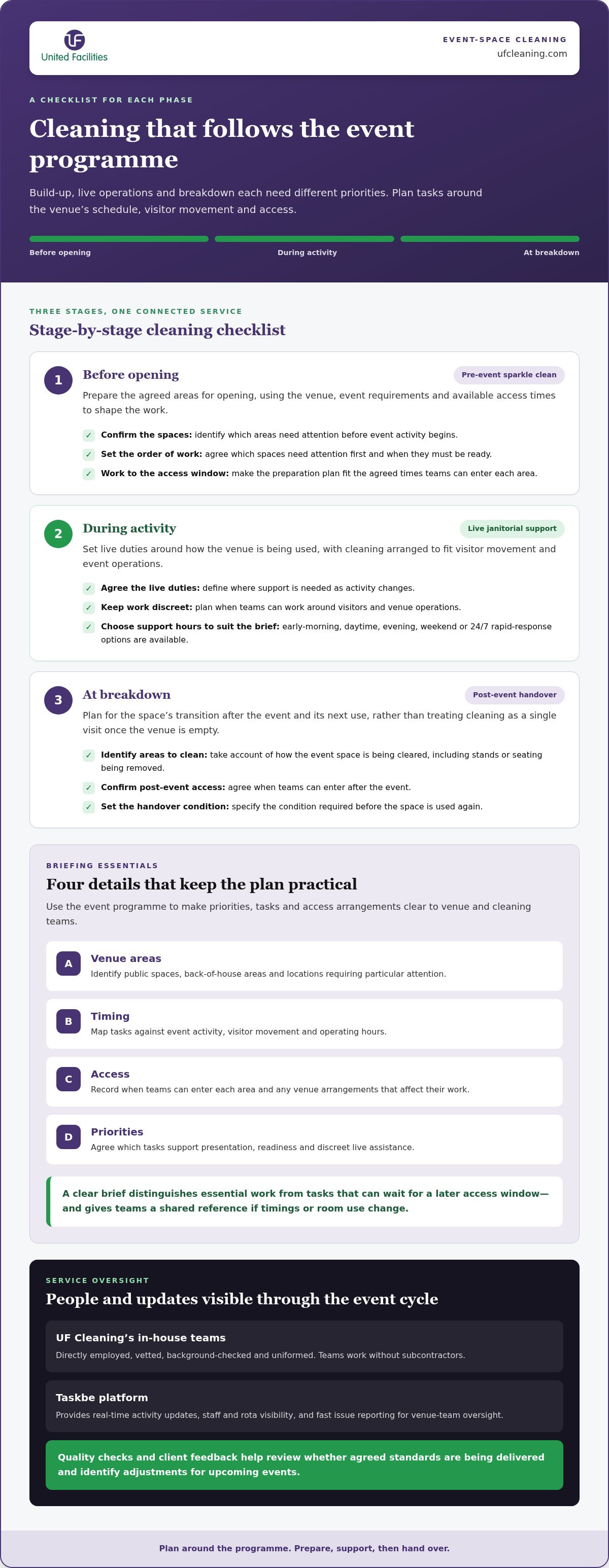
Event cleaning works best as a connected sequence, not a single visit once the venue is empty. The organiser’s brief sets out the tasks and access arrangements for each stage, so teams can prepare spaces, support activity discreetly and return areas to the agreed condition for their next use. This gives venue staff a clearer handover between phases.
Event cleaning prepares the venue before opening, covers agreed cleaning duties during live operations, then handles post-event breakdown as the space transitions towards its next use. Each stage has a distinct purpose, but the venue programme ties them together. Changes to room access or event timings may affect what can be completed, so the agreed plan should make priorities and access windows clear.
What should pre-event preparation cover?
A pre-event sparkle clean prepares the agreed areas for opening, with tasks selected to suit the venue, event requirements and available access times. The brief should identify which spaces need attention first and when they must be ready for event activity. Agreeing these details in advance helps teams work methodically without relying on assumptions about the layout or schedule.
How does live janitorial support fit around an event?
Live janitorial support follows the agreed duties and the way the venue is being used. Cleaning activity can be scheduled around event operations, with early-morning, evening, daytime, weekend and 24/7 rapid-response options. The arrangement is shaped by the brief, including operating hours, access and where support is needed as activity changes.
To make the stages work as one service, map cleaning against the event schedule rather than treating each phase in isolation:
- Before opening: agree the spaces, preparation tasks and access times required for the pre-event sparkle clean.
- During activity: define live support duties and when teams can work around visitors and venue operations.
- At breakdown: establish which areas need cleaning, what access is available after the event and the condition required for handover.
This staged approach also clarifies which responsibilities sit within the cleaning brief. For waste-related arrangements, the HSE guidance on handling event waste provides relevant safety information for event settings. UF Cleaning’s event and exhibition service includes 2026 environmental legislation compliant waste recycling, planned in line with the agreed venue requirements.
The result is a more coherent handover: preparation supports opening, live duties respond to the event in progress, and breakdown cleaning helps ready the space for what follows. UF Cleaning’s event and exhibition cleaning service can be tailored to the programme, access arrangements and required tasks.
How to assess event-space cleaning standards and service oversight
For commercial cleaning for event spaces, effective oversight makes clear who is responsible, what work is planned and how issues are reported. When comparing arrangements, focus on practical details rather than general promises. The points below show how UF Cleaning approaches these areas for event and exhibition cleaning.
| Area | UF Cleaning’s approach | What this supports |
|---|---|---|
| Staffing | Directly employed, vetted, background-checked and uniformed in-house employees; no subcontractors. | Clear team accountability. |
| Scheduling | Arrangements are tailored to the venue brief and its event activity. | Cleaning that fits venue operations. |
| Reporting | The Taskbe platform provides real-time activity updates, staff/rota visibility and fast issue reporting. | Practical oversight as work progresses. |
| Environmental practice | Low-VOC, non-toxic, 100% biodegradable chemicals; efficient dosing, recycled-content materials, equipment maintenance and waste recycling. | Environmental considerations built into delivery. |
| Credentials and review | CHAS Approved, ISO 9001 Certified, BICSc Member and Investors in People, alongside quality checks and client feedback. | Defined review points and recognised credentials. |
What do accountable staffing and live oversight look like?
UF Cleaning uses directly employed, vetted, background-checked and uniformed in-house employees, with no subcontractors. This makes it clear who is delivering the service. The Taskbe platform provides real-time activity updates, staff/rota visibility and fast issue reporting, giving organisers a way to follow activity and raise issues through a defined channel.
Reporting is most useful when it connects to action and review. Quality checks assess delivery against the agreed tasks, while client feedback gives venue teams a way to raise concerns and refine arrangements. Together, these steps make oversight part of the working service, with a clear follow-through.
Which environmental and accreditation details matter?
Assess environmental practice by looking at the methods and materials involved, not just broad claims. UF Cleaning uses low-VOC, non-toxic, 100% biodegradable cleaning chemicals and HEPA-filtration vacuums. Its approach also includes efficient dosing, recycled-content materials, equipment maintenance and waste recycling. Event and exhibition cleaning includes 2026 environmental legislation compliant waste recycling.
Credentials offer another useful reference point when stated precisely. UF Cleaning is CHAS Approved, ISO 9001 Certified, a BICSc Member and an Investors in People organisation. These credentials sit alongside practical measures; quality checks and client feedback remain part of reviewing how the service is delivered at the venue.
How to plan a commercial event cleaning brief step by step
A clear brief turns the event programme into practical instructions for the cleaning team. Describe the venue, the sequence of activity and the work expected at each stage, so the service can be shaped around real access and operating conditions. UF Cleaning uses an Assess, Plan, Clean and Quality Check approach to structure the process.
- Assess: map the venue areas included in the service, such as event rooms, shared spaces and back-of-house areas. Note the event schedule, access arrangements and operating hours, including periods when areas will be unavailable.
- Plan: separate requirements into pre-event, live-event and post-event tasks. Record what needs to be done in each space, when the team can enter, how often live support is required and how the plan should adapt if the programme changes.
- Clean: deliver the agreed tasks in line with the schedule and access arrangements. A well-defined brief helps the team understand priorities and makes responsibility for each space and stage clear.
- Quality Check: review delivery against the agreed tasks through quality checks or quality inspections, then use client feedback to identify any adjustments needed for future activity.
What information belongs in the event cleaning brief?
Make the brief specific enough to guide delivery, but straightforward to update if the event plan changes. Record the spaces covered, event timings, access arrangements, operating hours, required tasks and service frequency. Separate duties by event phase so preparation, live support and breakdown have distinct expectations and a clear handover.
For recurring events or changing schedules, a flexible cleaning schedule template can help organise tasks, timings and service frequency in one place. These details also inform the service arrangements and quotation. UF Cleaning provides a free, no-obligation quote based on building size, cleaning tasks, frequency, access arrangements and operating hours.
How should the service review delivery and feedback?
Set out how agreed tasks will be reviewed and how feedback will be shared. During the Quality Check stage, review delivery through quality checks or inspections alongside client feedback. The Taskbe platform provides real-time activity updates, staff/rota visibility and fast issue reporting to support operational follow-up.
Clear reporting helps organisers raise an issue promptly and gives the service team useful information to review against the agreed brief. For more detail on digital oversight, the real-time cleaning quality control explainer describes how this can support service monitoring.
With the scope, schedule and review process defined, the brief becomes a working reference for venue teams and cleaners alike. The free, no-obligation quote can be tailored to the required cleaning tasks and operating schedule.
How UF Cleaning supports event spaces from planning to service
UF Cleaning’s Event, Exhibition & Transport Cleaning is tailored to the venue and its event requirements, connecting preparation, live janitorial support and post-event breakdown in one considered service plan. For commercial cleaning for event spaces, the starting point is understanding how the venue operates: which areas are in use, when teams can access them and what cleaning tasks support each stage of the programme.
The service follows four steps: Assess, Plan, Clean and Quality Check. Assessment considers the venue and required work; planning sets out the tasks and service arrangements; cleaning follows the agreed brief; and quality checks and client feedback help review delivery. This gives organisers a clear structure from initial discussion through to ongoing review, rather than a service defined only by a list of cleaning duties.
UF Cleaning offers wider UK coverage for organisations with sites across the UK, helping multi-site teams consider event cleaning within their wider operational requirements. Each venue’s arrangements can be tailored to its spaces, access and event schedule.
What happens when a venue requests event cleaning?
A site survey helps assess the venue, the areas and tasks involved, access arrangements and operating hours. Sharing the event programme helps shape a plan around build-up, live activity and breakdown, while highlighting timings or venue requirements that affect service delivery. This creates a practical foundation for agreeing the scope.
The quotation is free and carries no obligation. It is based on building size, cleaning tasks, frequency, access arrangements and operating hours, with the service arrangements set out clearly, including which materials or consumables are covered. Pricing depends on the venue and the requirements agreed for its service.
How can venues take the next step with confidence?
Organisers can make the planning conversation more useful by sharing the event programme, venue areas, access windows and cleaning priorities. It also helps to identify opening and handover times, along with any changes between event phases. These details allow the proposed service to reflect the practical demands of the venue rather than rely on assumptions.
For broader guidance on assessing venue services, the event venue cleaning buying guide offers another useful reference. Once your priorities are clear, a free site survey and no-obligation quote can help define a tailored plan for your event space. Cleaning is delivered according to the agreed arrangements.
Put your event cleaning plan into practice
Use your cleaning brief as a working document, not a one-off specification. Event programmes can shift, and a clear record of priorities, access arrangements and reporting routes makes it easier to adapt the service while keeping venue teams aligned. That practical flexibility is central to effective commercial cleaning for event spaces.
UF Cleaning’s service is delivered by directly employed, vetted, background-checked and uniformed in-house teams, with no subcontractors. The Taskbe platform provides real-time activity updates, staff/rota visibility and fast issue reporting, helping organisers follow service activity. UF Cleaning is CHAS Approved, ISO 9001 Certified, a BICSc Member and an Investors in People organisation.
Bring your event schedule and venue priorities together, then shape a service around the work required. Arrange a free site survey and request a no-obligation quote for cleaning arrangements tailored to your event space.
Frequently Asked Questions
How is a commercial event cleaning quotation calculated?
A quotation for commercial cleaning for event spaces is based on the building, work required, cleaning hours, frequency and service arrangements. For example, a venue needing work across several event stages has different requirements from one seeking a single, defined clean. UF Cleaning provides a free, no-obligation quotation tailored to the venue rather than charging a public fixed price.
Are cleaning products, equipment and consumables included in an event cleaning quote?
They may be included or charged separately, as agreed in the quotation. The quote sets out which materials, equipment and consumables are covered, so you can understand the proposed arrangements before deciding. This is useful when planning an event with specific venue needs or recurring cleaning activity, as it clarifies what is included in the agreed scope.
Can event cleaning be coordinated with wider facilities support?
Yes. Event cleaning can be coordinated with wider facilities support as part of a joined-up service arrangement. For example, a venue may want cleaning delivery considered alongside related facilities support, such as maintenance. The quotation and service plan can define the scope of each element, helping organisers understand which tasks are covered and how the arrangements fit the venue’s operational requirements.
Does UF Cleaning clean transport environments as well as event spaces?
Yes. UF Cleaning provides transport cleaning as well as event and exhibition cleaning. Transport cleaning covers the interior and exterior of fleets, while event cleaning is tailored to the venue’s requirements. An organisation managing both event activity and transport environments can discuss these needs together, so the proposed service scope reflects the distinct spaces and cleaning tasks involved.
Can UF Cleaning support organisations with multiple sites across the UK?
Yes. UF Cleaning offers wider UK coverage for organisations with sites across the UK. This can help businesses coordinating cleaning across multiple venues or locations maintain consistent service arrangements. Each site’s requirements, including cleaning tasks, operating arrangements and access needs, can be considered in the proposed plan.
Is the event cleaning quotation a commitment to book the service?
No. The quotation is free and carries no obligation to book. It sets out the proposed scope and service arrangements, including the factors that shape the quotation, so you can review whether they suit your event and venue. Requesting a quote does not mean you have agreed to proceed with the cleaning service.